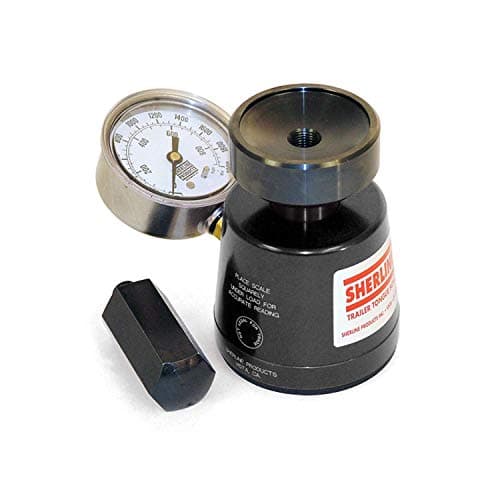
Start with one number — your loaded tongue weight — and the hitch decision stops being a guess. Everything in this section is organized around that number.
18 pages5 guides
How this page is funded: we earn a commission if you buy through our links, at no extra cost to you. It never changes which product we rank first. Prices come from Amazon and are read automatically — each one shows the date it was read. Full disclosure.
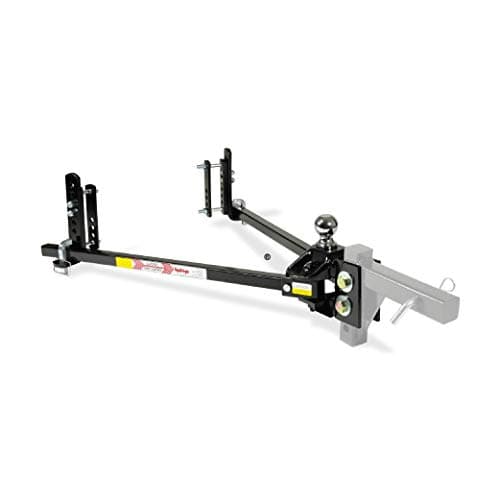
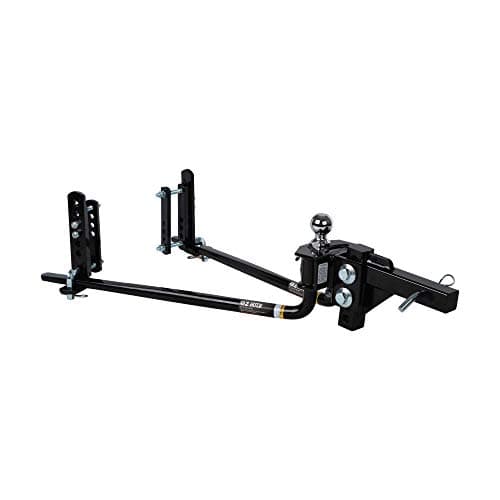
A weight distribution hitch is a lever. Spring bars run from the hitch head back to brackets on the trailer’s A-frame, you tension them, and some of the weight that was pressing down on the back of your truck gets pushed forward onto the front axle and backward onto the trailer axles. The visible result is a truck that sits level instead of squatting. The invisible result is the one that matters: the front tires get their grip back, so the steering and the brakes work the way the vehicle was designed for.
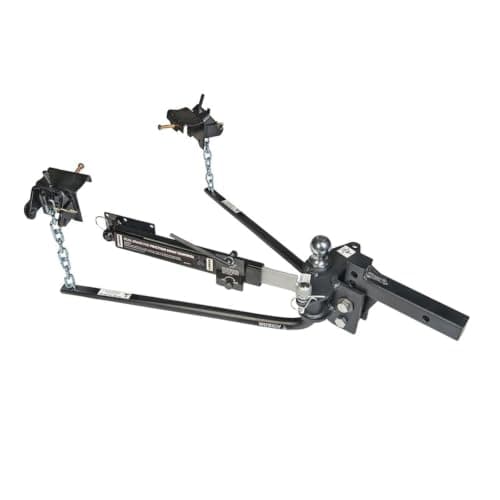
Sway control is a different job that usually arrives in the same box. Sway is the trailer pivoting side to side around the ball. Weight distribution does not stop it; friction does. Some hitches build that friction into the head, which means it is always working and there is nothing to remove before you back into a site. Others use a separate bar that you must unclip before a tight turn, every single time, or you will bend something. That one difference is the single biggest quality-of-life gap in this category, and it matters more to a first-time owner than any capacity figure.
What to buy first, and what decides the price
The first purchase is not a hitch. It is a number. You need your loaded tongue weight — the downward force the coupler puts on the ball with the trailer packed the way you actually travel, water in the tanks you actually fill, bikes on the rack. The brochure’s dry hitch weight is not that number and is usually 100–250 lb lower. Bar ratings are sold in bands, and the band has to bracket your real figure. A 1,000 lb bar set under a 550 lb tongue rides harsh and never tensions properly; a 600 lb set under 900 lb is simply overloaded.
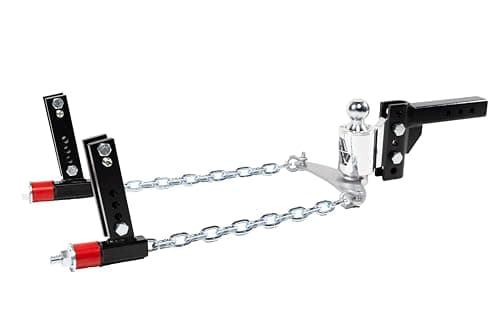
Price in this category tracks three things. First, whether sway control is integral or bolted on. Second, whether the kit includes the shank and the ball — two parts that can add well over a hundred dollars to a hitch that looked cheaper on the shelf. Third, the material: an aluminum or chain-tensioned design costs more and weighs a great deal less, which you notice every time you lift it onto the coupler.
The common mistake
Buying by trailer length. A 28 ft trailer can carry anywhere from 450 lb to 900 lb of loaded tongue weight depending on where the axles sit and what you put in the front storage. Length tells you nothing useful. Measure the tongue, then read the bar rating off the chart.
Almost every friction-based hitch makes noise. The Equal-i-zer and its relatives creak and groan in tight turns, loudly enough that new owners regularly post asking what they broke. Nothing is broken; it is metal sliding on metal under load, and it is the trade you accept for sway control that never needs unclipping. If silence matters more to you than anything else on the spec sheet, the chain-and-cone and under-slung spring-bar designs are genuinely quiet, and you will pay for it.
Two other practical notes. Bracket height on the A-frame is adjustable on most kits, and getting it wrong is the usual reason a hitch that should work rides badly — the setup guide walks the measurements. And a weight distribution hitch does nothing for your truck’s payload rating: it moves weight around, it does not delete it. If the tongue weight plus passengers plus cargo exceeds the number on your door-jamb sticker, no hitch fixes that, which is why payload, not towing capacity is the limit most half-ton owners hit first.
Federal rules treat the hitch as a safety component rather than an accessory: 49 CFR 393.70 sets the requirements for coupling devices on commercial towing, and SAE J684 is the industry standard that trailer couplings and hitches are tested to. Neither is light reading, but both are worth knowing exist the next time someone online tells you a rating is “conservative.”
Six sway control hitches ranked — and the loading checks to run first, because half of all trailer sway is a weight-distribution problem rather than a hardware one.
Our pick: Equal-i-zer 4-Point Sway Control Hitch, 90-00-1001
A lift raises the receiver and tips the trailer nose-high. The drop arithmetic you need, the shank that fixes it, and five hitches that work with a big drop.
Our pick: Equal-i-zer 4-Point Sway Control Hitch, 90-00-1001
Seven hitches with integral sway control, compared on friction method, adjustability and noise — nothing on this page needs unclipping before a tight turn.
Our pick: Equal-i-zer 4-Point Sway Control Hitch, 90-00-1001
Usually yes, but the deciding number is tongue weight, not trailer weight. Most vehicle manuals require weight distribution once the trailer exceeds roughly 50% of the vehicle weight, or once tongue weight passes the limit printed in the towing section. A 5,000 lb trailer typically carries 500–700 lb of loaded tongue weight, which is past the point most half-ton manuals require it. The full decision guide walks your manual’s wording.
No. Weight distribution moves load; sway control resists pivoting. Many hitches do both, but plenty of weight distribution kits have no sway control at all. The difference, in detail.
Not with most designs. A surge-brake coupler has to be able to compress, and bracket-style friction sway control can interfere with that. Check the hitch maker’s guidance and the brake manufacturer before you buy — this is one where getting it wrong disables your trailer brakes.