Weight Distribution & Sway Control
Sway Control Types Compared: Which Design Works Hardest?
Friction bar, two-point, four-point, dual-cam and friction cone. Five designs, five sets of trade-offs, and a clear answer for most trailers.
By Mike M. ·
How this page is funded: we earn a commission if you buy through our links, at no extra cost to you. It never changes which product we rank first. Prices come from Amazon and are read automatically — each one shows the date it was read. Full disclosure.
Quick picks
One representative hitch per design, so you can compare the types rather than the brands.
| # | Product | Best for | Score | Price |
|---|---|---|---|---|
| 1 | 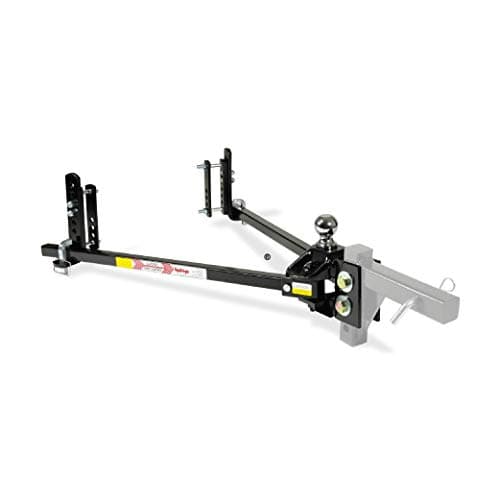 Equal-i-zer 4-Point Sway Control Hitch, 90-00-1001 Four-point sway control built into the head, so there is no friction bar to unclip before you back into a site — the single biggest quality-of-life difference for a first-timer. Four-point friction | Most half-ton trucks pulling a 5,000-10,000 lb trailer | 7.9/ 10 | |
| 2 | 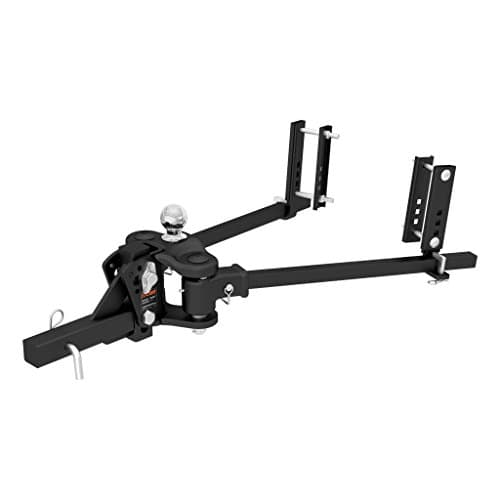 CURT TruTrack 4P Weight Distribution Hitch, 17500 CURT's answer to the four-point Equal-i-zer, with a 10,000 lb rating and an adjustable sway bias — generally a couple of hundred dollars under the hitch it is aimed at. | Four-point sway control at a mid-range price | 7.9/ 10 | |
| 3 | 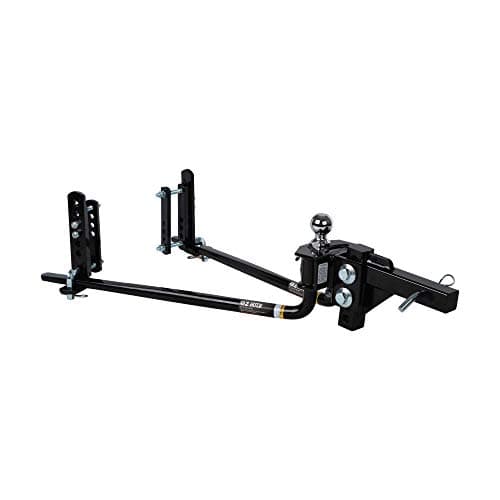 Fastway e2 2-Point Sway Control Round Bar Hitch, 94-00-1033 Equal-i-zer's own value line: two points of built-in sway control instead of four, at a price that leaves money for the shank and ball you still have to buy. | A first hitch on a 5,000-8,000 lb trailer, on a budget | 7.5/ 10 | |
| 4 | 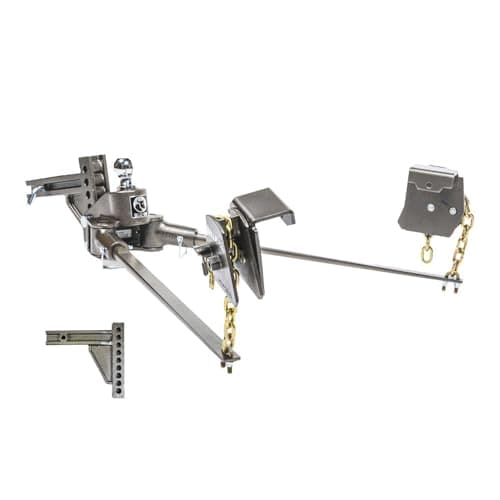 Blue Ox SwayPro BXW1000-S Weight Distributing Hitch Chain-tensioned spring bars that run under the A-frame rather than clamping onto it — quieter than a bracket hitch, and the hookup is a latch rather than a lift. Under-slung tension | Owners who want a quiet, under-slung bar setup | 7.5/ 10 | |
| 5 | 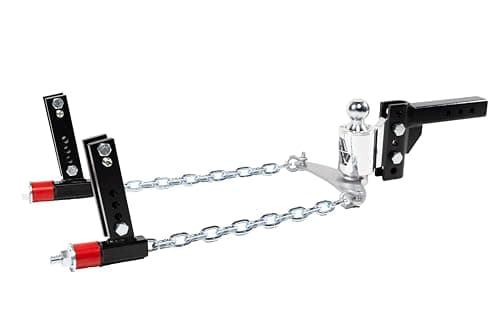 Andersen No-Sway Weight Distribution Hitch Chains and a urethane cone instead of steel spring bars, so it is the quietest and the lightest of the mainstream kits — and the only one most people can lift with one hand. Friction cone | Owners who care most about weight, noise and a short hookup | 7.5/ 10 | Check price on Amazon No buyable offer at the last price check. |
| 6 | 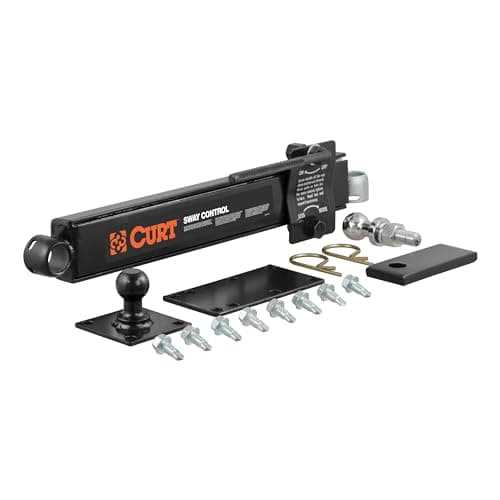 CURT Trailer Sway Control Kit, 17200 A friction bar and the brackets to mount it. The honest use for this is retrofitting a plain weight distribution hitch, not replacing a hitch that has sway control built in. Bolt-on friction bar | Adding sway control to a hitch that has none | 5.4/ 10 |
Tap any row to jump to the full write-up. Prices come from Amazon and are read automatically — see each product below for the date.
The short answer
Sway control is one word for five quite different mechanisms. Product listings blur them, which makes it hard to tell whether a hitch “with sway control” has a serious system or a bolt-on arm. Here is each one, what it actually does, and where it fails.
1. Bolt-on friction bar
A second ball on the shank, a bracket clamped to the trailer A-frame, and an arm between them with a friction pad you tighten with a handle. The arm resists the trailer rotating relative to the truck.
How hard it works: one friction interface. Weakest option here.
What it costs you: you must unclip it before any tight turn or reversing maneuver, every time. Forget once and you can bend the arm or tear the bracket off a painted A-frame. The bracket bolts also loosen over time and need checking.
Where it belongs: retrofitting a weight distribution kit that has no sway control, or a light utility trailer on straight roads.
2. Two-point integral friction
Friction surfaces built into the hitch head where each spring bar enters it. The bars are doing both jobs: transferring load and generating sway resistance.
How hard it works: two interfaces, continuously loaded. A real step up from a bar.
What it costs you: noise — the creaking is the friction working — and nothing else. Nothing to disconnect.
Where it belongs: most trailers under about 28 ft. Two points against four walks the decision.
3. Four-point integral friction
Friction at the head and at the bracket where each bar seats. Four loaded interfaces resisting rotation.
How hard it works: hardest of the passive designs. The reason it is the default recommendation for a travel trailer.
What it costs you: the most noise of any design, a slightly more involved first setup, and on some versions a sway bias you cannot adjust after installation.
Where it belongs: any travel trailer 28 ft or longer, anything towed across open country, anything near the tow vehicle’s limit.
4. Dual-cam
Cams on the hitch head hold the spring bars in a fixed position until a set side-force is exceeded, at which point the bar slides out of the cam detent. So the system is effectively rigid in normal driving and releases progressively at larger articulation angles.
How hard it works: very firm in the straight-ahead region, which is where sway happens. Owners of long trailers rate dual-cam systems highly.
What it costs you: setup precision — the cams have to be indexed correctly — and a distinct clunk as the bars re-seat after a turn, which alarms new owners. Fewer dual-cam kits are stocked than friction kits.
Where it belongs: long trailers, high-mileage towing, owners willing to set it up carefully.
5. Friction cone
A urethane cone sits around the ball between the coupler and the hitch head. Chain tension loads the cone, and the cone resists the coupler rotating.
How hard it works: moderate. One large friction surface rather than several small ones.
What it costs you: the cone is a wear part you replace, and setting chain tension correctly is less obvious than pinning a bracket hole.
Where it belongs: owners who prioritize quietness and low weight. Cone against four-point friction.
All five, side by side
| Design | Damping | Noise | Unclip to back up? | Wear parts |
|---|---|---|---|---|
| Bolt-on friction bar | Weakest | Moderate | Yes, every time | Friction pad |
| Two-point integral | Good | Loud | No | Friction pads |
| Four-point integral | Strongest passive | Loudest | No | Friction pads |
| Dual-cam | Very firm on-center | Clunks on re-seat | No | Cam detents |
| Friction cone | Moderate | Quietest | No | Urethane cone |
The common mistake
The verdict
For a travel trailer, buy integral sway control and prefer four points if the trailer is long or the terrain is open. Two points is a sensible economy on a shorter trailer. Choose a cone or under-slung design if silence is worth the premium to you. Use a bolt-on bar only to retrofit something you already own.
And before you spend anything, check the loading — the single biggest determinant of whether a trailer sways is still where the weight sits relative to the axles.
The picks in full
Equal-i-zer 4-Point Sway Control Hitch, 90-00-1001
Equal-i-zer · Best for most half-ton trucks pulling a 5,000-10,000 lb trailer
Four-point sway control built into the head, so there is no friction bar to unclip before you back into a site — the single biggest quality-of-life difference for a first-timer.
Key specifications
- Trailer weight rating
- 10,000 lb
- Tongue weight rating
- 1,000 lb
- Sway control
- 4-point, integral to the head
- Included
- Weight distribution kit; shank and ball sold separately
Capacity figures read from Equal-i-zer product specifications, October 2026.
How it scored
- Sway control (25%)9
- Tongue-weight range (20%)8
- Backing up (20%)9
- Setup effort (15%)7
- Quietness (10%)5
- Price for capability (10%)7
Weighted average of the figures above. We did not test this product — see how we pick.
What it does well
- Sway control is always on — nothing to remember, nothing to remove
- Back up and turn sharply without unhooking anything
- Bracket height is adjustable in the field with a wrench, not a shop visit
What it is bad at
- It creaks and groans in tight turns; owners report this consistently and it is normal, not a fault
- Needs a shank and ball bought separately, which catches people out on price
- Heavier to lift onto the coupler than a friction-bar setup
Price as of October 5, 2026. #ad How this is funded
CURT TruTrack 4P Weight Distribution Hitch, 17500
CURT · Best for four-point sway control at a mid-range price
CURT's answer to the four-point Equal-i-zer, with a 10,000 lb rating and an adjustable sway bias — generally a couple of hundred dollars under the hitch it is aimed at.
Key specifications
- Gross trailer weight
- 10,000 lb
- Sway control
- 4-point, integral
- Adjustment
- Sway-control bias adjustable
- Included
- Weight distribution kit with sway control
Capacity figures read from CURT TruTrack specifications, October 2026.
How it scored
- Sway control (25%)9
- Tongue-weight range (20%)8
- Backing up (20%)9
- Setup effort (15%)6
- Quietness (10%)5
- Price for capability (10%)8
Weighted average of the figures above. We did not test this product — see how we pick.
What it does well
- Four points of sway control for less than the obvious four-point alternative
- Bias adjustment lets you dial sway resistance to the trailer
- No bar to unclip before backing
What it is bad at
- More parts to understand on first setup than a two-point kit
- Less owner experience published than the market leaders, so fewer reports to read
- Friction surfaces mean friction noise
Price as of October 5, 2026. #ad How this is funded
Fastway e2 2-Point Sway Control Round Bar Hitch, 94-00-1033
Fastway · Best for a first hitch on a 5,000-8,000 lb trailer, on a budget
Equal-i-zer's own value line: two points of built-in sway control instead of four, at a price that leaves money for the shank and ball you still have to buy.
Key specifications
- Trailer weight rating
- 10,000 lb
- Tongue weight rating
- 1,000 lb
- Sway control
- 2-point, integral
- Included
- Weight distribution kit; shank and ball sold separately
Capacity figures read from Fastway e2 product specifications (Equal-i-zer / Progress Mfg), October 2026.
How it scored
- Sway control (25%)7
- Tongue-weight range (20%)8
- Backing up (20%)9
- Setup effort (15%)7
- Quietness (10%)5
- Price for capability (10%)8
Weighted average of the figures above. We did not test this product — see how we pick.
What it does well
- Integral sway control, so nothing to unclip before backing
- Cheaper than the four-point Equal-i-zer with most of the behavior
- Round bars are more forgiving of an imperfect bracket height
What it is bad at
- Two friction points rather than four, so it works less hard in a crosswind
- Still creaks, same as its four-point sibling
- Shank and ball sold separately
Price as of October 5, 2026. #ad How this is funded
Blue Ox SwayPro BXW1000-S Weight Distributing Hitch
Blue Ox · Best for owners who want a quiet, under-slung bar setup
Chain-tensioned spring bars that run under the A-frame rather than clamping onto it — quieter than a bracket hitch, and the hookup is a latch rather than a lift.
Key specifications
- Tongue weight
- 1,000 lb
- Towing capacity
- 10,000 lb
- Shank
- 9-hole, 2 in receiver
- Sway control
- Spring-bar tension, always engaged
Capacity figures read from Blue Ox SwayPro specifications, October 2026.
How it scored
- Sway control (25%)8
- Tongue-weight range (20%)8
- Backing up (20%)8
- Setup effort (15%)6
- Quietness (10%)9
- Price for capability (10%)5
Weighted average of the figures above. We did not test this product — see how we pick.
What it does well
- Notably quieter than bracket-style friction hitches
- Clamp-on latches make hooking up quick once set
- Bars stay under tension through a turn, so backing is normal
What it is bad at
- Most expensive option in this range
- Initial setup is the fussiest here — chain link count has to be right
- Shank included, ball is not
Price as of October 5, 2026. #ad How this is funded
Andersen No-Sway Weight Distribution Hitch
Andersen Hitches · Best for owners who care most about weight, noise and a short hookup
Chains and a urethane cone instead of steel spring bars, so it is the quietest and the lightest of the mainstream kits — and the only one most people can lift with one hand.
Key specifications
- Gross trailer weight rating
- 14,000 lb
- Shank
- 2 in shank, 4 in drop
- Ball
- 2-5/16 in included
- Sway control
- Friction cone, always engaged
Capacity figures read from Andersen Hitches weight distribution specifications, October 2026.
How it scored
- Sway control (25%)7
- Tongue-weight range (20%)8
- Backing up (20%)8
- Setup effort (15%)6
- Quietness (10%)10
- Price for capability (10%)6
Weighted average of the figures above. We did not test this product — see how we pick.
What it does well
- Quiet — the complaint that defines steel-bar hitches mostly goes away
- Much lighter than a bar-and-bracket kit, so hookup is a one-person job
- Ball and shank are included, which is rarer than it should be
What it is bad at
- Chain tension is set by feel and a wrench, which is fiddlier to get right the first time
- The urethane cone is a wear part you will eventually replace
- Price sits at the top of the range
CURT Trailer Sway Control Kit, 17200
CURT · Best for adding sway control to a hitch that has none
A friction bar and the brackets to mount it. The honest use for this is retrofitting a plain weight distribution hitch, not replacing a hitch that has sway control built in.
Key specifications
- Type
- Friction sway control bar
- Use
- Add-on for weight distribution hitches
- Mounting
- A-frame bracket plus ball on the shank
- Operation
- Manual — must be disconnected to back sharply
Capacity figures read from CURT 17200 specifications, October 2026.
How it scored
- Sway control (25%)4
- Tongue-weight range (20%)6
- Backing up (20%)3
- Setup effort (15%)7
- Quietness (10%)6
- Price for capability (10%)9
Weighted average of the figures above. We did not test this product — see how we pick.
What it does well
- Cheapest route to some sway resistance on a hitch that has none
- Simple, serviceable, nothing to go wrong electronically
- Works with most conventional round-bar kits
What it is bad at
- Must be unclipped before tight turns and backing, every single time
- One friction point is much weaker than an integrated four-point head
- Needs a second ball and a spare hole in the shank
Price as of October 5, 2026. #ad How this is funded
Common questions
Four-point integral friction is the strongest passive design and needs nothing disconnected. Dual-cam is very firm on-center and favored on long trailers. The quiet designs give up some damping.
Only with a bolt-on friction bar. Two-point, four-point, dual-cam and cone designs all allow normal backing with nothing disconnected.
On a dual-cam system it is the bar re-seating into its cam detent, which is normal. On a friction design, a clunk is more likely a loose bracket or an unseated bar — check it.
Sources
- Equal-i-zer published hitch specifications and bar ratings — read October 2026
- Andersen Hitches weight distribution hitch specifications — read October 2026
- CURT published weight distribution specifications — read October 2026
- Blue Ox SwayPro published specifications — read October 2026