Towing Setup & Capacity
How To Measure Your Trailer Tongue Weight
Three methods, one of them free. Get this number and every other decision on this site becomes arithmetic instead of guesswork.
By Mike M. ·
How this page is funded: we earn a commission if you buy through our links, at no extra cost to you. It never changes which product we rank first. Prices come from Amazon and are read automatically — each one shows the date it was read. Full disclosure.
Quick picks
The two tools that do this job, plus the hitch the number sizes.
| # | Product | Best for | Score | Price |
|---|---|---|---|---|
| 1 | 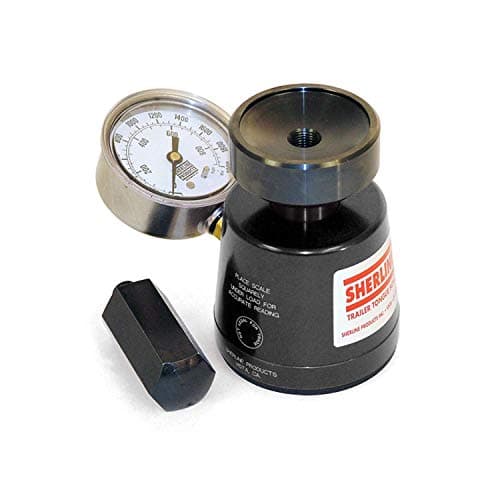 Sherline LM 2000 Trailer Tongue Weight Scale A hydraulic scale you set the coupler down on. It is the only tool here that answers the one question every hitch decision depends on, and it reads up to 2,000 lb. The dedicated tool | Measuring loaded tongue weight properly, once and for all | 7.4/ 10 | |
| 2 | 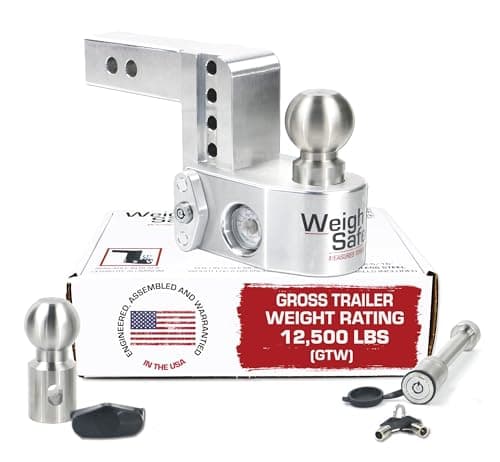 Weigh Safe Aluminum Adjustable Hitch with Tongue Weight Scale An adjustable ball mount with the scale built into the shank, so the number appears every time you couple up rather than only when you remember to get the scale out. | Seeing tongue weight every time you hook up, not once a year | 8.0/ 10 | |
| 3 | 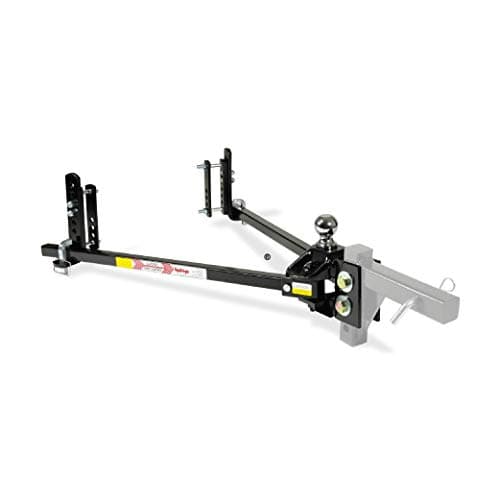 Equal-i-zer 4-Point Sway Control Hitch, 90-00-1001 Four-point sway control built into the head, so there is no friction bar to unclip before you back into a site — the single biggest quality-of-life difference for a first-timer. | Most half-ton trucks pulling a 5,000-10,000 lb trailer | 7.9/ 10 |
Tap any row to jump to the full write-up. Prices come from Amazon and are read automatically — see each product below for the date.
The short answer
Loaded tongue weight is the number that sizes your weight distribution bars, decides whether you need weight distribution at all, and eats the largest single chunk of your truck’s payload. Almost nobody measures it, and the brochure figure is not it.
Loaded vs dry: dry hitch weight is the trailer as the factory built it, empty. Loaded tongue weight is the trailer as you tow it — water in the tanks you fill, propane, batteries, gear in the front storage, bikes on the back. The gap is commonly 100–250 lb.
Before you measure anything
The measurement is only as useful as the load it represents, so load the trailer the way you actually travel:
- Water in the tanks you fill. Fresh water is 8.34 lb per gallon, so a 40-gallon tank is 334 lb. Where that tank sits relative to the axles decides how much of it lands on the tongue.
- Propane tanks full. They are on the A-frame, ahead of the axles, which means all of their weight is tongue weight.
- Batteries installed. Also usually on the A-frame.
- Everything in the storage you actually pack. Including the generator and the bike rack, which are usually behind the axles and reduce tongue weight.
Then record the configuration, because if you change it — a new battery bank, a rear bike rack — the number changes and you should re-measure.
Method 1: a public truck scale (free, accurate)
- 1
Find a scale and ask about multiple weighings
Public truck scales at truck stops will usually do several weighings in one transaction if you ask when you arrive. Call ahead. Walking up and improvising in a queue of semis is not fun for anybody. - 2
Weigh the whole rig
Truck and trailer coupled, everything on the scale. Record it. This is your gross combined weight and it is worth knowing against your GCWR. - 3
Weigh trailer axles only, still coupled
Pull forward until only the trailer's own axles sit on the scale platform, with the truck off it and the trailer still hitched. Record it. Call this reading A. - 4
Uncouple and weigh the trailer alone
Drop the tongue jack, uncouple, pull the truck off, and weigh with the trailer standing on its jack and its axles — the same axles — on the scale. Record it. Call this reading B. - 5
Subtract
Tongue weight = B minus A. When the trailer is coupled, the truck carries the tongue load; when it stands on its jack, the trailer's own axles and jack carry it. The difference is what the ball was holding.
A note on accuracy: the tongue jack bears a small part of the load in step 4, so this method reads slightly high. For practical purposes — choosing a bar band, budgeting payload — that error is irrelevant and erring high is the safe direction.
Method 2: a dedicated tongue weight scale
- 1
Level ground, loaded trailer
The trailer must be loaded as you travel and both the trailer and the scale on firm level ground. A slope invalidates the reading. - 2
Position the scale under the coupler
Set the scale where the coupler will come down onto it. The coupler should end up at roughly its normal towing height — not jacked high, not sitting low. - 3
Lower the coupler onto the scale
Wind the tongue jack down until the coupler rests fully on the scale and the jack foot is clear of the ground. All of the tongue load is now on the scale. - 4
Read the dial
That is your loaded tongue weight. Write it down, along with how the trailer was loaded, and keep it where you will find it.
This is the most accurate and most convenient method if you own the scale. The practical catch is storage: it is a bulky object you use twice a year, and most owners keep it in a garage rather than the trailer.
Method 3: a scale in the ball mount
A ball mount with a gauge in the shank reads tongue weight every time you couple up. No separate step, no remembering, no storage.
It measures load at the ball with the trailer coupled, which is not identical to a scale under the coupler, and the reading changes slightly as the mount deflects. Treat it as a highly repeatable indication rather than a certified figure — which, for tracking whether last weekend’s loading changed anything, is exactly what you want.
The common mistake
What to do with the number
| Check | How | Where |
|---|---|---|
| Is tongue weight 10-15% of loaded trailer weight? | Divide tongue weight by loaded trailer weight | Below 10% is sway-prone |
| Which bar band do I need? | Read it off the chart | The hitch chart |
| Is it inside the vehicle's tongue weight limit? | Compare with the manual | How much can my truck tow |
| Does payload still work? | Subtract from the door-jamb sticker | Payload vs towing capacity |
If the percentage is low, move heavy items forward of the axles rather than buying a sway control hitch. If it is high, you are spending payload you do not need to.
What to remember
- Measure loaded, not dry. The gap is commonly 100-250 lb.
- The truck-scale method is free: weigh the trailer axles coupled, then uncoupled on the jack, and subtract.
- A dedicated scale is the most accurate; a scale in the ball mount is the most used.
- Do not use a bathroom scale and a plank.
- Record how the trailer was loaded, and re-measure if that changes.
The picks in full
Sherline LM 2000 Trailer Tongue Weight Scale
Sherline · Best for measuring loaded tongue weight properly, once and for all
A hydraulic scale you set the coupler down on. It is the only tool here that answers the one question every hitch decision depends on, and it reads up to 2,000 lb.
Key specifications
- Capacity
- 2,000 lb
- Type
- Hydraulic dial gauge
- Use
- Jack the coupler down onto the scale
- Power
- None — mechanical
How it scored
- How often you use it (40%)9
- Build quality (25%)9
- Takes up little room (20%)4
- Price for capability (15%)5
Weighted average of the figures above. We did not test this product — see how we pick.
What it does well
- Gives you the loaded number, not the brochure dry number
- No batteries, no calibration routine, no app
- Capacity covers essentially every bumper-pull trailer
What it is bad at
- Expensive for a tool most people use twice a year
- Bulky to store
- You need level ground and the coupler at the right height to read it accurately
Price as of October 5, 2026. #ad How this is funded
Weigh Safe Aluminum Adjustable Hitch with Tongue Weight Scale
Weigh Safe · Best for seeing tongue weight every time you hook up, not once a year
An adjustable ball mount with the scale built into the shank, so the number appears every time you couple up rather than only when you remember to get the scale out.
Key specifications
- Gross trailer weight
- 12,500 lb
- Drop
- 4 in adjustable
- Balls
- Stainless 2 in and 2-5/16 in
- Receiver
- 2 in
- Extras
- 2-piece lock set included
How it scored
- Rated capacity (25%)8
- Adjustability (25%)9
- Security (20%)8
- Build quality (15%)8
- Price for capability (15%)6
Weighted average of the figures above. We did not test this product — see how we pick.
What it does well
- Measures tongue weight as part of hooking up — zero extra effort
- Dual stainless balls cover both common coupler sizes
- Adjustable height, so one mount fits two trailers
What it is bad at
- The gauge reads loaded tongue weight at the ball, which is not identical to a scale under the coupler
- Aluminum body scratches easily
- Expensive for a ball mount
Price as of October 5, 2026. #ad How this is funded
Equal-i-zer 4-Point Sway Control Hitch, 90-00-1001
Equal-i-zer · Best for most half-ton trucks pulling a 5,000-10,000 lb trailer
Four-point sway control built into the head, so there is no friction bar to unclip before you back into a site — the single biggest quality-of-life difference for a first-timer.
Key specifications
- Trailer weight rating
- 10,000 lb
- Tongue weight rating
- 1,000 lb
- Sway control
- 4-point, integral to the head
- Included
- Weight distribution kit; shank and ball sold separately
Capacity figures read from Equal-i-zer product specifications, October 2026.
How it scored
- Sway control (25%)9
- Tongue-weight range (20%)8
- Backing up (20%)9
- Setup effort (15%)7
- Quietness (10%)5
- Price for capability (10%)7
Weighted average of the figures above. We did not test this product — see how we pick.
What it does well
- Sway control is always on — nothing to remember, nothing to remove
- Back up and turn sharply without unhooking anything
- Bracket height is adjustable in the field with a wrench, not a shop visit
What it is bad at
- It creaks and groans in tight turns; owners report this consistently and it is normal, not a fault
- Needs a shank and ball bought separately, which catches people out on price
- Heavier to lift onto the coupler than a friction-bar setup
Price as of October 5, 2026. #ad How this is funded
Common questions
Ten to fifteen percent of loaded trailer weight. Below 10% the trailer gets sway-prone; above 15% you are spending payload for no benefit.
Yes, with a dedicated hydraulic tongue weight scale the coupler lowers onto. Do not improvise with a bathroom scale and a lever — domestic scales are not rated for the load and the arrangement is unstable.
Substantially, and the direction depends on where the tank sits. Water is 8.34 lb per gallon, so 40 gallons is about 334 lb. Ahead of the axles it adds to the tongue; behind them it takes weight off.
Whenever the loading changes meaningfully — a new battery bank, a rear rack, a generator in the bumper, a change in whether you travel with water. Otherwise once is enough.
Sources
- SAE J2807 — tow-vehicle gross combination weight rating procedure — read October 2026
- SAE J684 — trailer couplings, hitches and safety chains — read October 2026
- 49 CFR 393.70 — coupling devices and towing methods — read October 2026
- CURT published towing product specifications — read October 2026