Towing Setup & Capacity
Payload vs Towing Capacity
Your truck will tow more than it can carry. The difference is the single most expensive misunderstanding in first-time trailer ownership.
By Mike M. ·
How this page is funded: we earn a commission if you buy through our links, at no extra cost to you. It never changes which product we rank first. Prices come from Amazon and are read automatically — each one shows the date it was read. Full disclosure.
Quick picks
The tools for the two measurements this page depends on.
| # | Product | Best for | Score | Price |
|---|---|---|---|---|
| 1 | 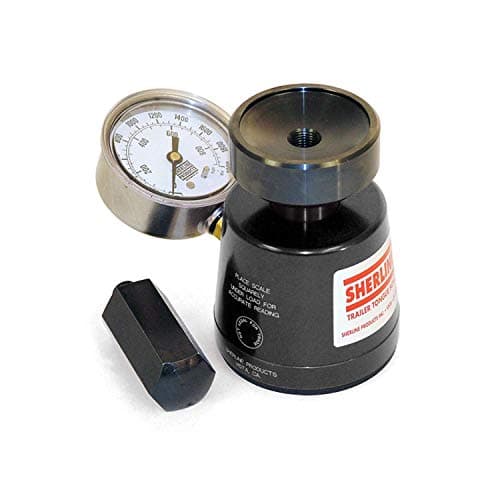 Sherline LM 2000 Trailer Tongue Weight Scale A hydraulic scale you set the coupler down on. It is the only tool here that answers the one question every hitch decision depends on, and it reads up to 2,000 lb. | Measuring loaded tongue weight properly, once and for all | 7.4/ 10 | |
| 2 | 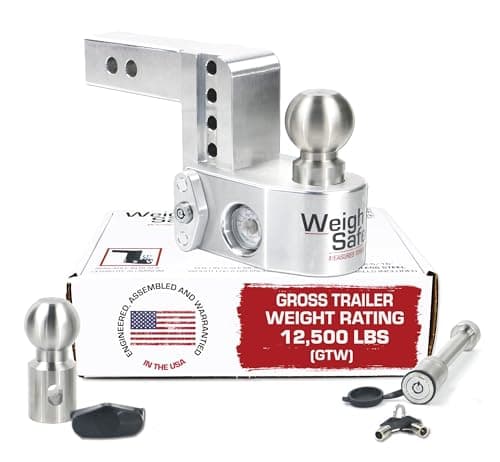 Weigh Safe Aluminum Adjustable Hitch with Tongue Weight Scale An adjustable ball mount with the scale built into the shank, so the number appears every time you couple up rather than only when you remember to get the scale out. | Seeing tongue weight every time you hook up, not once a year | 8.0/ 10 | |
| 3 | 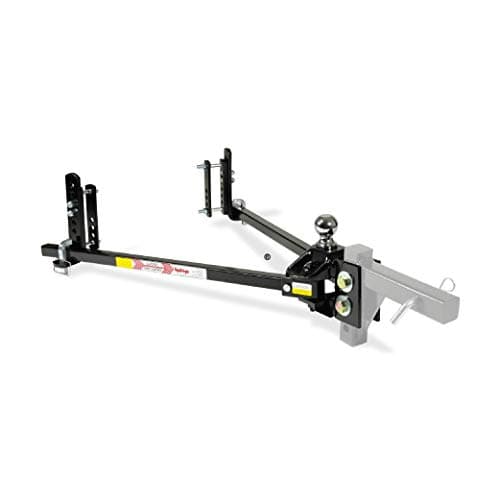 Equal-i-zer 4-Point Sway Control Hitch, 90-00-1001 Four-point sway control built into the head, so there is no friction bar to unclip before you back into a site — the single biggest quality-of-life difference for a first-timer. | Most half-ton trucks pulling a 5,000-10,000 lb trailer | 7.9/ 10 |
Tap any row to jump to the full write-up. Prices come from Amazon and are read automatically — see each product below for the date.
The short answer
Here is the conversation that happens at every RV dealership. “What do you tow with?” “An F-150.” “Great, that’ll pull this easily.” And it will pull it. The engine will pull it, the transmission will pull it, the brakes will stop it. And the door-jamb sticker will say you should not.
Where each number lives
Towing capacity is in the towing section of your owner’s manual, and the figure that applies to you is the one for your exact configuration: cab style, bed length, axle ratio, 2WD or 4WD, engine. The brochure headline is the best possible combination and frequently thousands of pounds above what your truck is rated for.
Payload is on the yellow sticker inside the driver’s door frame. It reads something like “The combined weight of occupants and cargo should never exceed XXXX lb.” That number is specific to your vehicle as built, which is why two trucks of the same model year can differ by over 1,000 lb. A sunroof, a bigger engine, four-wheel drive and a crew cab all cost payload.
The common mistake
The subtraction
Payload is everything you add to the truck. That includes:
- every person in it, including the driver;
- the weight distribution hitch, which is 70–100 lb sitting in the receiver;
- anything in the bed: coolers, firewood, generator, tools, a topper;
- aftermarket accessories: bed liner, running boards, roof rack, bigger tires;
- and the trailer’s loaded tongue weight, which is usually the biggest item.
| Item | Weight | Payload remaining |
|---|---|---|
| Door-jamb payload sticker | 1,487 lb | 1,487 lb |
| Driver and passenger | -340 lb | 1,147 lb |
| Two children | -150 lb | 997 lb |
| Weight distribution hitch | -95 lb | 902 lb |
| Dog, food, cooler | -120 lb | 782 lb |
| Firewood, chairs, tools in the bed | -130 lb | 652 lb |
| Available for trailer tongue weight | 652 lb |
Six hundred and fifty-two pounds of tongue weight, at a normal 12% tongue ratio, is a loaded trailer of about 5,400 lb. On a truck advertised to tow 9,300.
Turning payload into a trailer weight
The arithmetic is one division. Take your remaining payload and divide by the tongue weight percentage you expect:
| Payload left for tongue | At 10% | At 12% | At 15% |
|---|---|---|---|
| 400 lb | 4,000 lb | 3,330 lb | 2,670 lb |
| 600 lb | 6,000 lb | 5,000 lb | 4,000 lb |
| 800 lb | 8,000 lb | 6,670 lb | 5,330 lb |
| 1,000 lb | 10,000 lb | 8,330 lb | 6,670 lb |
| 1,400 lb | 14,000 lb | 11,670 lb | 9,330 lb |
Use the 12% column for planning. Travel trailers are commonly 11–13% and the 10% column flatters you in a way that will bite when you load the front storage.
What does not help
A weight distribution hitch. It relocates load between axles so the truck sits level and the front tires keep grip. The tongue weight is still on the vehicle and still counts against payload.
Airbags. They support the suspension so the truck stops squatting. They do not change the axle ratings, the GVWR or the payload. The two compared.
Bigger tires or heavier springs. Payload is derived from the gross vehicle weight rating on the certification label, which the manufacturer set. Changing components does not change the certification.
What does help: a lighter trailer, less stuff, fewer passengers, or a truck with a higher payload rating. There is no fifth option, and the sooner you know which of the four you are choosing, the cheaper the lesson.
The fourth number: GCWR
Gross combined weight rating caps the truck and trailer together, loaded. It is possible to be inside payload and inside towing capacity and still over GCWR, especially on a heavy three-quarter-ton with a heavy trailer.
It is in the same part of the manual. Check it once; for most half-ton owners payload binds first and GCWR never comes up, but it is worth knowing which rating you are actually closest to.
What to remember
- Towing capacity is in the manual; payload is on the yellow sticker in your door frame.
- Tongue weight counts against payload in full and is usually the biggest single item.
- Divide remaining payload by 0.12 for a realistic loaded trailer weight.
- No hitch and no suspension accessory increases payload.
- GCWR is a fourth limit worth checking once.
The picks in full
Sherline LM 2000 Trailer Tongue Weight Scale
Sherline · Best for measuring loaded tongue weight properly, once and for all
A hydraulic scale you set the coupler down on. It is the only tool here that answers the one question every hitch decision depends on, and it reads up to 2,000 lb.
Key specifications
- Capacity
- 2,000 lb
- Type
- Hydraulic dial gauge
- Use
- Jack the coupler down onto the scale
- Power
- None — mechanical
How it scored
- How often you use it (40%)9
- Build quality (25%)9
- Takes up little room (20%)4
- Price for capability (15%)5
Weighted average of the figures above. We did not test this product — see how we pick.
What it does well
- Gives you the loaded number, not the brochure dry number
- No batteries, no calibration routine, no app
- Capacity covers essentially every bumper-pull trailer
What it is bad at
- Expensive for a tool most people use twice a year
- Bulky to store
- You need level ground and the coupler at the right height to read it accurately
Price as of October 5, 2026. #ad How this is funded
Weigh Safe Aluminum Adjustable Hitch with Tongue Weight Scale
Weigh Safe · Best for seeing tongue weight every time you hook up, not once a year
An adjustable ball mount with the scale built into the shank, so the number appears every time you couple up rather than only when you remember to get the scale out.
Key specifications
- Gross trailer weight
- 12,500 lb
- Drop
- 4 in adjustable
- Balls
- Stainless 2 in and 2-5/16 in
- Receiver
- 2 in
- Extras
- 2-piece lock set included
How it scored
- Rated capacity (25%)8
- Adjustability (25%)9
- Security (20%)8
- Build quality (15%)8
- Price for capability (15%)6
Weighted average of the figures above. We did not test this product — see how we pick.
What it does well
- Measures tongue weight as part of hooking up — zero extra effort
- Dual stainless balls cover both common coupler sizes
- Adjustable height, so one mount fits two trailers
What it is bad at
- The gauge reads loaded tongue weight at the ball, which is not identical to a scale under the coupler
- Aluminum body scratches easily
- Expensive for a ball mount
Price as of October 5, 2026. #ad How this is funded
Equal-i-zer 4-Point Sway Control Hitch, 90-00-1001
Equal-i-zer · Best for most half-ton trucks pulling a 5,000-10,000 lb trailer
Four-point sway control built into the head, so there is no friction bar to unclip before you back into a site — the single biggest quality-of-life difference for a first-timer.
Key specifications
- Trailer weight rating
- 10,000 lb
- Tongue weight rating
- 1,000 lb
- Sway control
- 4-point, integral to the head
- Included
- Weight distribution kit; shank and ball sold separately
Capacity figures read from Equal-i-zer product specifications, October 2026.
How it scored
- Sway control (25%)9
- Tongue-weight range (20%)8
- Backing up (20%)9
- Setup effort (15%)7
- Quietness (10%)5
- Price for capability (10%)7
Weighted average of the figures above. We did not test this product — see how we pick.
What it does well
- Sway control is always on — nothing to remember, nothing to remove
- Back up and turn sharply without unhooking anything
- Bracket height is adjustable in the field with a wrench, not a shop visit
What it is bad at
- It creaks and groans in tight turns; owners report this consistently and it is normal, not a fault
- Needs a shank and ball bought separately, which catches people out on price
- Heavier to lift onto the coupler than a friction-bar setup
Price as of October 5, 2026. #ad How this is funded
Common questions
Payload is GVWR minus the truck’s actual curb weight as built, and every option adds curb weight: four-wheel drive, crew cab, bigger engine, sunroof, heavier trim. Hence 1,000 lb swings within the same model year.
The yellow sticker inside the driver’s door frame. It is specific to your vehicle; a published figure for your model will not match.
Not in any way that changes the rating. Payload comes from the GVWR on the certification label. Heavier springs, bigger tires and airbags change how the truck feels, not what it is rated to carry.
You are beyond the axle, tire, spring and brake capacity the vehicle was certified with, which lengthens braking distances. For a private vehicle it is usually not a traffic offense in itself, but it can affect insurance and liability after an incident.
Sources
- SAE J2807 — tow-vehicle gross combination weight rating procedure — read October 2026
- SAE J684 — trailer couplings, hitches and safety chains — read October 2026
- 49 CFR 393.70 — coupling devices and towing methods — read October 2026
- CURT published towing product specifications — read October 2026