Weight Distribution & Sway Control
Andersen vs Equal-i-zer: Which Hitch Should You Buy?
These two hitches solve the same problem in genuinely different ways, and the right answer depends on how much you value silence and how often you lift the thing.
By Mike M. ·
How this page is funded: we earn a commission if you buy through our links, at no extra cost to you. It never changes which product we rank first. Prices come from Amazon and are read automatically — each one shows the date it was read. Full disclosure.
Quick picks
Both hitches, plus the overall hub pick as a third option if neither is right for your tongue weight.
| # | Product | Best for | Score | Price |
|---|---|---|---|---|
| 1 | 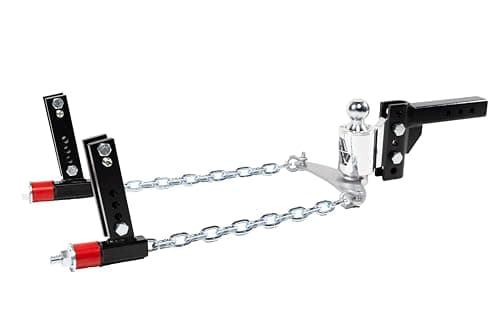 Andersen No-Sway Weight Distribution Hitch Chains and a urethane cone instead of steel spring bars, so it is the quietest and the lightest of the mainstream kits — and the only one most people can lift with one hand. If noise matters | Owners who care most about weight, noise and a short hookup | 7.5/ 10 | Check price on Amazon No buyable offer at the last price check. |
| 2 | 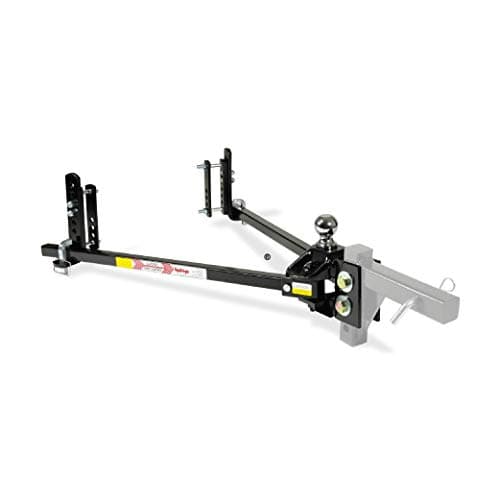 Equal-i-zer 4-Point Sway Control Hitch, 90-00-1001 Four-point sway control built into the head, so there is no friction bar to unclip before you back into a site — the single biggest quality-of-life difference for a first-timer. If sway resistance matters | Most half-ton trucks pulling a 5,000-10,000 lb trailer | 7.9/ 10 | |
| 3 | 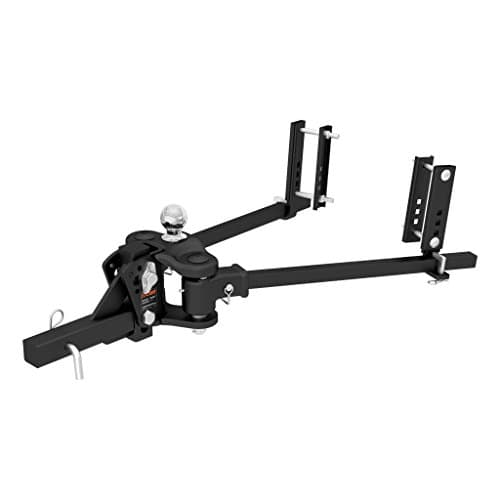 CURT TruTrack 4P Weight Distribution Hitch, 17500 CURT's answer to the four-point Equal-i-zer, with a 10,000 lb rating and an adjustable sway bias — generally a couple of hundred dollars under the hitch it is aimed at. The third option | Four-point sway control at a mid-range price | 7.9/ 10 |
Tap any row to jump to the full write-up. Prices come from Amazon and are read automatically — see each product below for the date.
The short answer
This is the most-asked head-to-head in the category, and most of the comparisons you find online are a list of specifications. The specifications are not where these two differ meaningfully. They differ in how they feel to live with.
They work differently, not just differently branded
The Equal-i-zer is a conventional bracket-and-bar hitch taken to its logical end. Two steel spring bars seat into brackets clamped on the trailer’s A-frame. Load transfers through the bars. Sway resistance comes from friction at four interfaces: each bar against its bracket pad, and each bar where it enters the head. Steel sliding on steel under several hundred pounds.
The Andersen throws out the spring bars. Two chains run from the head down to brackets on the A-frame, and tension is set by tightening the chains against a threaded adjuster. A urethane friction cone sits around the ball and resists the coupler rotating. Load transfers through chain tension; sway resistance comes from the cone.
That is why the Andersen weighs so much less: there are no heavy spring bars and no heavy brackets, just chains and a cone. The underlying mechanism of both is worth reading if this is new.
Side by side
| Andersen No-Sway | Equal-i-zer 4-point | |
|---|---|---|
| Load transfer | Chain tension | Steel spring bars |
| Sway control | Urethane friction cone | Four steel friction points |
| Gross trailer weight | 14,000 lb | 10,000 lb (this version) |
| Ball included | Yes, 2-5/16 in | No |
| Shank included | Yes | No |
| Noise | Quiet | Loud creaking in tight turns |
| Backing up | No disconnection needed | No disconnection needed |
| Wear parts | Urethane cone | Friction pads |
| Setup method | Chain tension by wrench and feel | Bracket height, then bar seating |
Setup: the Andersen is fiddlier, once
Both hitches need a correct initial setup and both reward doing it properly. The difference is what “correct” feels like.
On the Equal-i-zer you measure the truck’s fender heights unhitched, hitch up, set the bracket height so that the front fender comes back down by roughly half the amount it rose, and seat the bars. It is a measure-adjust-remeasure loop with discrete bracket holes, so there is a right answer you can land on.
On the Andersen you tighten the chains, and chain tension is continuous rather than stepped. That is more adjustable in principle and harder to get right the first time in practice, because there is no hole to pin — you are setting it by feel and by fender measurement. Owners who follow the measurement procedure report no trouble; owners who guess report a ride that is either harsh or ineffective.
The common mistake
The noise question, settled
The Equal-i-zer creaks. Not occasionally — routinely, in any tight low-speed turn, loudly enough to turn heads in a parking lot. The manufacturer treats it as normal operation, and it is: the friction producing the noise is the friction doing the sway control. Greasing the pads reduces the noise and reduces the sway control with it, which is the wrong trade.
The Andersen does not do this. There are no large steel friction surfaces to squeal. This is the single most common reason owners switch from one to the other, and it is a legitimate reason.
Who should buy which
Buy the Andersen if…
- You hook up and unhook frequently and lifting a 60-70 lb head onto the coupler is a real chore
- The creaking of a friction hitch would genuinely bother you
- You want the ball and shank in the box with no second order
- Your truck is lifted and you are installing the head at height
- Payload is tight enough that 30-40 lb of hitch weight matters
Buy the Equal-i-zer if…
- You tow a long trailer in open crosswind country and want maximum sway damping
- You want the hitch with the deepest pool of owner reports to read
- You would rather spend less on the hitch and more on a shank you choose
- You want a hitch with no urethane wear part in the load path
- Noise does not bother you
The verdict
Neither is a mistake. The Equal-i-zer is the stronger sway hitch and the better value once you account for the fact that it is the cheaper unit; the Andersen is the better hitch to own if you interact with it a lot.
If you are undecided and your tongue weight suits it, there is a third option worth looking at: the CURT TruTrack gives four-point friction with an adjustable bias at a price between the two, which is why it is in the table above.
What to remember
- The Equal-i-zer transfers load with steel spring bars and controls sway with four friction points.
- The Andersen transfers load with chain tension and controls sway with a urethane cone.
- Neither needs disconnecting before backing up.
- The Equal-i-zer is louder and cheaper; the Andersen is quieter, lighter and includes ball and shank.
- Both need the fender-height setup procedure, not a visual check.
The picks in full
Andersen No-Sway Weight Distribution Hitch
Andersen Hitches · Best for owners who care most about weight, noise and a short hookup
Chains and a urethane cone instead of steel spring bars, so it is the quietest and the lightest of the mainstream kits — and the only one most people can lift with one hand.
Key specifications
- Gross trailer weight rating
- 14,000 lb
- Shank
- 2 in shank, 4 in drop
- Ball
- 2-5/16 in included
- Sway control
- Friction cone, always engaged
Capacity figures read from Andersen Hitches weight distribution specifications, October 2026.
How it scored
- Sway control (25%)7
- Tongue-weight range (20%)8
- Backing up (20%)8
- Setup effort (15%)6
- Quietness (10%)10
- Price for capability (10%)6
Weighted average of the figures above. We did not test this product — see how we pick.
What it does well
- Quiet — the complaint that defines steel-bar hitches mostly goes away
- Much lighter than a bar-and-bracket kit, so hookup is a one-person job
- Ball and shank are included, which is rarer than it should be
What it is bad at
- Chain tension is set by feel and a wrench, which is fiddlier to get right the first time
- The urethane cone is a wear part you will eventually replace
- Price sits at the top of the range
Equal-i-zer 4-Point Sway Control Hitch, 90-00-1001
Equal-i-zer · Best for most half-ton trucks pulling a 5,000-10,000 lb trailer
Four-point sway control built into the head, so there is no friction bar to unclip before you back into a site — the single biggest quality-of-life difference for a first-timer.
Key specifications
- Trailer weight rating
- 10,000 lb
- Tongue weight rating
- 1,000 lb
- Sway control
- 4-point, integral to the head
- Included
- Weight distribution kit; shank and ball sold separately
Capacity figures read from Equal-i-zer product specifications, October 2026.
How it scored
- Sway control (25%)9
- Tongue-weight range (20%)8
- Backing up (20%)9
- Setup effort (15%)7
- Quietness (10%)5
- Price for capability (10%)7
Weighted average of the figures above. We did not test this product — see how we pick.
What it does well
- Sway control is always on — nothing to remember, nothing to remove
- Back up and turn sharply without unhooking anything
- Bracket height is adjustable in the field with a wrench, not a shop visit
What it is bad at
- It creaks and groans in tight turns; owners report this consistently and it is normal, not a fault
- Needs a shank and ball bought separately, which catches people out on price
- Heavier to lift onto the coupler than a friction-bar setup
Price as of October 5, 2026. #ad How this is funded
CURT TruTrack 4P Weight Distribution Hitch, 17500
CURT · Best for four-point sway control at a mid-range price
CURT's answer to the four-point Equal-i-zer, with a 10,000 lb rating and an adjustable sway bias — generally a couple of hundred dollars under the hitch it is aimed at.
Key specifications
- Gross trailer weight
- 10,000 lb
- Sway control
- 4-point, integral
- Adjustment
- Sway-control bias adjustable
- Included
- Weight distribution kit with sway control
Capacity figures read from CURT TruTrack specifications, October 2026.
How it scored
- Sway control (25%)9
- Tongue-weight range (20%)8
- Backing up (20%)9
- Setup effort (15%)6
- Quietness (10%)5
- Price for capability (10%)8
Weighted average of the figures above. We did not test this product — see how we pick.
What it does well
- Four points of sway control for less than the obvious four-point alternative
- Bias adjustment lets you dial sway resistance to the trailer
- No bar to unclip before backing
What it is bad at
- More parts to understand on first setup than a two-point kit
- Less owner experience published than the market leaders, so fewer reports to read
- Friction surfaces mean friction noise
Price as of October 5, 2026. #ad How this is funded
Common questions
Owners consistently report the Andersen controls sway well, but that four-point friction designs feel firmer in sustained crosswind. One urethane cone against four loaded steel interfaces is the mechanical difference.
The urethane cone is a wear part and gets replaced periodically; replacement cones are available from the maker. The chains, head and brackets are not consumables.
Steel friction surfaces sliding under load. The noise is the sway control working. Lubricating the pads quietens it and reduces sway resistance with it, so it is not a fix.
Sources
- Equal-i-zer published hitch specifications and bar ratings — read October 2026
- Andersen Hitches weight distribution hitch specifications — read October 2026
- CURT published weight distribution specifications — read October 2026
- Blue Ox SwayPro published specifications — read October 2026