Weight Distribution & Sway Control
Do You Actually Need A Weight Distribution Hitch?
There are three tests, they take ten minutes, and two of them do not involve buying anything.
By Mike M. ·
How this page is funded: we earn a commission if you buy through our links, at no extra cost to you. It never changes which product we rank first. Prices come from Amazon and are read automatically — each one shows the date it was read. Full disclosure.
Quick picks
If the answer is yes, these three cover the usual tongue weight bands. The chart page maps your number to a band.
| # | Product | Best for | Score | Price |
|---|---|---|---|---|
| 1 | 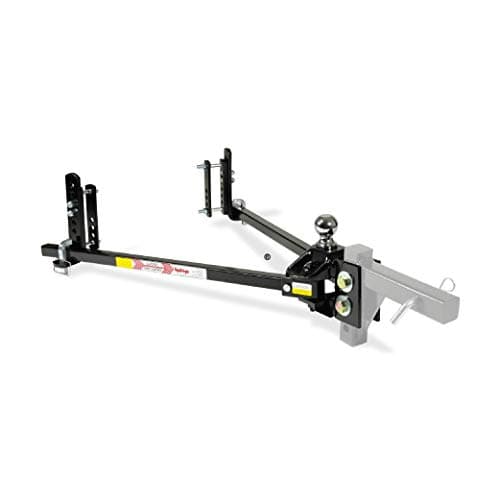 Equal-i-zer 4-Point Sway Control Hitch, 90-00-1001 Four-point sway control built into the head, so there is no friction bar to unclip before you back into a site — the single biggest quality-of-life difference for a first-timer. Most common answer | Most half-ton trucks pulling a 5,000-10,000 lb trailer | 7.9/ 10 | |
| 2 | 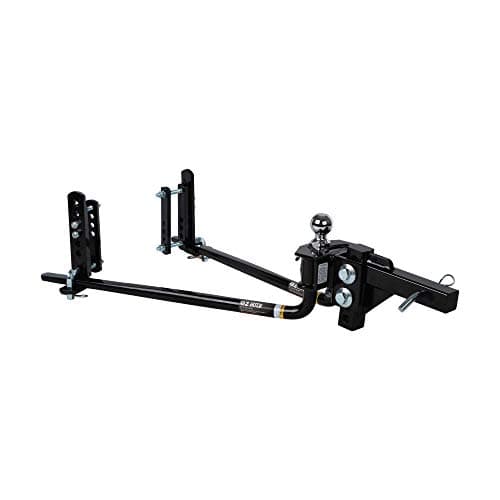 Fastway e2 2-Point Sway Control Round Bar Hitch, 94-00-1033 Equal-i-zer's own value line: two points of built-in sway control instead of four, at a price that leaves money for the shank and ball you still have to buy. | A first hitch on a 5,000-8,000 lb trailer, on a budget | 7.5/ 10 | |
| 3 | Equal-i-zer 4-Point Sway Control Hitch, 90-00-0601 The small-bar Equal-i-zer. Buying this instead of the 1,000 lb version is the fix for the harsh, over-sprung ride people complain about on light trailers. | Light trailers with a loaded tongue weight near 600 lb | 7.6/ 10 |
Tap any row to jump to the full write-up. Prices come from Amazon and are read automatically — see each product below for the date.
The short answer
This question gets asked constantly and answered badly, usually with a trailer weight threshold that someone made up. There is no universal pounds figure. There are three tests, and you should run all three.
Test 1: what does your manual say?
Open the towing section of your owner’s manual. Nearly every manufacturer states one of these, and the wording matters:
- A tongue weight threshold. “A weight-distributing hitch is required for trailers with a tongue weight over 500 lb.” If your measured tongue weight is over it, the answer is yes.
- A trailer weight threshold. “Weight distribution is required above 5,000 lb gross trailer weight.” Same logic.
- A two-tier towing capacity. Some manuals list a lower maximum trailer weight without weight distribution and a higher one with it. In that case the hitch is what unlocks the higher figure.
- A ratio. “Required when the trailer exceeds 50% of the vehicle’s weight.” Common on SUVs.
This is the authoritative answer for your vehicle. Not a forum, not a dealer, not this page. If the manual says required, it is required, and that matters for both safety and insurance.
The common mistake
Test 2: the two-inch squat test
This one costs nothing and takes ten minutes. You need a tape measure and a flat surface.
- 1
Measure unhitched
With the truck empty and on level ground, measure from the ground to the top of the front wheel arch and the rear wheel arch. Write both numbers down. - 2
Hitch up the loaded trailer
Couple the trailer, loaded the way you actually travel, on the same level ground. No weight distribution bars, if you have them — this is the baseline. - 3
Measure again
Same two points, same tape. The rear will be lower and the front will be higher. - 4
Compare
If the rear has dropped more than about 2 inches, or the front has risen more than about an inch, the geometry has changed enough to matter and you want weight distribution.
This test is useful because it measures what actually matters — whether the tongue load is changing the vehicle’s attitude enough to unload the front tires. A light trailer on a stiff three-quarter-ton may barely move the tape. A moderate trailer on a half-ton with soft rear springs can drop three inches.
Test 3: the half-the-vehicle-weight rule
A rough but genuinely useful heuristic: if the loaded trailer weighs more than about half what the tow vehicle weighs, you want weight distribution regardless of what the squat test shows.
The reasoning is about who is in charge in a disturbance. A 7,000 lb trailer behind a 5,500 lb half-ton is a trailer that has real authority over the truck; a 3,000 lb trailer behind the same truck does not. The closer the ratio gets to 1:1, the more the trailer dictates what the combination does, and the more you need the front axle fully loaded so the steering can argue back.
| Loaded trailer vs vehicle weight | Weight distribution |
|---|---|
| Under 40% | Usually unnecessary |
| 40-50% | Check the manual; probably worth it |
| 50-80% | Yes |
| Over 80% | Yes, and check you are inside the vehicle's ratings at all |
What it will not fix
A weight distribution hitch does not increase payload. If the subtraction in payload vs towing capacity says you are over the sticker, the hitch does not help — it relocates load, it does not delete it.
It also does not, on its own, stop sway. Many kits include sway control and many do not, and the two jobs are separate. If your complaint is wandering rather than squatting, read what causes trailer sway first.
If the answer is yes
Measure your loaded tongue weight, read the band off the selection chart, and buy a hitch with integral sway control in that band. Budget for a shank and a ball unless the kit includes them. Then set it up properly, which is a measured procedure rather than a guess.
What to remember
- Your owner's manual is the authoritative answer. Read the towing section.
- If the rear squats more than about 2 in with the loaded trailer hitched, you want weight distribution.
- If the loaded trailer exceeds roughly half the vehicle's weight, you want it.
- It never increases payload, and it is not the same thing as sway control.
The picks in full
Equal-i-zer 4-Point Sway Control Hitch, 90-00-1001
Equal-i-zer · Best for most half-ton trucks pulling a 5,000-10,000 lb trailer
Four-point sway control built into the head, so there is no friction bar to unclip before you back into a site — the single biggest quality-of-life difference for a first-timer.
Key specifications
- Trailer weight rating
- 10,000 lb
- Tongue weight rating
- 1,000 lb
- Sway control
- 4-point, integral to the head
- Included
- Weight distribution kit; shank and ball sold separately
Capacity figures read from Equal-i-zer product specifications, October 2026.
How it scored
- Sway control (25%)9
- Tongue-weight range (20%)8
- Backing up (20%)9
- Setup effort (15%)7
- Quietness (10%)5
- Price for capability (10%)7
Weighted average of the figures above. We did not test this product — see how we pick.
What it does well
- Sway control is always on — nothing to remember, nothing to remove
- Back up and turn sharply without unhooking anything
- Bracket height is adjustable in the field with a wrench, not a shop visit
What it is bad at
- It creaks and groans in tight turns; owners report this consistently and it is normal, not a fault
- Needs a shank and ball bought separately, which catches people out on price
- Heavier to lift onto the coupler than a friction-bar setup
Price as of October 5, 2026. #ad How this is funded
Fastway e2 2-Point Sway Control Round Bar Hitch, 94-00-1033
Fastway · Best for a first hitch on a 5,000-8,000 lb trailer, on a budget
Equal-i-zer's own value line: two points of built-in sway control instead of four, at a price that leaves money for the shank and ball you still have to buy.
Key specifications
- Trailer weight rating
- 10,000 lb
- Tongue weight rating
- 1,000 lb
- Sway control
- 2-point, integral
- Included
- Weight distribution kit; shank and ball sold separately
Capacity figures read from Fastway e2 product specifications (Equal-i-zer / Progress Mfg), October 2026.
How it scored
- Sway control (25%)7
- Tongue-weight range (20%)8
- Backing up (20%)9
- Setup effort (15%)7
- Quietness (10%)5
- Price for capability (10%)8
Weighted average of the figures above. We did not test this product — see how we pick.
What it does well
- Integral sway control, so nothing to unclip before backing
- Cheaper than the four-point Equal-i-zer with most of the behavior
- Round bars are more forgiving of an imperfect bracket height
What it is bad at
- Two friction points rather than four, so it works less hard in a crosswind
- Still creaks, same as its four-point sibling
- Shank and ball sold separately
Price as of October 5, 2026. #ad How this is funded
Equal-i-zer 4-Point Sway Control Hitch, 90-00-0601
Equal-i-zer · Best for light trailers with a loaded tongue weight near 600 lb
The small-bar Equal-i-zer. Buying this instead of the 1,000 lb version is the fix for the harsh, over-sprung ride people complain about on light trailers.
Key specifications
- Trailer weight rating
- 6,000 lb
- Tongue weight rating
- 600 lb
- Sway control
- 4-point, integral to the head
- Included
- Weight distribution kit; shank and ball sold separately
Capacity figures read from Equal-i-zer product specifications, October 2026.
How it scored
- Sway control (25%)9
- Tongue-weight range (20%)6
- Backing up (20%)9
- Setup effort (15%)8
- Quietness (10%)5
- Price for capability (10%)6
Weighted average of the figures above. We did not test this product — see how we pick.
What it does well
- Correctly sprung for a 400-600 lb tongue, where the 1,000 lb bars ride stiff
- Same four-point sway geometry as the bigger versions
- Light enough that one person can hook up without a fight
What it is bad at
- No headroom if you upgrade trailers later — the bars are the limit, not a suggestion
- Costs close to the 1,000 lb kit, so the saving is in ride quality, not money
- Shank and ball still sold separately
Price as of October 5, 2026. #ad How this is funded
Common questions
There is no universal figure. Makers set it either as a tongue weight threshold — often 350–600 lb — or as a share of vehicle weight, commonly 50%. Your own manual is the answer.
The truck will physically tow, but you would be outside the manufacturer’s stated requirements, which has safety and insurance implications. If the manual requires it, fit it.
It will make the truck sit closer to level and restore steering and braking feel, which most owners describe as a large improvement. It can also firm up the ride over bumps, especially if the bars are over-rated for your tongue weight.
Sources
- Equal-i-zer published hitch specifications and bar ratings — read October 2026
- SAE J684 — trailer couplings, hitches and safety chains — read October 2026
- SAE J2807 — tow-vehicle gross combination weight rating procedure — read October 2026
- 49 CFR 393.70 — coupling devices and towing methods — read October 2026