Weight Distribution & Sway Control
The Best Sway Control Hitch For A Travel Trailer
Sway is a loading problem about half the time and a hardware problem the rest. Here is how to tell which one you have before you spend anything.
By Mike M. ·
How this page is funded: we earn a commission if you buy through our links, at no extra cost to you. It never changes which product we rank first. Prices come from Amazon and are read automatically — each one shows the date it was read. Full disclosure.
Quick picks
Ranked with sway control weighted highest. Every pick resists sway without a bar you have to unclip, except the retrofit kit at the bottom, which is there for hitches that have no sway control at all.
| # | Product | Best for | Score | Price |
|---|---|---|---|---|
| 1 | 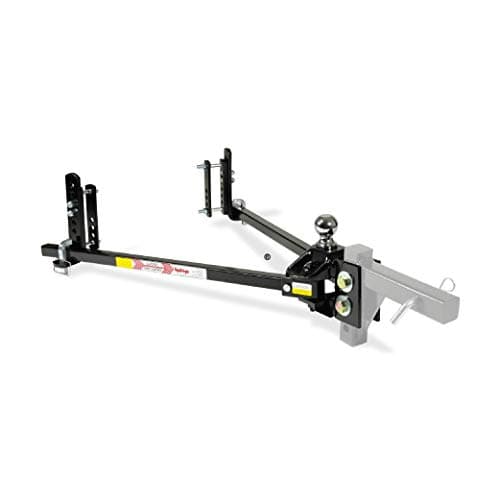 Equal-i-zer 4-Point Sway Control Hitch, 90-00-1001 Four-point sway control built into the head, so there is no friction bar to unclip before you back into a site — the single biggest quality-of-life difference for a first-timer. Top pick | Most half-ton trucks pulling a 5,000-10,000 lb trailer | 7.9/ 10 | |
| 2 | 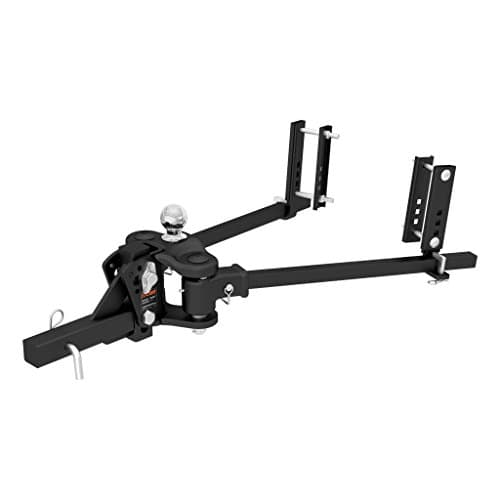 CURT TruTrack 4P Weight Distribution Hitch, 17500 CURT's answer to the four-point Equal-i-zer, with a 10,000 lb rating and an adjustable sway bias — generally a couple of hundred dollars under the hitch it is aimed at. Best value | Four-point sway control at a mid-range price | 7.9/ 10 | |
| 3 | 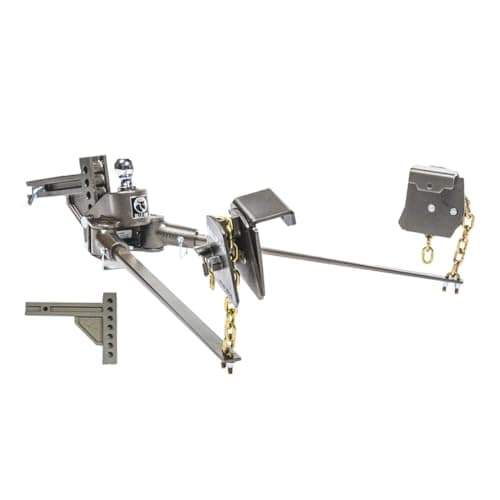 Blue Ox SwayPro BXW1500 Weight Distributing Hitch Same quiet under-slung design as the BXW1000 with a 15,000 lb ceiling, for the trailer that is at the top of a three-quarter-ton's rating. | Heavy bumper-pull trailers up to 15,000 lb | 7.7/ 10 | |
| 4 | 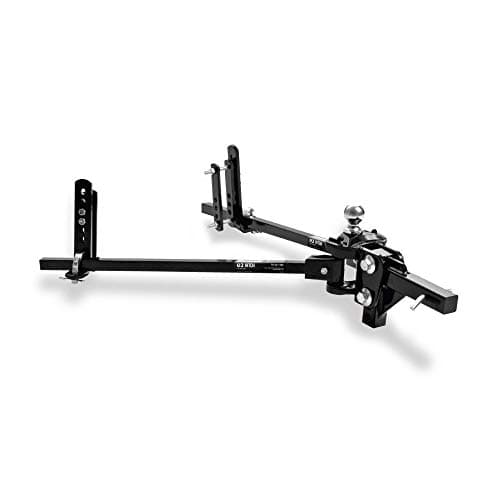 Fastway e2 2-Point Sway Control Trunnion Hitch, 92-00-1200 The trunnion version sits the bars higher than round bars do, which matters on a steep driveway, and this one includes the shank. | 8,000-12,000 lb trailers where ground clearance matters | 7.7/ 10 | |
| 5 | 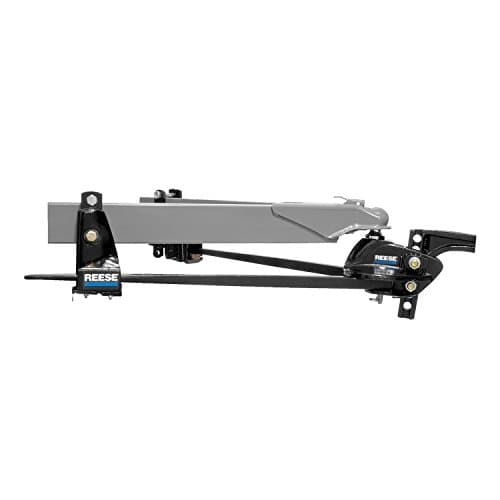 Reese Steadi-Flex Trunnion Weight-Distributing Hitch Kit, 66560 Reese's integrated-sway trunnion kit, shipped with its shank. The selling point is that the friction surfaces are enclosed, so grit does less to them over a season. | Owners who want a sealed, low-maintenance friction system | 7.6/ 10 | |
| 6 | 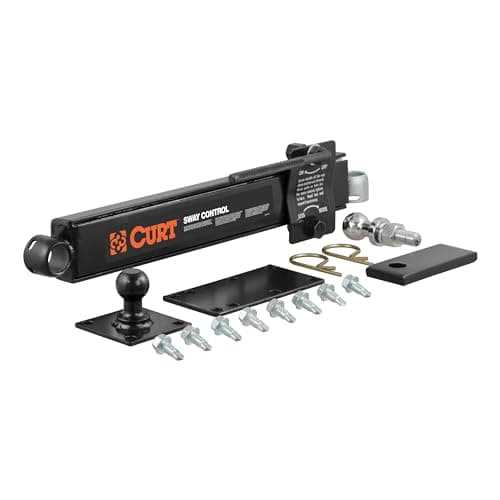 CURT Trailer Sway Control Kit, 17200 A friction bar and the brackets to mount it. The honest use for this is retrofitting a plain weight distribution hitch, not replacing a hitch that has sway control built in. Retrofit option | Adding sway control to a hitch that has none | 5.4/ 10 |
Tap any row to jump to the full write-up. Prices come from Amazon and are read automatically — see each product below for the date.
The short answer
Trailer sway is the trailer pivoting left and right around the hitch ball while the truck tries to go straight. At its mild end it is an unsettling wander you correct without thinking. At its serious end it builds — each correction feeding the next oscillation — until the trailer is steering the truck. That progression is why sway gets treated as a safety issue rather than a comfort one.
The uncomfortable part of this page is that a hitch is often not the answer. A trailer with too little tongue weight will sway with the best hitch in the world fitted, because the fundamental geometry is wrong. The mechanism, and how to diagnose which problem you have is the page to read first if you are already experiencing sway.
Three checks before you spend money
1. Tongue weight percentage. Target 10–15% of the loaded trailer weight on the tongue. Below about 10% a trailer becomes genuinely sway-prone, and the usual cause is heavy cargo loaded behind the axles. A generator in the rear bumper storage, two full bikes on a rear rack, and a loaded rear pass-through can take a correctly balanced trailer below the threshold without changing its total weight at all.
2. Tire pressure. Trailer tires are generally specified at the maximum cold pressure on the sidewall, which is often 50–80 psi. Soft tires flex, and sidewall flex reads as sway. The pressure guide.
3. Speed. Sway is speed-dependent and the onset is often sharp. Many ST trailer tires carry a speed rating in the 65–81 mph range, and plenty of trailers that are stable at 60 are not at 70. If sway starts at a specific speed, that is information.
The common mistake
What the hardware actually contributes
Friction-based sway control resists the rate at which the trailer can rotate around the ball. It does not lock the trailer straight — it cannot, because the trailer has to articulate to go round a corner. What it does is damp the oscillation, so a disturbance that would have built into a sway cycle decays instead.
That is why four friction points beat two, and two beat one. More damping, faster decay. And it is why a passing semi, a crosswind gust or a mid-corner bump produces a single correction on a well-damped rig and a sequence of corrections on a poorly damped one.
Weight distribution contributes separately and genuinely: by loading the trailer axles and the truck’s front axle, it keeps the tow vehicle’s steering effective, which is what lets you correct a developing sway rather than ride it out.
What about airbags?
Air springs on the tow vehicle’s rear axle level the truck, which looks like the same outcome as weight distribution. It is not. Airbags support the squat; they do not transfer load forward onto the front axle, and they do nothing for sway. A truck sitting level on airbags with a tail-heavy trailer behind it is still a sway-prone rig with a flattering stance. The two compared properly.
If you already own a hitch with no sway control
A bolt-on friction kit is the cheap route. It needs a spare hole in your shank for a second ball, a bracket clamped to the A-frame, and the discipline to unclip the arm before every tight turn. One friction point is much weaker than four, and the bracket bolts can slip on a painted A-frame if they are not tight.
It is a real improvement over nothing. It is not equivalent to buying a hitch with integral sway control, and if you are towing anything near your vehicle’s limit the upgrade is the better spend.
The verdict
Check the loading, then buy integral four-point sway control. The Equal-i-zer and the CURT TruTrack are the two to choose between, and the choice comes down to whether an adjustable bias is worth anything to you. For a long trailer at the top of a three-quarter-ton’s rating, the Blue Ox SwayPro at 15,000 lb is the quiet heavy-duty option. The retrofit friction kit is for the hitch you already own.
What to remember
- Half of all trailer sway is loading, not hardware. Check tongue weight percentage, tire pressure and speed first.
- Friction sway control damps the oscillation; it does not lock the trailer straight.
- Four friction points damp faster than two, and two faster than one.
- Airbags level the truck but do nothing for sway and do not transfer load forward.
- A retrofit friction bar helps, but has to be unclipped before every tight turn.
The picks in full
Equal-i-zer 4-Point Sway Control Hitch, 90-00-1001
Equal-i-zer · Best for most half-ton trucks pulling a 5,000-10,000 lb trailer
Four-point sway control built into the head, so there is no friction bar to unclip before you back into a site — the single biggest quality-of-life difference for a first-timer.
Key specifications
- Trailer weight rating
- 10,000 lb
- Tongue weight rating
- 1,000 lb
- Sway control
- 4-point, integral to the head
- Included
- Weight distribution kit; shank and ball sold separately
Capacity figures read from Equal-i-zer product specifications, October 2026.
How it scored
- Sway control (25%)9
- Tongue-weight range (20%)8
- Backing up (20%)9
- Setup effort (15%)7
- Quietness (10%)5
- Price for capability (10%)7
Weighted average of the figures above. We did not test this product — see how we pick.
What it does well
- Sway control is always on — nothing to remember, nothing to remove
- Back up and turn sharply without unhooking anything
- Bracket height is adjustable in the field with a wrench, not a shop visit
What it is bad at
- It creaks and groans in tight turns; owners report this consistently and it is normal, not a fault
- Needs a shank and ball bought separately, which catches people out on price
- Heavier to lift onto the coupler than a friction-bar setup
Price as of October 5, 2026. #ad How this is funded
CURT TruTrack 4P Weight Distribution Hitch, 17500
CURT · Best for four-point sway control at a mid-range price
CURT's answer to the four-point Equal-i-zer, with a 10,000 lb rating and an adjustable sway bias — generally a couple of hundred dollars under the hitch it is aimed at.
Key specifications
- Gross trailer weight
- 10,000 lb
- Sway control
- 4-point, integral
- Adjustment
- Sway-control bias adjustable
- Included
- Weight distribution kit with sway control
Capacity figures read from CURT TruTrack specifications, October 2026.
How it scored
- Sway control (25%)9
- Tongue-weight range (20%)8
- Backing up (20%)9
- Setup effort (15%)6
- Quietness (10%)5
- Price for capability (10%)8
Weighted average of the figures above. We did not test this product — see how we pick.
What it does well
- Four points of sway control for less than the obvious four-point alternative
- Bias adjustment lets you dial sway resistance to the trailer
- No bar to unclip before backing
What it is bad at
- More parts to understand on first setup than a two-point kit
- Less owner experience published than the market leaders, so fewer reports to read
- Friction surfaces mean friction noise
Price as of October 5, 2026. #ad How this is funded
Blue Ox SwayPro BXW1500 Weight Distributing Hitch
Blue Ox · Best for heavy bumper-pull trailers up to 15,000 lb
Same quiet under-slung design as the BXW1000 with a 15,000 lb ceiling, for the trailer that is at the top of a three-quarter-ton's rating.
Key specifications
- Maximum towing
- 15,000 lb
- Shank
- 7-hole, 2 in receiver
- Sway control
- Spring-bar tension, always engaged
- Noise
- No friction surfaces to squeal
Capacity figures read from Blue Ox SwayPro specifications, October 2026.
How it scored
- Sway control (25%)8
- Tongue-weight range (20%)9
- Backing up (20%)8
- Setup effort (15%)6
- Quietness (10%)9
- Price for capability (10%)5
Weighted average of the figures above. We did not test this product — see how we pick.
What it does well
- Heavy capacity without going to a friction-bracket design
- Quiet in turns
- Latch-style hookup
What it is bad at
- Over-sprung for a light trailer — do not buy for headroom you do not need
- Expensive
- Chain setup takes patience the first time
Price as of October 5, 2026. #ad How this is funded
Fastway e2 2-Point Sway Control Trunnion Hitch, 92-00-1200
Fastway · Best for 8,000-12,000 lb trailers where ground clearance matters
The trunnion version sits the bars higher than round bars do, which matters on a steep driveway, and this one includes the shank.
Key specifications
- Trailer weight rating
- 12,000 lb
- Tongue weight rating
- 1,200 lb
- Sway control
- 2-point, integral
- Included
- Standard hitch shank included; ball sold separately
Capacity figures read from Fastway e2 product specifications (Equal-i-zer / Progress Mfg), October 2026.
How it scored
- Sway control (25%)7
- Tongue-weight range (20%)9
- Backing up (20%)9
- Setup effort (15%)7
- Quietness (10%)5
- Price for capability (10%)8
Weighted average of the figures above. We did not test this product — see how we pick.
What it does well
- Trunnion bars give more clearance than round bars at the same rating
- Shank included
- Good match for a loaded 30-33 ft trailer behind a half-ton
What it is bad at
- Trunnion heads are slightly fussier to index correctly on first setup
- Two-point sway control only
- Noisy in tight turns
Price as of October 5, 2026. #ad How this is funded
Reese Steadi-Flex Trunnion Weight-Distributing Hitch Kit, 66560
Reese · Best for owners who want a sealed, low-maintenance friction system
Reese's integrated-sway trunnion kit, shipped with its shank. The selling point is that the friction surfaces are enclosed, so grit does less to them over a season.
Key specifications
- Gross trailer weight
- 12,000 lb
- Bars
- Trunnion
- Included
- Shank included
- Sway control
- Integrated
How it scored
- Sway control (25%)8
- Tongue-weight range (20%)8
- Backing up (20%)8
- Setup effort (15%)7
- Quietness (10%)7
- Price for capability (10%)6
Weighted average of the figures above. We did not test this product — see how we pick.
What it does well
- Integrated sway control with no separate bar
- Enclosed friction surfaces shrug off road grit
- Shank in the box
What it is bad at
- Priced near the premium kits without the premium name recognition
- Heavy
- 12,000 lb bars are too stiff for a light trailer
Price as of October 5, 2026. #ad How this is funded
CURT Trailer Sway Control Kit, 17200
CURT · Best for adding sway control to a hitch that has none
A friction bar and the brackets to mount it. The honest use for this is retrofitting a plain weight distribution hitch, not replacing a hitch that has sway control built in.
Key specifications
- Type
- Friction sway control bar
- Use
- Add-on for weight distribution hitches
- Mounting
- A-frame bracket plus ball on the shank
- Operation
- Manual — must be disconnected to back sharply
Capacity figures read from CURT 17200 specifications, October 2026.
How it scored
- Sway control (25%)4
- Tongue-weight range (20%)6
- Backing up (20%)3
- Setup effort (15%)7
- Quietness (10%)6
- Price for capability (10%)9
Weighted average of the figures above. We did not test this product — see how we pick.
What it does well
- Cheapest route to some sway resistance on a hitch that has none
- Simple, serviceable, nothing to go wrong electronically
- Works with most conventional round-bar kits
What it is bad at
- Must be unclipped before tight turns and backing, every single time
- One friction point is much weaker than an integrated four-point head
- Needs a second ball and a spare hole in the shank
Price as of October 5, 2026. #ad How this is funded
Common questions
It varies by rig, but the commonly reported onset is between 55 and 70 mph. The threshold is often sharp, so a consistent speed is a strong signal the rig is marginal rather than the road being at fault.
It damps sway so a disturbance decays instead of building. It cannot eliminate pivoting — the trailer has to articulate to turn — and it will not rescue a trailer loaded with too little tongue weight.
Dual-cam systems hold the bars in a fixed position until a set force is exceeded, giving firm resistance in normal driving and releasing at larger angles. Owners rate them highly on long trailers. Four-point friction is simpler, cheaper and far more widely stocked.
Sources
- Equal-i-zer published hitch specifications and bar ratings — read October 2026
- Blue Ox SwayPro published specifications — read October 2026
- CURT published weight distribution specifications — read October 2026
- Andersen Hitches weight distribution hitch specifications — read October 2026
- SAE J684 — trailer couplings, hitches and safety chains — read October 2026
- 49 CFR 393.70 — coupling devices and towing methods — read October 2026