Weight Distribution & Sway Control
Andersen Weight Distribution Hitch Problems, Sorted By Cause
Most reported Andersen problems are setup or wear items, not failures. Here is which is which, what to do about each, and when the hitch is simply the wrong one for your trailer.
By Mike M. ·
How this page is funded: we earn a commission if you buy through our links, at no extra cost to you. It never changes which product we rank first. Prices come from Amazon and are read automatically — each one shows the date it was read. Full disclosure.
Quick picks
The hitch itself, plus the two hitches owners most often move to when an Andersen turns out to be the wrong fit for their trailer.
| # | Product | Best for | Score | Price |
|---|---|---|---|---|
| 1 | 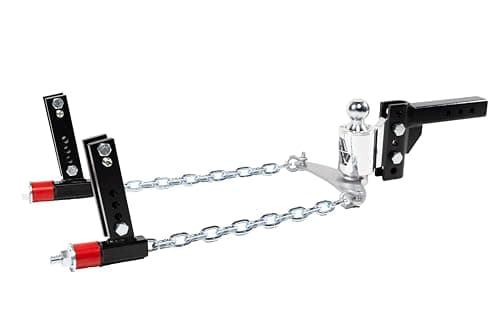 Andersen No-Sway Weight Distribution Hitch Chains and a urethane cone instead of steel spring bars, so it is the quietest and the lightest of the mainstream kits — and the only one most people can lift with one hand. The hitch in question | Owners who care most about weight, noise and a short hookup | 7.5/ 10 | Check price on Amazon No buyable offer at the last price check. |
| 2 | 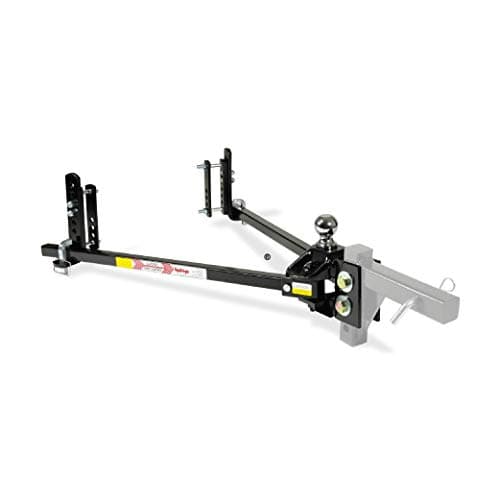 Equal-i-zer 4-Point Sway Control Hitch, 90-00-1001 Four-point sway control built into the head, so there is no friction bar to unclip before you back into a site — the single biggest quality-of-life difference for a first-timer. If you need more sway resistance | Most half-ton trucks pulling a 5,000-10,000 lb trailer | 7.9/ 10 | |
| 3 | 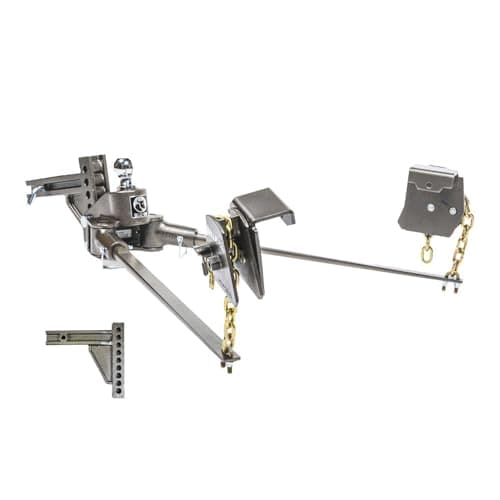 Blue Ox SwayPro BXW1000-S Weight Distributing Hitch Chain-tensioned spring bars that run under the A-frame rather than clamping onto it — quieter than a bracket hitch, and the hookup is a latch rather than a lift. If you want quiet with steel bars | Owners who want a quiet, under-slung bar setup | 7.5/ 10 |
Tap any row to jump to the full write-up. Prices come from Amazon and are read automatically — see each product below for the date.
The short answer
The Andersen No-Sway is built on a different principle from every steel-bar hitch, which is why the complaints about it are different too. Instead of spring bars clamped into brackets, it uses two chains under tension pulling down on the trailer tongue, with sway resistance coming from a urethane friction cone squeezed between the ball mount and the coupler. That buys roughly half the weight of a conventional kit and near silence. It also means the wear items and the setup errors are not the ones owners of other hitches are used to.
Urethane cone: the tapered polymer bushing that sits between the Andersen ball platform and the trailer coupler. Tightening the hitch squeezes it, and the friction it generates is where all of the sway resistance comes from. It is a wear part by design, not a structural one.
Problem: the chains are loose after a few miles
This is the single most common report and it is normal. On the first tow, the chain links seat into the brackets, the cone compresses slightly, and the whole assembly takes up its working clearance. Tension that was correct in the driveway reads low after twenty miles.
The fix is procedure, not parts: set the tension, drive a few miles, stop and retension. Then check it again at the next fuel stop on the first long trip. After the assembly has bedded in, tension holds for a season.
The common mistake
Problem: the cone is worn, cracked or flattened
The cone is a consumable. It takes every bit of the friction that would otherwise be taken by steel bracket faces on a conventional hitch, and the trade for silence is that a polymer part absorbs the wear instead of a steel one. Owners typically report replacing it every few seasons, sooner with heavy mileage or a tongue weight at the top of the hitch’s range.
Signs it is due: sway resistance noticeably worse than it was, a visible lip or flat spot where the coupler sits, cracking at the taper, or the hitch needing more tension than it used to for the same tongue rise. Replacement cones are a stocked spare, and swapping one is a driveway job.
Budget for it. A hitch with a consumable in the load path is not worse than one without, but it is a different ownership cost, and it belongs in the comparison when you are deciding between this and a steel-bar kit.
Problem: clunking or rattling at low speed
Three causes, in the order worth checking:
- 1
Check chain tension first
Slack chains let the tongue move against the cone and knock. Retension to the specified tongue rise, not to feel. - 2
Check the cone is seated and lubricated per the maker's instructions
A dry or misseated cone can chatter against the coupler. Follow Andersen's own guidance here rather than general hitch advice — this design does not want grease in the places a steel hitch does. - 3
Check the ball and coupler, not the hitch
A worn coupler latch or a ball one size down from the coupler produces exactly this noise on any hitch. Confirm the ball matches your coupler before blaming the weight distribution.
That last one catches a surprising number of people. The ball size chart covers which ball your coupler actually needs; a 2-5/16 in coupler sitting on a 2 in ball rattles, then eventually comes off.
Problem: the brackets will not fit the A-frame
Not a fault — a measurement that should have happened before the order. The chain brackets clamp to the A-frame rails and need clear, straight, unobstructed rail at the right distance from the coupler. Trailers with a shallow A-frame angle, a front generator tray, a battery box mounted forward, or a propane cover that overhangs the rails can all block the position the brackets need.
Measure before buying: the clear straight run on each rail, the rail height, and whether anything bolted to the frame sits in the first 30 in behind the coupler. If it does not fit, the hitch is not defective and it is not the one for your trailer.
When the Andersen is simply the wrong hitch for you
Three situations where owners reasonably move on, and what they move to:
You need maximum sway resistance. A single friction cone does less than four separate steel friction points. If you tow a long, tall trailer in crosswinds and want the most aggressive sway control available in this class, the Equal-i-zer is the honest answer, and you accept its groan as the price. The head-to-head comparison lays out both.
You want quiet without a consumable. The Blue Ox SwayPro runs steel bars under the A-frame on chains with no clamped bracket faces, so it is nearly as quiet as the Andersen without a urethane wear part in the load path.
Your tongue weight is at the edge of the range. Any hitch run at the top of its rating wears faster and is less forgiving of setup error. Confirm your measured figure against the selection chart before concluding the hitch is at fault.
What to remember
- Chains going slack after the first few miles is bedding-in. Retension and recheck; it is not a failure.
- The urethane cone is a consumable. Plan on replacing it every few seasons.
- Set tension by the specified tongue rise, never by feel — over-tightening wears the cone without adding sway control.
- Low-speed clunking is often a mismatched ball or a worn coupler, not the hitch.
- Measure your A-frame before ordering: shallow angles, battery boxes and generator trays block the bracket positions.
- Cracked or deformed steel brackets are the one symptom to stop towing over and inspect properly.
How we assembled this
We do not own an Andersen hitch and have not towed with one. What is above is a reading of Andersen’s own published documentation and specifications, cross-checked against what owners consistently report, and it is stated as reporting rather than as experience. Where our sources disagreed with a popular forum claim, we kept the manufacturer’s position and said so. Our method is on how we pick.
The picks in full
Andersen No-Sway Weight Distribution Hitch
Andersen Hitches · Best for owners who care most about weight, noise and a short hookup
Chains and a urethane cone instead of steel spring bars, so it is the quietest and the lightest of the mainstream kits — and the only one most people can lift with one hand.
Key specifications
- Gross trailer weight rating
- 14,000 lb
- Shank
- 2 in shank, 4 in drop
- Ball
- 2-5/16 in included
- Sway control
- Friction cone, always engaged
Capacity figures read from Andersen Hitches weight distribution specifications, October 2026.
How it scored
- Sway control (25%)7
- Tongue-weight range (20%)8
- Backing up (20%)8
- Setup effort (15%)6
- Quietness (10%)10
- Price for capability (10%)6
Weighted average of the figures above. We did not test this product — see how we pick.
What it does well
- Quiet — the complaint that defines steel-bar hitches mostly goes away
- Much lighter than a bar-and-bracket kit, so hookup is a one-person job
- Ball and shank are included, which is rarer than it should be
What it is bad at
- Chain tension is set by feel and a wrench, which is fiddlier to get right the first time
- The urethane cone is a wear part you will eventually replace
- Price sits at the top of the range
Equal-i-zer 4-Point Sway Control Hitch, 90-00-1001
Equal-i-zer · Best for most half-ton trucks pulling a 5,000-10,000 lb trailer
Four-point sway control built into the head, so there is no friction bar to unclip before you back into a site — the single biggest quality-of-life difference for a first-timer.
Key specifications
- Trailer weight rating
- 10,000 lb
- Tongue weight rating
- 1,000 lb
- Sway control
- 4-point, integral to the head
- Included
- Weight distribution kit; shank and ball sold separately
Capacity figures read from Equal-i-zer product specifications, October 2026.
How it scored
- Sway control (25%)9
- Tongue-weight range (20%)8
- Backing up (20%)9
- Setup effort (15%)7
- Quietness (10%)5
- Price for capability (10%)7
Weighted average of the figures above. We did not test this product — see how we pick.
What it does well
- Sway control is always on — nothing to remember, nothing to remove
- Back up and turn sharply without unhooking anything
- Bracket height is adjustable in the field with a wrench, not a shop visit
What it is bad at
- It creaks and groans in tight turns; owners report this consistently and it is normal, not a fault
- Needs a shank and ball bought separately, which catches people out on price
- Heavier to lift onto the coupler than a friction-bar setup
Price as of October 10, 2026. #ad How this is funded
Blue Ox SwayPro BXW1000-S Weight Distributing Hitch
Blue Ox · Best for owners who want a quiet, under-slung bar setup
Chain-tensioned spring bars that run under the A-frame rather than clamping onto it — quieter than a bracket hitch, and the hookup is a latch rather than a lift.
Key specifications
- Tongue weight
- 1,000 lb
- Towing capacity
- 10,000 lb
- Shank
- 9-hole, 2 in receiver
- Sway control
- Spring-bar tension, always engaged
Capacity figures read from Blue Ox SwayPro specifications, October 2026.
How it scored
- Sway control (25%)8
- Tongue-weight range (20%)8
- Backing up (20%)8
- Setup effort (15%)6
- Quietness (10%)9
- Price for capability (10%)5
Weighted average of the figures above. We did not test this product — see how we pick.
What it does well
- Notably quieter than bracket-style friction hitches
- Clamp-on latches make hooking up quick once set
- Bars stay under tension through a turn, so backing is normal
What it is bad at
- Most expensive option in this range
- Initial setup is the fussiest here — chain link count has to be right
- Shank included, ball is not
Price as of October 10, 2026. #ad How this is funded
Common questions
On the first few tows it is bedding-in — links seat and the cone compresses. Retension after a few miles and again at the next stop. If it keeps dropping after that, check the cone for wear and the brackets for deformation.
It is a consumable — commonly every few seasons, sooner with high mileage or a heavy tongue. Replace it when sway resistance drops off, the taper cracks, or it needs more tension than it used to for the same tongue rise.
Yes, by a wide margin — there are no clamped steel faces to groan. The trade is a wearing urethane cone and less sway resistance than four steel friction points give.
No. The brackets need clear straight rail at a set distance from the coupler, and battery boxes, generator trays and propane covers often occupy it. Measure the first 30 in of each rail before ordering.
Sources
- Equal-i-zer published hitch specifications and bar ratings — read October 2026
- Andersen Hitches weight distribution hitch specifications — read October 2026
- Reese published weight-distributing hitch specifications — read October 2026
- CURT published weight distribution specifications — read October 2026
- Blue Ox SwayPro published specifications — read October 2026
- SAE J684 — trailer couplings, hitches and safety chains — read October 2026