Weight Distribution & Sway Control
Blue Ox SwayPro vs Equal-i-zer
One is quiet and fussy to set up. One creaks in turns and costs a lot less. The noise is the real decision.
By Mike M. ·
How this page is funded: we earn a commission if you buy through our links, at no extra cost to you. It never changes which product we rank first. Prices come from Amazon and are read automatically — each one shows the date it was read. Full disclosure.
Quick picks
Both hitches at both common bar ratings, scored on the same hitch rubric: sway control (25%), tongue-weight range (20%), backing up (20%), setup effort (15%), quietness (10%) and price for capability (10%).
| # | Product | Best for | Score | Price |
|---|---|---|---|---|
| 1 | 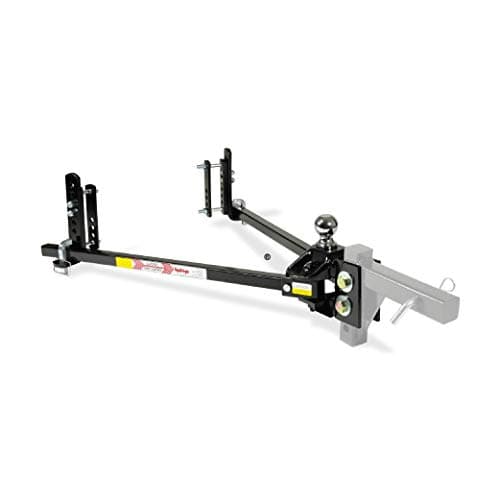 Equal-i-zer 4-Point Sway Control Hitch, 90-00-1001 Four-point sway control built into the head, so there is no friction bar to unclip before you back into a site — the single biggest quality-of-life difference for a first-timer. Top pick overall | Most half-ton trucks pulling a 5,000-10,000 lb trailer | 7.9/ 10 | |
| 2 | 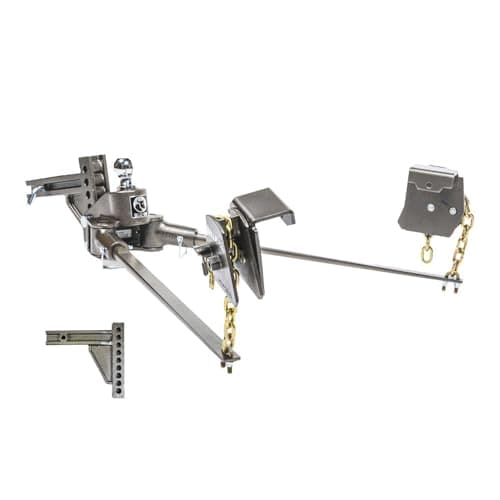 Blue Ox SwayPro BXW1000-S Weight Distributing Hitch Chain-tensioned spring bars that run under the A-frame rather than clamping onto it — quieter than a bracket hitch, and the hookup is a latch rather than a lift. Quietest | Owners who want a quiet, under-slung bar setup | 7.5/ 10 | |
| 3 | Equal-i-zer 4-Point Sway Control Hitch, 90-00-0601 The small-bar Equal-i-zer. Buying this instead of the 1,000 lb version is the fix for the harsh, over-sprung ride people complain about on light trailers. Best for a light trailer | Light trailers with a loaded tongue weight near 600 lb | 7.6/ 10 | |
| 4 | 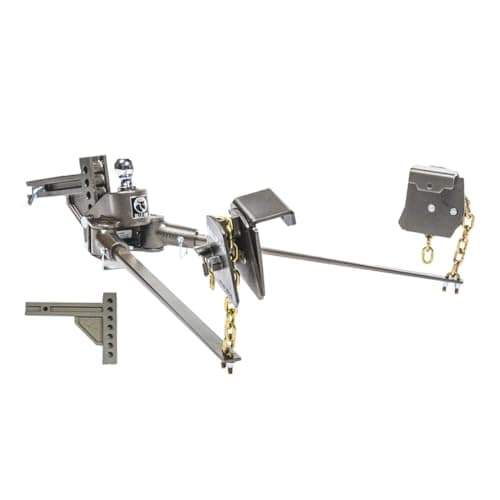 Blue Ox SwayPro BXW1500 Weight Distributing Hitch Same quiet under-slung design as the BXW1000 with a 15,000 lb ceiling, for the trailer that is at the top of a three-quarter-ton's rating. Heaviest capacity | Heavy bumper-pull trailers up to 15,000 lb | 7.7/ 10 |
Tap any row to jump to the full write-up. Prices come from Amazon and are read automatically — see each product below for the date.
The short answer
These two hitches solve the same two problems in almost opposite ways. Both move weight forward onto your front axle and both resist sway. But Blue Ox does its sway control with spring-bar tension and no rubbing surfaces, while Equal-i-zer does it with deliberate friction at four points. Everything that follows — the noise, the setup, the price — comes out of that single design split.
How each one actually resists sway
Equal-i-zer builds its sway control into the head. The spring bars sit in sockets that rub against the head casting, and the bar ends rest on brackets that rub against the trailer frame. Four rubbing surfaces, always engaged, resisting any attempt by the trailer to pivot. Nothing to switch on and nothing to remove.
Blue Ox runs the spring bars under the A-frame and pulls them up with chains latched to brackets on the trailer. Sway resistance comes from the bars being held in tension, not from friction. There are no rubbing surfaces to squeal, which is the whole point of the design and the reason owners who switch talk about the silence first.
Equal-i-zer — four-point friction
- Sway resistance from deliberate rubbing at head and brackets
- Always engaged, nothing to unclip before backing up
- The friction is what makes the noise owners complain about
- Bracket height is adjustable in the field with a wrench
- Shank and ball both sold separately
Blue Ox SwayPro — chain-tensioned bars
- Sway resistance from spring-bar tension under the A-frame
- No friction surfaces, so nothing squeals in a turn
- Hookup is a latch rather than lifting a bar into a bracket
- Correct chain link count is the fussy part of setup
- Shank is included; the ball is not
The noise, honestly
This is the only axis where the two hitches are not close, so it deserves a straight answer. An Equal-i-zer creaks and groans in tight, slow turns. Owners report it consistently, Equal-i-zer itself does not pretend otherwise, and it is not a fault or a sign of a bad install. It is four metal surfaces loaded against each other and moving. It is loudest in parking lots and at campground entrances and it largely disappears at road speed.
Some people stop noticing it in a week. Some people never stop noticing it. We cannot tell you which one you are, and that is genuinely the decision here. A Blue Ox is quiet because it has no surfaces rubbing on each other, and if you already know that noise will bother you every single trip, the premium buys you a real thing.
The common mistake
What each one costs once it is actually usable
Compare these two on the sticker and you will get the answer wrong, because the boxes do not contain the same things.
An Equal-i-zer kit is the head, bars and brackets. It includes neither a shank nor a ball, and both are required. Budget for a shank sized to your rise or drop and a 2-5/16 in ball at the correct torque rating. People are caught out by this constantly — the hitch arrives and cannot be fitted.
A Blue Ox SwayPro includes its shank, so you are buying the ball only. That genuinely narrows the gap.
It does not close it. Even after you add a shank and a ball to the Equal-i-zer, the Blue Ox sits in a clearly higher price bracket — it is the most expensive way to solve this problem that we recommend at all. The live prices on the buy rows above are the current ones; the ranking is what does not move.
| Equal-i-zer | Blue Ox SwayPro | |
|---|---|---|
| Head and spring bars | Included | Included |
| Frame brackets | Included | Included |
| Shank | Sold separately | Included |
| Hitch ball | Sold separately | Sold separately |
| Price bracket, all-in | Mid | High |
Bar rating: the mistake that matters more than the brand
Both makers sell more than one bar rating, and picking the wrong one produces a harsh, skittish ride that owners usually blame on the brand. Spring bars have to be matched to your loaded tongue weight, not to your trailer’s dry weight and not to your truck’s rating.
Equal-i-zer has the advantage here for light trailers. Its 600 lb kit is correctly sprung for a tongue in the 400–600 lb range, where the 1,000 lb bars ride stiff. Blue Ox starts at 1,000 lb in the SwayPro line we recommend, so a genuinely light trailer is better served by the smaller Equal-i-zer than by either 1,000 lb hitch.
At the other end, the BXW1500 takes Blue Ox to a 15,000 lb ceiling for a heavy bumper-pull. Do not buy it for headroom you do not need — over-sprung bars are the same mistake in the other direction. The hitch chart by trailer weight matches ratings to real loaded numbers, and measuring your tongue weight is the step that makes the chart usable.
Setup and living with it
Neither hitch is hard, and both are fussier the first time than the instructions suggest.
The Equal-i-zer variable is bracket height. Get it wrong and the bars sit at the wrong angle, the weight transfer is off, and the ride suffers. It is adjusted with a wrench in your driveway, not at a shop, and once it is right you never touch it again for that trailer.
The Blue Ox variable is chain link count. Tension is set by which link you latch, and one link out is a noticeable difference in how the rig sits. It is the fussiest initial setup of any hitch we recommend. Like the Equal-i-zer bracket, it is a one-time job.
Day to day, Blue Ox latches are quicker than lifting bars into brackets, and the difference is real if you hitch and unhitch constantly. Both back up and turn sharply with nothing to disconnect first, which is the thing friction-bar add-on systems make you do and the reason we do not recommend them for a first trailer. The setup guide walks the measurements for either one.
Which one to buy
Buy the Equal-i-zer if this is your first weight distribution hitch. It is the cheaper way to get four-point sway control that is always on, it is the easier of the two to set up correctly without help, and the 600 lb option means a light trailer can be sprung properly. The noise is the price of admission and most owners pay it.
Buy the Blue Ox SwayPro if noise is a decision-maker for you, if you hitch and unhitch often enough that latch-style hookup is worth money, or if you want a 15,000 lb ceiling without moving to a friction-bracket design. You are paying a clear premium for quiet, and quiet is a legitimate thing to want.
If you are still choosing between brands more broadly, Andersen vs Equal-i-zer covers the other common shortlist, and the main hitch roundup ranks the whole field.
What to remember
- Equal-i-zer controls sway with friction and creaks; Blue Ox uses chain-tensioned bars and is quiet. That is the real difference.
- Blue Ox includes a shank, Equal-i-zer includes neither shank nor ball — compare all-in, not on the sticker.
- Even all-in, Blue Ox sits in a clearly higher price bracket.
- Match bars to loaded tongue weight. For a light trailer the 600 lb Equal-i-zer beats either 1,000 lb hitch.
- Never grease an Equal-i-zer's friction surfaces to quiet it — the friction is the sway control.
- Both let you back up and turn sharply without unclipping anything.
The picks in full
Equal-i-zer 4-Point Sway Control Hitch, 90-00-1001
Equal-i-zer · Best for most half-ton trucks pulling a 5,000-10,000 lb trailer
Four-point sway control built into the head, so there is no friction bar to unclip before you back into a site — the single biggest quality-of-life difference for a first-timer.
Key specifications
- Trailer weight rating
- 10,000 lb
- Tongue weight rating
- 1,000 lb
- Sway control
- 4-point, integral to the head
- Included
- Weight distribution kit; shank and ball sold separately
Capacity figures read from Equal-i-zer product specifications, October 2026.
How it scored
- Sway control (25%)9
- Tongue-weight range (20%)8
- Backing up (20%)9
- Setup effort (15%)7
- Quietness (10%)5
- Price for capability (10%)7
Weighted average of the figures above. We did not test this product — see how we pick.
What it does well
- Sway control is always on — nothing to remember, nothing to remove
- Back up and turn sharply without unhooking anything
- Bracket height is adjustable in the field with a wrench, not a shop visit
What it is bad at
- It creaks and groans in tight turns; owners report this consistently and it is normal, not a fault
- Needs a shank and ball bought separately, which catches people out on price
- Heavier to lift onto the coupler than a friction-bar setup
Price as of October 7, 2026. #ad How this is funded
Blue Ox SwayPro BXW1000-S Weight Distributing Hitch
Blue Ox · Best for owners who want a quiet, under-slung bar setup
Chain-tensioned spring bars that run under the A-frame rather than clamping onto it — quieter than a bracket hitch, and the hookup is a latch rather than a lift.
Key specifications
- Tongue weight
- 1,000 lb
- Towing capacity
- 10,000 lb
- Shank
- 9-hole, 2 in receiver
- Sway control
- Spring-bar tension, always engaged
Capacity figures read from Blue Ox SwayPro specifications, October 2026.
How it scored
- Sway control (25%)8
- Tongue-weight range (20%)8
- Backing up (20%)8
- Setup effort (15%)6
- Quietness (10%)9
- Price for capability (10%)5
Weighted average of the figures above. We did not test this product — see how we pick.
What it does well
- Notably quieter than bracket-style friction hitches
- Clamp-on latches make hooking up quick once set
- Bars stay under tension through a turn, so backing is normal
What it is bad at
- Most expensive option in this range
- Initial setup is the fussiest here — chain link count has to be right
- Shank included, ball is not
Price as of October 7, 2026. #ad How this is funded
Equal-i-zer 4-Point Sway Control Hitch, 90-00-0601
Equal-i-zer · Best for light trailers with a loaded tongue weight near 600 lb
The small-bar Equal-i-zer. Buying this instead of the 1,000 lb version is the fix for the harsh, over-sprung ride people complain about on light trailers.
Key specifications
- Trailer weight rating
- 6,000 lb
- Tongue weight rating
- 600 lb
- Sway control
- 4-point, integral to the head
- Included
- Weight distribution kit; shank and ball sold separately
Capacity figures read from Equal-i-zer product specifications, October 2026.
How it scored
- Sway control (25%)9
- Tongue-weight range (20%)6
- Backing up (20%)9
- Setup effort (15%)8
- Quietness (10%)5
- Price for capability (10%)6
Weighted average of the figures above. We did not test this product — see how we pick.
What it does well
- Correctly sprung for a 400-600 lb tongue, where the 1,000 lb bars ride stiff
- Same four-point sway geometry as the bigger versions
- Light enough that one person can hook up without a fight
What it is bad at
- No headroom if you upgrade trailers later — the bars are the limit, not a suggestion
- Costs close to the 1,000 lb kit, so the saving is in ride quality, not money
- Shank and ball still sold separately
Price as of October 7, 2026. #ad How this is funded
Blue Ox SwayPro BXW1500 Weight Distributing Hitch
Blue Ox · Best for heavy bumper-pull trailers up to 15,000 lb
Same quiet under-slung design as the BXW1000 with a 15,000 lb ceiling, for the trailer that is at the top of a three-quarter-ton's rating.
Key specifications
- Maximum towing
- 15,000 lb
- Shank
- 7-hole, 2 in receiver
- Sway control
- Spring-bar tension, always engaged
- Noise
- No friction surfaces to squeal
Capacity figures read from Blue Ox SwayPro specifications, October 2026.
How it scored
- Sway control (25%)8
- Tongue-weight range (20%)9
- Backing up (20%)8
- Setup effort (15%)6
- Quietness (10%)9
- Price for capability (10%)5
Weighted average of the figures above. We did not test this product — see how we pick.
What it does well
- Heavy capacity without going to a friction-bracket design
- Quiet in turns
- Latch-style hookup
What it is bad at
- Over-sprung for a light trailer — do not buy for headroom you do not need
- Expensive
- Chain setup takes patience the first time
Price as of October 7, 2026. #ad How this is funded
Common questions
Yes. The SwayPro has no friction surfaces, so nothing squeals. An Equal-i-zer uses deliberate friction at four points and creaks in tight, slow turns — consistently reported, and normal rather than a fault.
Equal-i-zer, clearly. Blue Ox includes a shank and Equal-i-zer does not, which narrows the gap — but it does not close it. Blue Ox is in a higher bracket all-in.
Yes, both — with nothing disconnected. That is their shared advantage over add-on friction sway bars, which must be unclipped before reversing.
No. That friction is the sway control — greasing it reduces sway resistance. Clean off grit if they are dirty, but do not lubricate to quiet it.
Sources
- Equal-i-zer published hitch specifications and bar ratings — read October 2026
- Andersen Hitches weight distribution hitch specifications — read October 2026
- CURT published weight distribution specifications — read October 2026
- Blue Ox SwayPro published specifications — read October 2026