Towing Setup & Capacity
Trailer Hitch Ball Size Chart
Three diameters, several shank sizes, and wildly different ratings on identical-looking balls. Read your coupler before you order anything.
By Mike M. ·
How this page is funded: we earn a commission if you buy through our links, at no extra cost to you. It never changes which product we rank first. Prices come from Amazon and are read automatically — each one shows the date it was read. Full disclosure.
Quick picks
The two sizes that cover most trailers, correctly rated.
| # | Product | Best for | Score | Price |
|---|---|---|---|---|
| 1 | 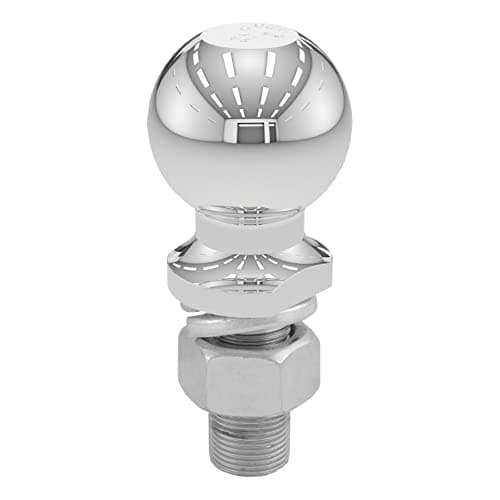 CURT Chrome Trailer Hitch Ball, 2-5/16 in, 10,000 lb, 40007 A 2-5/16 in ball on a 1 in shank rated to 10,000 lb. If your coupler says 2-5/16, no other size is acceptable, and this is the plain correct answer. Most travel trailers | The ball most travel trailers over 5,000 lb actually need | 8.9/ 10 | |
| 2 | 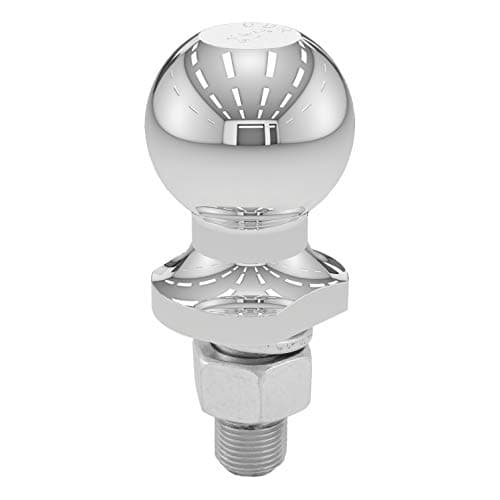 CURT Chrome Trailer Hitch Ball, 2 in, 3,500 lb, 40003 The 2 in, 3,500 lb ball. Correct for a small trailer and badly wrong for a loaded travel trailer, which is exactly the mistake the ball size chart exists to prevent. | Small trailers and utility trailers with a 2 in coupler | 8.1/ 10 | $11.69View on Amazon
|
| 3 | 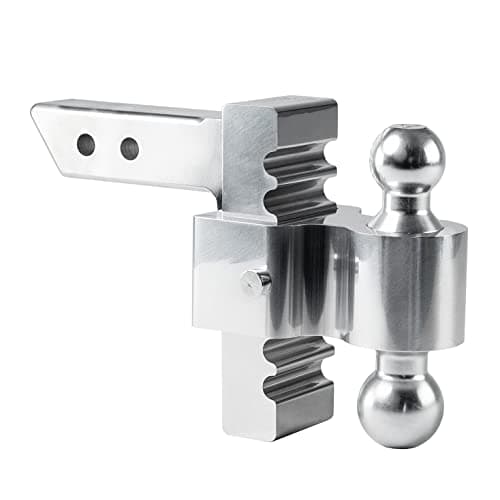 Andersen Rapid Hitch Adjustable Ball Mount, 3410 Aluminum body, plate-steel dual ball, six inches of drop or rise. The practical case for it is owning two trailers with different coupler heights and one ball mount. | One mount that fits a trailer and a utility trailer | 7.7/ 10 | |
| 4 | 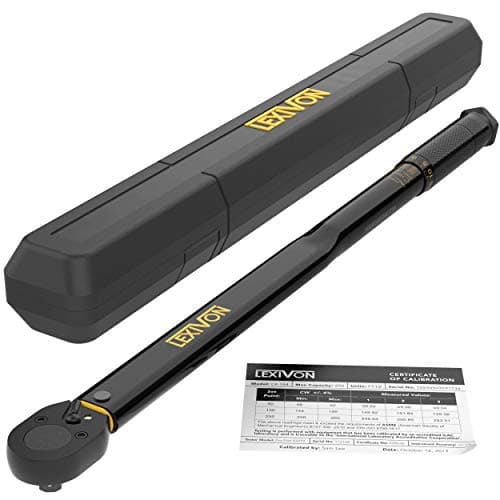 LEXIVON 1/2 in Drive Click Torque Wrench, 25-250 ft-lb Trailer wheels need re-torquing after the first 50 miles and periodically after. Guessing with a lug wrench is how wheels come off, and this covers the usual 90-120 ft-lb range. | Torquing trailer lug nuts to the number in the manual | 7.7/ 10 |
Tap any row to jump to the full write-up. Prices come from Amazon and are read automatically — see each product below for the date.
The short answer
This is the cheapest part in the chain and one of the easiest to get wrong. A ball that is slightly too small will seat in a coupler and feel latched, and will come out over a bump. That is the failure this page exists to prevent.
The chart
| Ball diameter | Shank diameter | Typical rating | Usual application |
|---|---|---|---|
| 1-7/8 in | 3/4 in | 2,000 - 3,500 lb | Small utility, jet ski, light boat |
| 2 in | 3/4 in | 3,500 lb | Utility trailers, small boats |
| 2 in | 1 in | 6,000 - 8,000 lb | Mid-size trailers, some travel trailers |
| 2 in | 1-1/4 in | 10,000 lb | Heavy-duty 2 in applications |
| 2-5/16 in | 1 in | 10,000 lb | Most travel trailers |
| 2-5/16 in | 1-1/4 in | 14,000 - 21,000 lb | Heavy bumper-pull, equipment |
| 3 in | 1-1/2 in or 2 in | 20,000 lb and up | Commercial, gooseneck |
Two things to take from that table. First, 2 in balls span 3,500 lb to 10,000 lb depending on shank diameter — they look identical and are not interchangeable for rating purposes. Second, your ball mount’s hole determines which shank diameter you can fit, so the mount and the ball have to be chosen together.
How to read your coupler
The coupler is the socket on the trailer’s A-frame that drops over the ball. Look at it and you will find stamped or cast lettering, usually on the top or the side:
- The ball size. “2-5/16” or “2 IN”. This is not a suggestion.
- The capacity. Often expressed as a GTW rating. This is the trailer’s own limit and it is one of the six ratings in the chain.
- Sometimes a class. Some couplers carry a class rating too.
If the stamping is painted over or corroded, clean it rather than guessing. A caliper across the coupler socket gives you the diameter if the stamping is gone.
The common mistake
Torquing the ball, which almost nobody does
A hitch ball is held to the mount by a single nut, and that nut has a specified torque — commonly in the 250–450 ft-lb range depending on shank diameter. That is far beyond what you can achieve with a socket wrench and a determined pull.
Under-torqued, the ball works loose, the shank wears the mount’s hole oval, and eventually the ball moves under load. It is a slow failure that gives little warning.
Use a torque wrench with a long enough range, check the figure in the ball’s packaging, and re-check it after the first trip. If you do not own a torque wrench, you need one anyway for trailer lug nuts.
Grease, rust and the rest
A dry ball in a dry coupler squeaks and wears both parts. A light smear of grease or a ball cover does the job. Grease picks up grit, so wipe and re-grease rather than piling it on.
Chrome balls chip, and once chipped they rust under the chip and the rust spreads beneath the plating. A chipped, rusting ball is cheap to replace and worth replacing — a rough ball wears the coupler, which is not cheap.
Keep a ball cover on it when not towing. It stops the rust, stops grease transferring onto trouser legs, and stops you barking a shin on it in the dark.
Two trailers, two sizes
If you tow a travel trailer on 2-5/16 in and a utility trailer on 2 in, you have two options. Two ball mounts, each with the correct ball, is cheapest and foolproof. Or an adjustable mount with a dual ball plate — both sizes on one flip-over plate, which is one of the better arguments for buying adjustable. The adjustable mount picks.
What to remember
- The coupler's stamped size is the only acceptable ball size.
- A 2 in ball can be rated 3,500 lb or 10,000 lb depending on shank diameter.
- The ball nut torque is commonly 250-450 ft-lb — use a torque wrench.
- Replace a chipped, rusting ball before it wears the coupler.
- A dual-ball flip plate covers two trailers with one mount.
The picks in full
CURT Chrome Trailer Hitch Ball, 2-5/16 in, 10,000 lb, 40007
CURT · Best for the ball most travel trailers over 5,000 lb actually need
A 2-5/16 in ball on a 1 in shank rated to 10,000 lb. If your coupler says 2-5/16, no other size is acceptable, and this is the plain correct answer.
Key specifications
- Ball diameter
- 2-5/16 in
- Capacity
- 10,000 lb
- Shank
- 1 in diameter x 2-1/4 in long
- Finish
- Chrome
Capacity figures read from CURT hitch ball specifications, October 2026.
How it scored
- How often you use it (40%)9
- Build quality (25%)8
- Takes up little room (20%)9
- Price for capability (15%)10
Weighted average of the figures above. We did not test this product — see how we pick.
What it does well
- Correct size for the majority of mid-size and larger travel trailers
- Cheap enough to keep a spare
- Chrome finish resists the rust that seizes a coupler
What it is bad at
- A 1 in shank will not fit a ball mount drilled for 3/4 in
- Chrome chips, and then it rusts under the chip
- Needs a torque wrench to tighten properly, which most people skip
Price as of October 5, 2026. #ad How this is funded
CURT Chrome Trailer Hitch Ball, 2 in, 3,500 lb, 40003
CURT · Best for small trailers and utility trailers with a 2 in coupler
The 2 in, 3,500 lb ball. Correct for a small trailer and badly wrong for a loaded travel trailer, which is exactly the mistake the ball size chart exists to prevent.
Key specifications
- Ball diameter
- 2 in
- Capacity
- 3,500 lb
- Shank
- 3/4 in diameter x 1-3/4 in long
- Finish
- Chrome
Capacity figures read from CURT hitch ball specifications, October 2026.
How it scored
- How often you use it (40%)7
- Build quality (25%)8
- Takes up little room (20%)9
- Price for capability (15%)10
Weighted average of the figures above. We did not test this product — see how we pick.
What it does well
- The right answer for a utility or small boat trailer
- Inexpensive
- Universal 3/4 in shank fits most light-duty mounts
What it is bad at
- 3,500 lb is well below a typical loaded travel trailer
- Easy to confuse with a 2 in ball rated higher — read the stamp on the ball
- Chrome, so it chips
Andersen Rapid Hitch Adjustable Ball Mount, 3410
Andersen Hitches · Best for one mount that fits a trailer and a utility trailer
Aluminum body, plate-steel dual ball, six inches of drop or rise. The practical case for it is owning two trailers with different coupler heights and one ball mount.
Key specifications
- Drop / rise
- 6 in
- Balls
- 2 in and 2-5/16 in plate steel dual ball
- Receiver
- 2 in
- Body
- Aluminum
Capacity figures read from Andersen Rapid Hitch specifications, October 2026.
How it scored
- Rated capacity (25%)8
- Adjustability (25%)9
- Security (20%)6
- Build quality (15%)8
- Price for capability (15%)7
Weighted average of the figures above. We did not test this product — see how we pick.
What it does well
- Flip the ball plate instead of buying a second mount
- Aluminum means you can actually lift it
- Generous drop and rise range
What it is bad at
- Aluminum galls against a steel receiver if you never grease it
- The pin and clip are the weak point for theft unless you add a lock
- Costs as much as three fixed mounts
Price as of October 5, 2026. #ad How this is funded
LEXIVON 1/2 in Drive Click Torque Wrench, 25-250 ft-lb
LEXIVON · Best for torquing trailer lug nuts to the number in the manual
Trailer wheels need re-torquing after the first 50 miles and periodically after. Guessing with a lug wrench is how wheels come off, and this covers the usual 90-120 ft-lb range.
Key specifications
- Drive
- 1/2 in
- Range
- 25-250 ft-lb
- Type
- Click type
- Case
- Included
How it scored
- How often you use it (40%)9
- Build quality (25%)7
- Takes up little room (20%)5
- Price for capability (15%)9
Weighted average of the figures above. We did not test this product — see how we pick.
What it does well
- Covers every trailer lug torque spec you will meet
- Click type is the easiest to use correctly without training
- Cheap enough to justify for two uses a year
What it is bad at
- Needs to be wound back to zero after use or it drifts out of calibration
- No calibration certificate at this price
- Heavy and long — it lives in the truck, not the trailer
Price as of October 5, 2026. #ad How this is funded
Common questions
Most travel trailers over about 5,000 lb use 2-5/16 in; smaller ones commonly use 2 in. The coupler is stamped with the answer.
No. The latch appears to close but there is nearly 5/16 in of play and nothing solid for it to close against. The coupler can lift off over a bump. This is a known cause of separation.
To the torque specified with the ball — commonly 250–450 ft-lb depending on shank diameter. Well beyond hand-tight; use a torque wrench and re-check after the first trip.
The rating and which mounts it fits. A 2 in ball on a 3/4 in shank is typically 3,500 lb; the same ball on a 1 in shank can be 8,000 lb. The mount’s hole decides which you can use.
Sources
- SAE J2807 — tow-vehicle gross combination weight rating procedure — read October 2026
- SAE J684 — trailer couplings, hitches and safety chains — read October 2026
- 49 CFR 393.70 — coupling devices and towing methods — read October 2026
- CURT published towing product specifications — read October 2026