Weight Distribution & Sway Control
Reese Steadi-Flex vs Equal-i-zer: Which One Should You Buy?
Two integral sway-control hitches at a similar price, built on opposite philosophies: seal the friction surfaces away, or clamp them where you can see and adjust them.
By Mike M. ·
How this page is funded: we earn a commission if you buy through our links, at no extra cost to you. It never changes which product we rank first. Prices come from Amazon and are read automatically — each one shows the date it was read. Full disclosure.
Quick picks
Both hitches head to head, plus the budget alternative from the same family as the Equal-i-zer if neither suits your tongue weight band.
| # | Product | Best for | Score | Price |
|---|---|---|---|---|
| 1 | 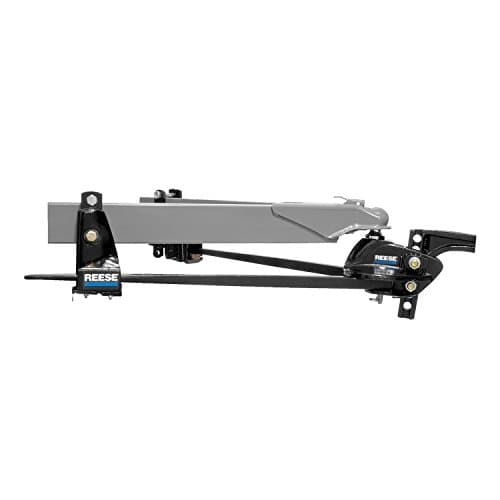 Reese Steadi-Flex Trunnion Weight-Distributing Hitch Kit, 66560 Reese's integrated-sway trunnion kit, shipped with its shank. The selling point is that the friction surfaces are enclosed, so grit does less to them over a season. If you want it quiet and sealed | Owners who want a sealed, low-maintenance friction system | 7.6/ 10 | |
| 2 | 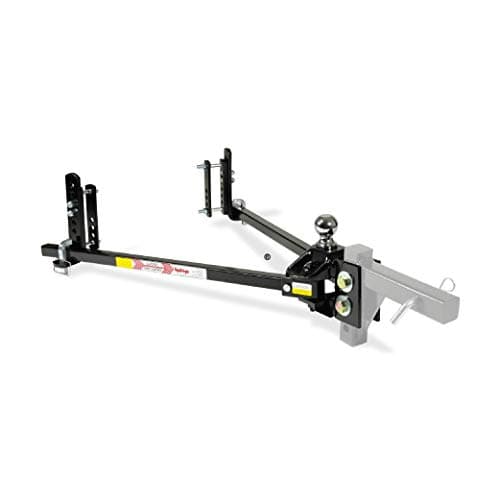 Equal-i-zer 4-Point Sway Control Hitch, 90-00-1001 Four-point sway control built into the head, so there is no friction bar to unclip before you back into a site — the single biggest quality-of-life difference for a first-timer. If you want maximum sway resistance | Most half-ton trucks pulling a 5,000-10,000 lb trailer | 7.9/ 10 | |
| 3 | 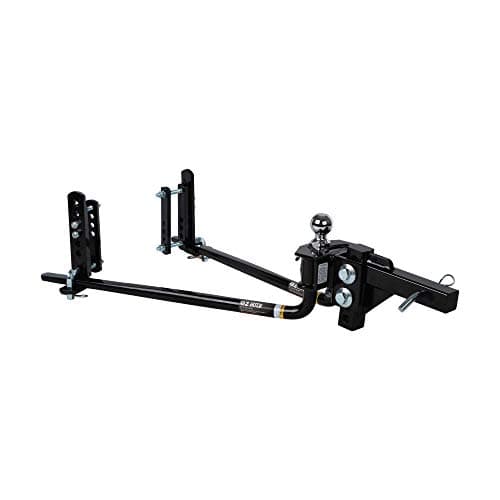 Fastway e2 2-Point Sway Control Round Bar Hitch, 94-00-1033 Equal-i-zer's own value line: two points of built-in sway control instead of four, at a price that leaves money for the shank and ball you still have to buy. The budget alternative | A first hitch on a 5,000-8,000 lb trailer, on a budget | 7.5/ 10 |
Tap any row to jump to the full write-up. Prices come from Amazon and are read automatically — see each product below for the date.
The short answer
These two are genuinely close. Both put sway control inside the hitch rather than on a separate bolt-on bar, which means both can be reversed, jackknifed and parked without getting out of the truck. That one shared property matters more than anything separating them, and it is why both outrank every friction-bar kit on this site.
What differs is where the friction lives. The Equal-i-zer clamps its trunnion bars into open steel brackets on the A-frame and adds friction at the head sockets too — four surfaces, all visible, all adjustable, all exposed to road grit. The Steadi-Flex seals a rotating friction element into the bar ends. Nothing to grease, nothing to tune, nothing to hear.
The specifications, head to head
| Reese Steadi-Flex | Equal-i-zer 90-00-1001 | |
|---|---|---|
| Sway control | Sealed rotating friction in the bar ends | Four-point steel-on-steel friction |
| Bar style | Trunnion | Trunnion |
| Typical kit rating | Up to 1,200 lb tongue / 12,000 lb trailer | 1,000 lb tongue / 10,000 lb trailer |
| Shank included | Yes | No — buy separately |
| Hitch ball included | No | No |
| Lubrication | None required | Grease the brackets and sockets |
| Noise in tight turns | Minimal | Pronounced groan — normal, not a fault |
| Backing up | No disconnection | No disconnection |
The shank line is the one that moves the real price. An Equal-i-zer kit at a given sticker needs a shank bought alongside it, and the right drop or rise for your truck is not a $20 part. Price the two as complete, towable setups rather than as boxes.
Noise, and whether you should care
The Equal-i-zer family’s creak is the single most-posted complaint about any weight distribution hitch. In a slow tight turn it produces a long metallic groan loud enough that new owners assume something has broken. Nothing has. It is steel sliding on steel under several hundred pounds of clamp load, and the manufacturer treats it as expected behavior. Greasing the brackets quiets it for a while; it always comes back.
The Steadi-Flex does not do this, because its friction happens inside a sealed element rather than between two clamped plates. If you camp in sites where you reverse past other people’s awnings at 9pm, that is a real quality-of-life difference. If you tow long highway legs and park once, it is close to irrelevant — neither hitch makes a sound at road speed.
Reese Steadi-Flex
- Sealed friction — no grease, no adjustment, no squeal
- Shank included, so the box is closer to a complete setup
- Higher mainstream bar rating, up to 1,200 lb tongue
- Fewer third-party spares and less dealer familiarity
- Friction level is not user-adjustable
Equal-i-zer 90-00-1001
- Four friction points — the strongest sway resistance in this class
- Every part available everywhere, and every RV tech knows it
- Bracket position lets you tune how much friction you get
- Groans in tight turns, permanently
- Needs a shank and a ball bought separately
Setup and living with them
Neither is a ten-minute job the first time. Both need the A-frame brackets positioned at a measured distance from the coupler, the head angled with washers or a tilt adjustment, and the whole thing checked with a tape measure at the wheel arches until the truck sits where it did unhitched. The setup walkthrough applies to both.
Day to day the difference is small. The Equal-i-zer’s bars drop into open sockets and are held by an L-bracket and pin, which is quick but means lifting a bar into position against spring pressure. The Steadi-Flex uses the same trunnion idea with a retaining clip. Both take a couple of minutes a side once you have done it ten times.
The common mistake
Who should buy which
Buy the Equal-i-zer if your loaded tongue weight sits in the 750–1,000 lb band, you want the most sway resistance available without going to a specialist product, and you value being able to walk into any RV dealer in the country and buy a replacement bracket off the shelf. Accept the noise as part of the deal.
Buy the Steadi-Flex if you want the same no-unclipping convenience with none of the maintenance, your tongue weight runs toward the upper end of the band, or you are buying a complete kit and the included shank genuinely matters to the total.
Buy neither if your loaded tongue weight is well under 600 lb or well over 1,200 lb. Both of these are mid-band hitches, and a hitch sprung outside your real figure is the one mistake that no amount of careful setup fixes. The selection chart maps your number to a band, and the Fastway e2 comparison covers the cheaper two-point route.
What to remember
- Both have integral sway control, so neither needs disconnecting to back up. That is the headline both share.
- Equal-i-zer gives more friction points; Steadi-Flex gives less noise and no greasing.
- The Steadi-Flex kit includes a shank. Price both as complete setups, not as boxes.
- Equal-i-zer spares and dealer knowledge are unmatched in this category.
- Bar band beats brand. Outside your tongue weight range, neither is the right hitch.
The picks in full
Reese Steadi-Flex Trunnion Weight-Distributing Hitch Kit, 66560
Reese · Best for owners who want a sealed, low-maintenance friction system
Reese's integrated-sway trunnion kit, shipped with its shank. The selling point is that the friction surfaces are enclosed, so grit does less to them over a season.
Key specifications
- Gross trailer weight
- 12,000 lb
- Bars
- Trunnion
- Included
- Shank included
- Sway control
- Integrated
How it scored
- Sway control (25%)8
- Tongue-weight range (20%)8
- Backing up (20%)8
- Setup effort (15%)7
- Quietness (10%)7
- Price for capability (10%)6
Weighted average of the figures above. We did not test this product — see how we pick.
What it does well
- Integrated sway control with no separate bar
- Enclosed friction surfaces shrug off road grit
- Shank in the box
What it is bad at
- Priced near the premium kits without the premium name recognition
- Heavy
- 12,000 lb bars are too stiff for a light trailer
Price as of October 10, 2026. #ad How this is funded
Equal-i-zer 4-Point Sway Control Hitch, 90-00-1001
Equal-i-zer · Best for most half-ton trucks pulling a 5,000-10,000 lb trailer
Four-point sway control built into the head, so there is no friction bar to unclip before you back into a site — the single biggest quality-of-life difference for a first-timer.
Key specifications
- Trailer weight rating
- 10,000 lb
- Tongue weight rating
- 1,000 lb
- Sway control
- 4-point, integral to the head
- Included
- Weight distribution kit; shank and ball sold separately
Capacity figures read from Equal-i-zer product specifications, October 2026.
How it scored
- Sway control (25%)9
- Tongue-weight range (20%)8
- Backing up (20%)9
- Setup effort (15%)7
- Quietness (10%)5
- Price for capability (10%)7
Weighted average of the figures above. We did not test this product — see how we pick.
What it does well
- Sway control is always on — nothing to remember, nothing to remove
- Back up and turn sharply without unhooking anything
- Bracket height is adjustable in the field with a wrench, not a shop visit
What it is bad at
- It creaks and groans in tight turns; owners report this consistently and it is normal, not a fault
- Needs a shank and ball bought separately, which catches people out on price
- Heavier to lift onto the coupler than a friction-bar setup
Price as of October 10, 2026. #ad How this is funded
Fastway e2 2-Point Sway Control Round Bar Hitch, 94-00-1033
Fastway · Best for a first hitch on a 5,000-8,000 lb trailer, on a budget
Equal-i-zer's own value line: two points of built-in sway control instead of four, at a price that leaves money for the shank and ball you still have to buy.
Key specifications
- Trailer weight rating
- 10,000 lb
- Tongue weight rating
- 1,000 lb
- Sway control
- 2-point, integral
- Included
- Weight distribution kit; shank and ball sold separately
Capacity figures read from Fastway e2 product specifications (Equal-i-zer / Progress Mfg), October 2026.
How it scored
- Sway control (25%)7
- Tongue-weight range (20%)8
- Backing up (20%)9
- Setup effort (15%)7
- Quietness (10%)5
- Price for capability (10%)8
Weighted average of the figures above. We did not test this product — see how we pick.
What it does well
- Integral sway control, so nothing to unclip before backing
- Cheaper than the four-point Equal-i-zer with most of the behavior
- Round bars are more forgiving of an imperfect bracket height
What it is bad at
- Two friction points rather than four, so it works less hard in a crosswind
- Still creaks, same as its four-point sibling
- Shank and ball sold separately
Price as of October 10, 2026. #ad How this is funded
Common questions
Close, not identical. Equal-i-zer’s four friction points resist more aggressively; the Steadi-Flex is smoother and quieter but not adjustable. Both work continuously and neither needs disconnecting to reverse.
No — the friction is sealed inside the bar ends. An Equal-i-zer does want grease on the bracket and socket faces, which also quiets its groan for a while.
Steel sliding on steel under load, in slow tight turns. It is expected behavior, not a fault. Grease the bracket and socket faces and it quiets for a while.
Steadi-Flex includes a shank, Equal-i-zer does not, and neither includes a ball. The ball size chart is worth reading before you order.
Sources
- Equal-i-zer published hitch specifications and bar ratings — read October 2026
- Andersen Hitches weight distribution hitch specifications — read October 2026
- Reese published weight-distributing hitch specifications — read October 2026
- CURT published weight distribution specifications — read October 2026
- Blue Ox SwayPro published specifications — read October 2026
- SAE J684 — trailer couplings, hitches and safety chains — read October 2026