Weight Distribution & Sway Control
Do You Need A Weight Distribution Hitch With A 3/4-Ton Truck?
The truck will not squat. That answers the question people think they are asking, and not the one that actually matters.
By Mike M. ·
How this page is funded: we earn a commission if you buy through our links, at no extra cost to you. It never changes which product we rank first. Prices come from Amazon and are read automatically — each one shows the date it was read. Full disclosure.
Quick picks
If the answer is yes, these three cover the heavier tongue-weight bands a three-quarter-ton truck is usually towing in.
| # | Product | Best for | Score | Price |
|---|---|---|---|---|
| 1 | 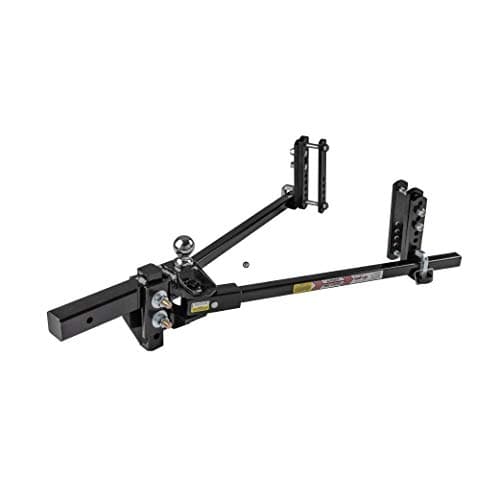 Equal-i-zer 4-Point Sway Control Hitch, 90-00-1600 The heavy end of the Equal-i-zer line, and the one version that ships with a standard shank included rather than as an extra line on the invoice. Most common answer | Heavy trailers over 10,000 lb behind a three-quarter-ton or bigger | 8.0/ 10 | |
| 2 | 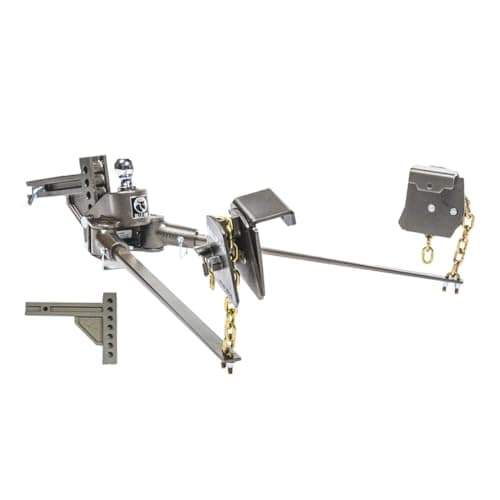 Blue Ox SwayPro BXW1500 Weight Distributing Hitch Same quiet under-slung design as the BXW1000 with a 15,000 lb ceiling, for the trailer that is at the top of a three-quarter-ton's rating. Quietest at this weight | Heavy bumper-pull trailers up to 15,000 lb | 7.7/ 10 | |
| 3 | 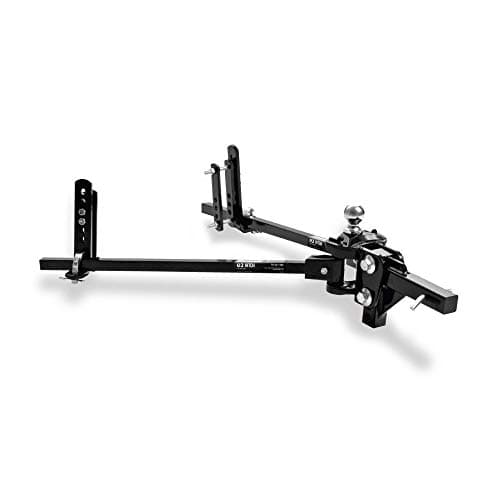 Fastway e2 2-Point Sway Control Trunnion Hitch, 92-00-1200 The trunnion version sits the bars higher than round bars do, which matters on a steep driveway, and this one includes the shank. Best value | 8,000-12,000 lb trailers where ground clearance matters | 7.7/ 10 |
Tap any row to jump to the full write-up. Prices come from Amazon and are read automatically — see each product below for the date.
The short answer
This is the question where half-ton advice gets copied onto a truck it does not describe. A 2500, 250 or 3500 single-rear-wheel pickup has rear springs built for 2,000–4,000 lb of payload. A travel trailer tongue of 800–1,200 lb is a fraction of that. Hitch up and the tape measure at the wheel arch moves half an inch. Every piece of reasoning that starts “if the rear squats more than two inches” has just answered itself.
So the useful version of this question is: what is weight distribution doing for a truck that does not need its attitude corrected?
What weight distribution still does on a 3/4-ton
Three things survive the no-squat finding, and they are worth knowing before you decide.
It unlocks the higher receiver rating. This is the one most owners miss. Nearly every receiver is stamped with two sets of numbers: a weight-carrying rating and a higher weight-distributing rating. A receiver might be rated 1,000 lb tongue / 10,000 lb trailer carrying, and 1,200 lb / 12,000 lb distributing. If your loaded tongue weight is above the carrying figure, the hitch is not optional — it is what makes the setup legal and within spec. The two capacity numbers explained goes through where to find them.
It brings sway control with it. A heavy truck resists being pushed around far better than a half-ton, but it does not stop the trailer pivoting around the ball. A 33 ft trailer behind a 2500 still gets shoved by a passing semi, and the sway control integrated into most weight distribution hitches is the part that damps it.
It loads the trailer axles more evenly. Spring bars push load back onto the trailer’s own axles as well as forward onto the truck’s front axle. On a tandem-axle trailer carrying a heavy tongue, that is a real reduction in how much the front axle is doing relative to the rear.
The common mistake
The three checks, in order
- 1
Read the receiver label
Find the sticker or stamping on the receiver itself. Note both pairs of numbers: weight-carrying tongue weight and trailer weight, and weight-distributing tongue weight and trailer weight. If your measured loaded tongue weight exceeds the carrying figure, you need weight distribution and the decision is made. - 2
Read the towing section of the owner's manual
Some manufacturers require weight distribution above a stated trailer weight on every truck in the range, regardless of squat or receiver rating. If the manual says required at your weight, it is required — that wording is what matters for both warranty and insurance. - 3
Tow it and judge the sway honestly
If the receiver and the manual are both clear, the remaining question is behavior. If the trailer tracks straight, settles quickly after a truck passes, and does not wander in crosswinds, you have your answer. If it does any of those things, buy the hitch for the sway control rather than for the weight.
Step one needs a real tongue weight figure, not a brochure number. How to measure tongue weight covers the three honest methods, and payload vs towing capacity explains why the tongue figure still counts against your payload in full even on a truck with plenty of it.
Where 3/4-ton owners usually land
| Loaded trailer weight | Typical loaded tongue | Usual answer |
|---|---|---|
| Under 6,000 lb | 600-800 lb | No — inside almost every weight-carrying rating |
| 6,000-8,000 lb | 800-1,000 lb | Check the receiver's carrying rating; often still no |
| 8,000-10,000 lb | 1,000-1,300 lb | Usually yes — above most carrying ratings |
| 10,000-12,000 lb | 1,300-1,600 lb | Yes, and check the manual's wording too |
| Over 12,000 lb | 1,600 lb and up | Yes, and consider whether a bumper-pull is the right trailer |
Note what this table is not doing: it is not telling you a pounds threshold at which the hitch becomes necessary. It is showing where the receiver’s own two ratings typically cross over for trucks in this class. The threshold is on your receiver, not in a table on a website.
If the answer is yes, what to buy
Three-quarter-ton owners are usually in the 1,000–1,600 lb tongue band, which is a different shelf from the half-ton default. The Equal-i-zer 16,000 lb kit and the Blue Ox SwayPro 1500 are the mainstream choices there; the Fastway e2 trunnion 1,200 lb kit is the value option and its trunnion bars give better ground clearance behind a tall truck, which matters on steep driveways and campground aprons.
Do not size up “for safety”. Bars rated well above your real tongue weight never deflect at your load, which means a harsher ride and no extra margin. The main hitch roundup ranks the whole field by band, and the three tests is the version of this page for lighter tow vehicles.
What to remember
- On a 3/4-ton the squat test stops being informative. Do not let it decide the question.
- Your receiver carries two ratings. If your tongue weight exceeds the weight-carrying one, the hitch is required.
- Some manuals require weight distribution above a trailer weight regardless of squat. The manual wins.
- Sway control is the benefit that survives on a heavy truck — buy it for that if you buy it at all.
- Expect the 1,000-1,600 lb bar band, and do not size above your measured tongue weight.
The picks in full
Equal-i-zer 4-Point Sway Control Hitch, 90-00-1600
Equal-i-zer · Best for heavy trailers over 10,000 lb behind a three-quarter-ton or bigger
The heavy end of the Equal-i-zer line, and the one version that ships with a standard shank included rather than as an extra line on the invoice.
Key specifications
- Trailer weight rating
- 16,000 lb
- Tongue weight rating
- 1,600 lb
- Sway control
- 4-point, integral to the head
- Included
- Standard hitch shank included; ball sold separately
Capacity figures read from Equal-i-zer product specifications, October 2026.
How it scored
- Sway control (25%)9
- Tongue-weight range (20%)9
- Backing up (20%)9
- Setup effort (15%)7
- Quietness (10%)5
- Price for capability (10%)6
Weighted average of the figures above. We did not test this product — see how we pick.
What it does well
- Shank included, which closes most of the price gap with the 10,000 lb kit
- Enough bar for a loaded fifth-wheel-weight bumper-pull trailer
- Same no-unclip backing behavior as the rest of the line
What it is bad at
- Badly over-sprung for anything under about 1,000 lb of tongue weight
- Heavy — awkward to store and to lift onto the coupler alone
- Price is the highest in the Equal-i-zer range
Price as of October 10, 2026. #ad How this is funded
Blue Ox SwayPro BXW1500 Weight Distributing Hitch
Blue Ox · Best for heavy bumper-pull trailers up to 15,000 lb
Same quiet under-slung design as the BXW1000 with a 15,000 lb ceiling, for the trailer that is at the top of a three-quarter-ton's rating.
Key specifications
- Maximum towing
- 15,000 lb
- Shank
- 7-hole, 2 in receiver
- Sway control
- Spring-bar tension, always engaged
- Noise
- No friction surfaces to squeal
Capacity figures read from Blue Ox SwayPro specifications, October 2026.
How it scored
- Sway control (25%)8
- Tongue-weight range (20%)9
- Backing up (20%)8
- Setup effort (15%)6
- Quietness (10%)9
- Price for capability (10%)5
Weighted average of the figures above. We did not test this product — see how we pick.
What it does well
- Heavy capacity without going to a friction-bracket design
- Quiet in turns
- Latch-style hookup
What it is bad at
- Over-sprung for a light trailer — do not buy for headroom you do not need
- Expensive
- Chain setup takes patience the first time
Price as of October 10, 2026. #ad How this is funded
Fastway e2 2-Point Sway Control Trunnion Hitch, 92-00-1200
Fastway · Best for 8,000-12,000 lb trailers where ground clearance matters
The trunnion version sits the bars higher than round bars do, which matters on a steep driveway, and this one includes the shank.
Key specifications
- Trailer weight rating
- 12,000 lb
- Tongue weight rating
- 1,200 lb
- Sway control
- 2-point, integral
- Included
- Standard hitch shank included; ball sold separately
Capacity figures read from Fastway e2 product specifications (Equal-i-zer / Progress Mfg), October 2026.
How it scored
- Sway control (25%)7
- Tongue-weight range (20%)9
- Backing up (20%)9
- Setup effort (15%)7
- Quietness (10%)5
- Price for capability (10%)8
Weighted average of the figures above. We did not test this product — see how we pick.
What it does well
- Trunnion bars give more clearance than round bars at the same rating
- Shank included
- Good match for a loaded 30-33 ft trailer behind a half-ton
What it is bad at
- Trunnion heads are slightly fussier to index correctly on first setup
- Two-point sway control only
- Noisy in tight turns
Price as of October 10, 2026. #ad How this is funded
Common questions
Frequently not — but the receiver label decides it, not the truck. Check whether your measured tongue weight exceeds the receiver’s weight-carrying rating, what the manual requires at your trailer weight, and whether the trailer actually sways.
Two ratings for one receiver: carrying is the limit with a plain ball mount, distributing is the higher limit that only applies with a weight distribution hitch fitted. The full explanation shows where both are printed.
Yes. Mass resists being pushed off line; it does not stop the trailer pivoting around the ball. Long tall trailers still get shoved, and sway control is what damps it.
Match the band to your measured tongue weight, not to the truck — usually 1,200 lb or 1,400–1,600 lb bars in this class. Oversized bars ride harshly without adding margin.
Sources
- Equal-i-zer published hitch specifications and bar ratings — read October 2026
- Andersen Hitches weight distribution hitch specifications — read October 2026
- Reese published weight-distributing hitch specifications — read October 2026
- CURT published weight distribution specifications — read October 2026
- Blue Ox SwayPro published specifications — read October 2026
- SAE J684 — trailer couplings, hitches and safety chains — read October 2026