First-Trailer Essentials & Tires
Travel Trailer Departure Checklist
Sixteen checks. Everyone who skips this list eventually drives off with something still connected, and it is never cheap.
By Mike M. ·
How this page is funded: we earn a commission if you buy through our links, at no extra cost to you. It never changes which product we rank first. Prices come from Amazon and are read automatically — each one shows the date it was read. Full disclosure.
Quick picks
The gear this list touches, and the hitch it checks.
| # | Product | Best for | Score | Price |
|---|---|---|---|---|
| 1 | 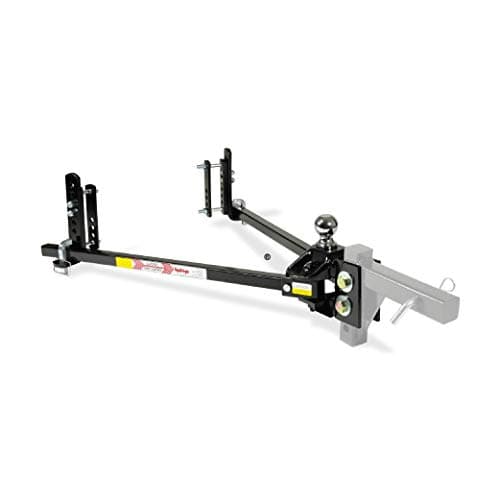 Equal-i-zer 4-Point Sway Control Hitch, 90-00-1001 Four-point sway control built into the head, so there is no friction bar to unclip before you back into a site — the single biggest quality-of-life difference for a first-timer. Check the bars | Most half-ton trucks pulling a 5,000-10,000 lb trailer | 7.9/ 10 | |
| 2 | 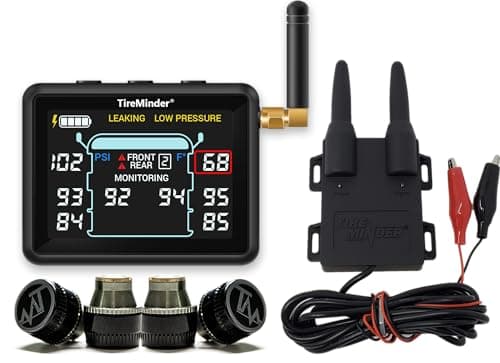 TireMinder i10 RV TPMS with 4 Transmitters Four transmitters and a dedicated monitor, which is exactly the count a tandem-axle travel trailer needs. The dedicated screen beats a phone app you have to keep awake. | A straightforward four-tire TPMS for a tandem-axle trailer | 7.5/ 10 | |
| 3 | 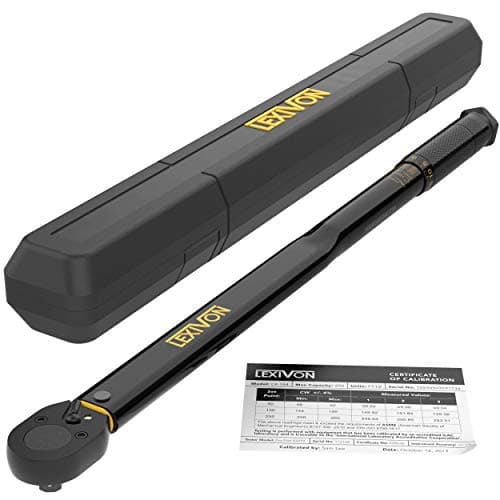 LEXIVON 1/2 in Drive Click Torque Wrench, 25-250 ft-lb Trailer wheels need re-torquing after the first 50 miles and periodically after. Guessing with a lug wrench is how wheels come off, and this covers the usual 90-120 ft-lb range. | Torquing trailer lug nuts to the number in the manual | 7.7/ 10 | |
| 4 |  Camco RV Wheel Chocks with Rope, 2-Pack Two plastic chocks with a pull rope so you can retrieve them without lying on the ground. Unremarkable, correct, and the first thing to buy. | The basic chock every trailer needs before anything else | 7.9/ 10 | |
| 5 | 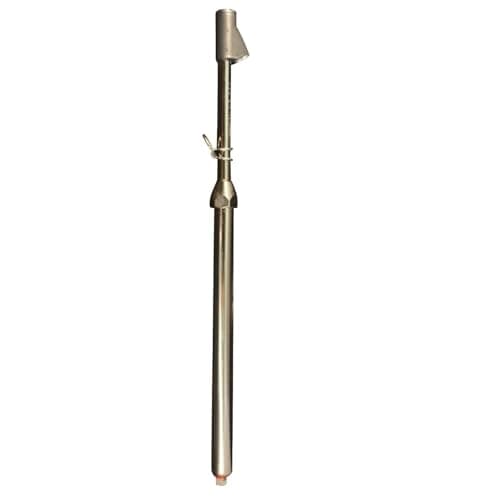 Milton S-986 Dual Head Tire Pressure Gauge, 10-160 psi Trailer tires often run 50-80 psi, which is past the top of a typical car gauge. This one reads to 160 psi and the dual head reaches an inner dually valve. | Reading trailer tire pressure that a car gauge cannot | 9.6/ 10 |
Tap any row to jump to the full write-up. Prices come from Amazon and are read automatically — see each product below for the date.
The short answer
Arriving is a job you do carefully because everything is new. Leaving is a job you do at seven in the morning with coffee in one hand, and that is why it needs a written list.
Inside the trailer
01Fridge door latched and vents set
The travel latch is there for a reason. A fridge door that opens on the road empties itself onto the floor.02Everything off the counters and tables
Anything not in a cupboard or a sink will be on the floor. Including the thing you are sure will be fine.03Cupboard and drawer latches engaged
Check them, do not assume. One unlatched overhead cabinet redistributes its contents through the trailer.04Roof vents and windows closed
An open roof vent at 60 mph breaks its hinge or tears off entirely. Windows closed keeps road dust out.05Water pump and water heater off
The pump cycling against a closed system on the road is pointless wear, and a water heater element running dry is a replacement element.06TV antenna down, satellite stowed
Crank the antenna fully down. This is one of the five classics and a raised antenna meets the first low branch on the way out.
Outside, and this is where the expensive ones live
01Awning fully retracted and locked
Fully in, latched, and check the arms are seated. An awning that unrolls on the highway destroys itself and whatever it hits.02Sewer hose disconnected, drained and stowed
Both tank valves closed, hose drained toward the sewer, capped both ends, outlet cap back on. The disconnect sequence.03Water hose disconnected and the inlet capped
Spigot off first, then disconnect, then drain the hose. The regulator and filter come off with it.04Power cord disconnected and stowed
Pedestal breaker off first, then unplug, then the protector, then coil the cord into its compartment. Not left dangling.05Steps retracted and locked
Manual or electric, fully in and locked. Another of the five classics, and a step that catches a curb takes the mounting with it.06Stabilizer jacks fully up
All of them, fully retracted, and pads collected. A jack left down is bent on the first driveway lip.07Walk the whole site
A full lap. You are looking for the chock you forgot, the leveling block still under a wheel, the jack pad, the hose cap, the dog's bowl. This lap finds something roughly one time in three.
Hitching up and the final checks
01Coupler latched, pinned and weight distribution bars seated
Latch closed, safety pin or clip in, bars seated and at the bracket setting you recorded. Your recorded settings.02Safety chains crossed, breakaway cable attached
Chains crossed under the coupler so they catch it if the coupler releases, with enough slack to turn and not enough to drag. Breakaway cable to the truck, not to the ball mount.037-way plugged in and lights tested
Someone at the back while you work through running lights, brake lights, left indicator, right indicator. Every time, because a bulb fails whenever it likes.04Chocks removed — all of them
Count them. Four out, four in the compartment. Driving over your own chock is an undignified way to start a trip.05Tire pressures checked cold, and the TPMS paired
Before you move, while they are cold. Trailer tires run near the sidewall maximum, often 50-80 psi. The psi guide.06Tongue jack fully up and the pad collected
Fully retracted. A tongue jack left part-way down is the first thing to hit a dip at the campground exit.
The common mistake
The first fifty miles
Stop at fifty miles and check three things: the hitch and bars are still seated, the wheel lug nuts are still at torque, and nothing has shifted inside. New trailer wheels loosen, which is why the torque check matters, and a loaded trailer settles on its first run.
Also put a hand on each wheel hub. A hub that is noticeably hotter than the others is a dragging brake or a failing bearing, and finding that at a rest area is far better than finding it later.
What to remember
- Five classics: power cord, water hose, sewer hose, antenna up, steps out.
- Walk the whole site last, after everything is stowed and the trailer is hitched.
- Cross the safety chains under the coupler, and put the breakaway cable on the truck.
- Count the chocks out as well as in.
- Stop at fifty miles: hitch, lug torque, and a hand on each hub.
The picks in full
Equal-i-zer 4-Point Sway Control Hitch, 90-00-1001
Equal-i-zer · Best for most half-ton trucks pulling a 5,000-10,000 lb trailer
Four-point sway control built into the head, so there is no friction bar to unclip before you back into a site — the single biggest quality-of-life difference for a first-timer.
Key specifications
- Trailer weight rating
- 10,000 lb
- Tongue weight rating
- 1,000 lb
- Sway control
- 4-point, integral to the head
- Included
- Weight distribution kit; shank and ball sold separately
Capacity figures read from Equal-i-zer product specifications, October 2026.
How it scored
- Sway control (25%)9
- Tongue-weight range (20%)8
- Backing up (20%)9
- Setup effort (15%)7
- Quietness (10%)5
- Price for capability (10%)7
Weighted average of the figures above. We did not test this product — see how we pick.
What it does well
- Sway control is always on — nothing to remember, nothing to remove
- Back up and turn sharply without unhooking anything
- Bracket height is adjustable in the field with a wrench, not a shop visit
What it is bad at
- It creaks and groans in tight turns; owners report this consistently and it is normal, not a fault
- Needs a shank and ball bought separately, which catches people out on price
- Heavier to lift onto the coupler than a friction-bar setup
Price as of October 5, 2026. #ad How this is funded
TireMinder i10 RV TPMS with 4 Transmitters
TireMinder · Best for a straightforward four-tire tpms for a tandem-axle trailer
Four transmitters and a dedicated monitor, which is exactly the count a tandem-axle travel trailer needs. The dedicated screen beats a phone app you have to keep awake.
Key specifications
- Transmitters
- 4 included
- Monitor
- Dedicated display
- Expandable
- Yes, additional transmitters
- Model
- i10
How it scored
- Sensor coverage (25%)7
- Display (25%)8
- Alerting (25%)8
- Battery life (15%)7
- Price for capability (10%)7
Weighted average of the figures above. We did not test this product — see how we pick.
What it does well
- Four sensors matches a tandem-axle trailer with no add-ons
- Dedicated monitor, not a phone app
- Established name in RV tire monitoring
What it is bad at
- Four sensors means no spare coverage without buying a fifth
- Monitor needs 12 V power routed to it
- Sensor batteries are a periodic chore
Price as of October 5, 2026. #ad How this is funded
LEXIVON 1/2 in Drive Click Torque Wrench, 25-250 ft-lb
LEXIVON · Best for torquing trailer lug nuts to the number in the manual
Trailer wheels need re-torquing after the first 50 miles and periodically after. Guessing with a lug wrench is how wheels come off, and this covers the usual 90-120 ft-lb range.
Key specifications
- Drive
- 1/2 in
- Range
- 25-250 ft-lb
- Type
- Click type
- Case
- Included
How it scored
- How often you use it (40%)9
- Build quality (25%)7
- Takes up little room (20%)5
- Price for capability (15%)9
Weighted average of the figures above. We did not test this product — see how we pick.
What it does well
- Covers every trailer lug torque spec you will meet
- Click type is the easiest to use correctly without training
- Cheap enough to justify for two uses a year
What it is bad at
- Needs to be wound back to zero after use or it drifts out of calibration
- No calibration certificate at this price
- Heavy and long — it lives in the truck, not the trailer
Price as of October 5, 2026. #ad How this is funded
Camco RV Wheel Chocks with Rope, 2-Pack
Camco · Best for the basic chock every trailer needs before anything else
Two plastic chocks with a pull rope so you can retrieve them without lying on the ground. Unremarkable, correct, and the first thing to buy.
Key specifications
- Pack
- 2 chocks
- Feature
- Pull rope
- Material
- Molded plastic
- Origin
- Made in USA
Capacity figures read from Camco wheel chock specifications, October 2026.
How it scored
- Holding force (35%)7
- Fit range (25%)8
- Everyday usability (20%)9
- Build quality (10%)6
- Price for capability (10%)10
Weighted average of the figures above. We did not test this product — see how we pick.
What it does well
- The rope saves you crawling under the trailer
- Light and stackable
- Cheap enough to buy four
What it is bad at
- Plastic slides on wet smooth concrete
- Sized for standard trailer tires, not oversized ones
- Two is the bare minimum; most trailers want four
Price as of October 5, 2026. #ad How this is funded
Milton S-986 Dual Head Tire Pressure Gauge, 10-160 psi
Milton · Best for reading trailer tire pressure that a car gauge cannot
Trailer tires often run 50-80 psi, which is past the top of a typical car gauge. This one reads to 160 psi and the dual head reaches an inner dually valve.
Key specifications
- Range
- 10-160 psi
- Head
- Dual head chuck
- Type
- Straight foot, mechanical
- Model
- S-986
How it scored
- How often you use it (40%)10
- Build quality (25%)9
- Takes up little room (20%)9
- Price for capability (15%)10
Weighted average of the figures above. We did not test this product — see how we pick.
What it does well
- Range actually covers trailer tire pressures
- Dual head reaches awkward and inner valves
- Mechanical — no battery to die in a cold trailer
What it is bad at
- Analog scale is harder to read precisely than a digital gauge
- No calibration certificate
- Brass head is heavy in a pocket
Price as of October 5, 2026. #ad How this is funded
Common questions
The power cord, water hose, sewer hose, antenna left up and steps left out are the five. Jacks left down and the awning out follow close behind.
Yes. Crossed under the coupler they form a cradle that catches it if it releases from the ball. Enough slack to turn fully, not enough to drag.
After the first 50 miles on new wheels or after any wheel has been off, then periodically to the manual figure. New trailer wheels loosening is more common than it should be.
Sources
- Camco published product specifications — read October 2026
- RV Industry Association — standards and compliance program — read October 2026