Leveling, Chocks & Stabilizing
How To Level A Travel Trailer Front To Back
Side to side comes first, because you cannot fix it once the wheels are chocked. Front to back is then just the tongue jack - but only if you know when to stop and what the jack is standing on.
By Mike M. ·
How this page is funded: we earn a commission if you buy through our links, at no extra cost to you. It never changes which product we rank first. Prices come from Amazon and are read automatically — each one shows the date it was read. Full disclosure.
Quick picks
Three things make front-to-back leveling quick rather than a guessing game: something to read level with, something solid under the jack, and blocks for the awkward sites.
| # | Product | Best for | Score | Price |
|---|---|---|---|---|
| 1 | 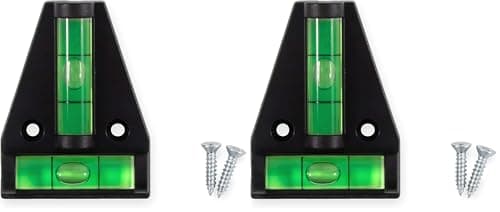 Camco RV T Level, 2-Pack, 25543 Two screw-on bubble levels, one for front-to-back and one for side-to-side. Cheap, and the reason you stop guessing from inside the trailer. Buy this first | Knowing when to stop driving up the leveler | 8.6/ 10 | $9.16View on Amazon
|
| 2 | 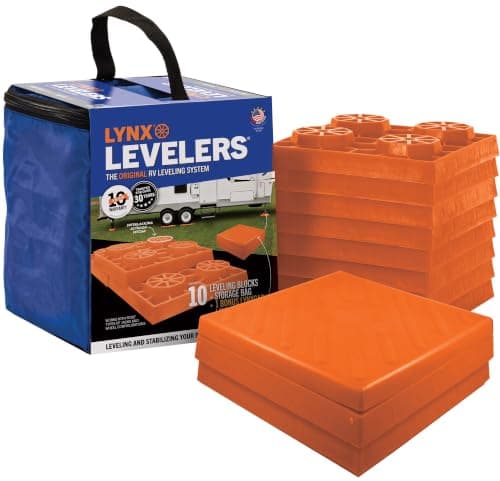 Lynx Levelers, 11-Pack with Cap and Storage Bag The long-standing honeycomb block. Eleven pieces including a cap, which is the detail that matters: the cap gives a flat top so a jack foot does not sit in the honeycomb. Blocks with a level cap | Leveling, jack pads and stabilizer feet from one bag | 7.3/ 10 | |
| 3 | 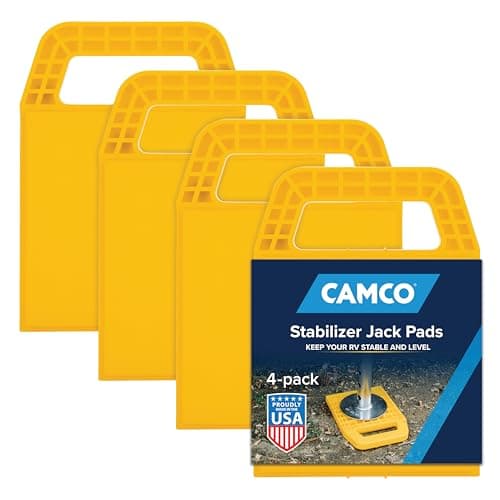 Camco RV Stabilizing Jack Pads, 4-Pack Four plastic pads for under the stabilizer jacks. They stop the jack foot sinking into soft ground, which is the usual reason a leveled trailer is no longer level in the morning. Under the jack foot | Keeping scissor jacks out of the dirt | 7.0/ 10 | $13.27View on Amazon
|
Tap any row to jump to the full write-up. Prices come from Amazon and are read automatically — see each product below for the date.
The short answer
Two things make this harder than it should be, and neither is the jack. The first is that most people do the steps in the wrong order. The second is that a tongue jack on soft or gravel ground sinks while you sleep, so a trailer that was level at 8 pm is nose-down at midnight, which is why the fridge stops working properly and the shower drains to the wrong corner.
Tongue jack: the jack on the trailer’s A-frame, ahead of the body. It carries the tongue weight when the trailer is unhitched and is the only thing that changes the trailer’s front-to-back attitude. Stabilizer jacks at the corners do not level — they stop movement.
Do it in this order
- 1
Pick the spot and check which way the site falls
Walk the site before you position. You are looking for which side is low and whether the pad falls away front to back. Doing this first saves a reposition. - 2
Level side to side, still hitched
Put blocks or a ramp under the low side’s wheels and pull up until the trailer is level across its width. Still hitched, because the tow vehicle is how you move the trailer onto the blocks. The side-to-side guide covers this step in detail. - 3
Chock the wheels
Chock before you unhitch, not after. Once the wheels are chocked the side-to-side attitude is fixed, which is exactly why this step comes after step 2 and not before. - 4
Put something solid under the tongue jack
A jack pad, or two or three interlocked leveling blocks, centered under the jack foot. On gravel or soft ground this is what stops the jack sinking overnight and taking your front-to-back level with it. - 5
Unhitch and raise or lower the tongue
Unhitch, then run the tongue jack until the trailer reads level front to back. Nose down slightly is better than nose up if you cannot get it exact, because the drains run the right way. - 6
Check level inside, not just outside
Read a level on the floor inside, in the middle of the trailer. The A-frame and the bumper are not reliable reference surfaces, and an exterior-mounted bubble can be screwed on crooked. - 7
Lower the stabilizer jacks last
Stabilizers come down after the trailer is level, and they take weight without lifting. If you are using them to level, they are doing a job they are not built for.
The common mistake
How level does it actually need to be?
Level enough that an absorption refrigerator works, which is the real constraint on an older trailer. Absorption fridges move coolant by gravity, and manufacturers generally specify a tolerance measured in a few degrees off level — check your own fridge’s manual for its stated figure rather than relying on a number from a forum. A compressor fridge does not care.
Beyond the fridge, the things you will notice are: shower and sink drains running to the right corner, doors staying where you put them rather than swinging shut, and sleeping without feeling like your head is downhill. Those are all satisfied well before the bubble is perfectly centered.
| What it affects | How sensitive | Practical note |
|---|---|---|
| Absorption refrigerator | Most sensitive | Check your fridge manual for its stated tolerance |
| Shower and sink drainage | Moderate | Slightly nose-down drains better than nose-up |
| Interior doors swinging | Moderate | Noticeable before anything functional breaks |
| Sleeping comfort | Low | A small nose-down attitude is barely felt |
| Compressor refrigerator | Not sensitive | Works at any reasonable attitude |
What to use
A level you can read. The single highest-value purchase for this job. A pair of screw-mounted T-levels gives you front-to-back and side-to-side at a glance from outside the trailer, which is what you want while you are the one cranking the jack.
Blocks with a level cap. The Lynx 11-piece kit includes a cap that gives a flat top to a stack, which is what makes an interlocked stack a sensible thing to put a jack foot on. Without the cap you are standing a round jack foot on a honeycomb surface.
A dedicated jack pad. Molded pads are purpose-shaped for jack and stabilizer feet and spread load better on soft ground than a single block does. Cheap, and the reason your trailer is still level in the morning. The jack pad roundup ranks the field.
If your site slopes front to back more than the tongue jack’s travel can handle, you have run out of jack rather than out of technique — leveling on uneven ground covers blocking the jack up and when to give up on the site. If your trailer has a slide-out, the order changes slightly: level before you extend it.
What to remember
- Side to side first, chock second, front to back third. The order is not optional.
- Front-to-back level is the tongue jack's job and nothing else's.
- Put a pad or interlocked blocks under the jack foot or it sinks overnight.
- Read level on the floor inside, in the middle, not off the A-frame.
- Slightly nose-down beats nose-up, because the drains run the right way.
- Stabilizer jacks go down last and never do the leveling.
The picks in full
Camco RV T Level, 2-Pack, 25543
Camco · Best for knowing when to stop driving up the leveler
Two screw-on bubble levels, one for front-to-back and one for side-to-side. Cheap, and the reason you stop guessing from inside the trailer.
Key specifications
- Pack
- 2 levels
- Mounting
- Screw-mounted
- Axes
- Front-to-back and side-to-side
- Part
- 25543
Capacity figures read from Camco RV T Level specifications, October 2026.
How it scored
- How often you use it (40%)9
- Build quality (25%)6
- Takes up little room (20%)10
- Price for capability (15%)10
Weighted average of the figures above. We did not test this product — see how we pick.
What it does well
- Lets you read level from outside the trailer, where you are standing
- Costs less than a sandwich
- No batteries, nothing to pair
What it is bad at
- You have to mount them with the trailer already level, or they lie forever
- Screw holes in the trailer skin
- Harder to read at dusk than a phone app
Lynx Levelers, 11-Pack with Cap and Storage Bag
Tri-Lynx · Best for leveling, jack pads and stabilizer feet from one bag
The long-standing honeycomb block. Eleven pieces including a cap, which is the detail that matters: the cap gives a flat top so a jack foot does not sit in the honeycomb.
Key specifications
- Pack
- 11 pieces including 1 cap level top
- Design
- Interlocking honeycomb
- Storage
- Bag included
- Origin
- Made in USA
How it scored
- Lift range (25%)7
- Grip / stability (25%)6
- Packed size (20%)8
- Build quality (20%)7
- Price for capability (10%)10
Weighted average of the figures above. We did not test this product — see how we pick.
What it does well
- Cap piece gives a flat bearing surface for jacks
- Honeycomb is strong for its weight
- Decades of owner reports to read
What it is bad at
- Honeycomb edges split if you drive onto a stack at an angle
- No grip mat, so they slide on wet concrete
- Same coarse one-inch-per-layer stacking
Price as of October 21, 2026. #ad How this is funded
Camco RV Stabilizing Jack Pads, 4-Pack
Camco · Best for keeping scissor jacks out of the dirt
Four plastic pads for under the stabilizer jacks. They stop the jack foot sinking into soft ground, which is the usual reason a leveled trailer is no longer level in the morning.
Key specifications
- Pack
- 4 pads
- Use
- Under scissor and stabilizer jacks
- Material
- Molded plastic
- Origin
- Made in USA
Capacity figures read from Camco jack pad specifications, October 2026.
How it scored
- Lift range (25%)4
- Grip / stability (25%)7
- Packed size (20%)9
- Build quality (20%)7
- Price for capability (10%)10
Weighted average of the figures above. We did not test this product — see how we pick.
What it does well
- Cheapest fix for a trailer that settles overnight
- Spread load on gravel and soft ground
- Stack flat, take almost no space
What it is bad at
- Not rated to lift anything — these spread load, they do not level
- Plastic cracks under a jack that is already over-extended
- Four is not enough if you also want pads under the tongue jack
Common questions
Side to side first, while still hitched. Then chock, unhitch, and do front to back with the tongue jack.
The tongue jack, standing on a pad or interlocked blocks. Stabilizer jacks are not for leveling.
Level enough for your fridge, which is the fussiest thing in the trailer. Check its manual for the stated tolerance; everything else is easier to satisfy.
The tongue jack has sunk. A jack pad or interlocked blocks under the foot spreads the load and stops it.
Sources
- Camco published FasTen leveling block and T-level specifications — read October 2026
- Andersen Hitches published Camper Leveler specifications and rating — read October 2026
- Tri-Lynx published Lynx Levelers specifications — read October 2026