Water & Waste
The Best RV Water Filter
Know which problem you are buying for. Taste, sediment and bacteria are three different jobs at three very different prices.
By Mike M. ·
How this page is funded: we earn a commission if you buy through our links, at no extra cost to you. It never changes which product we rank first. Prices come from Amazon and are read automatically — each one shows the date it was read. Full disclosure.
Quick picks
Scored on material safety and filtration (35%), flow (20%), durability (20%), build (15%) and price (10%).
| # | Product | Best for | Score | Price |
|---|---|---|---|---|
| 1 | 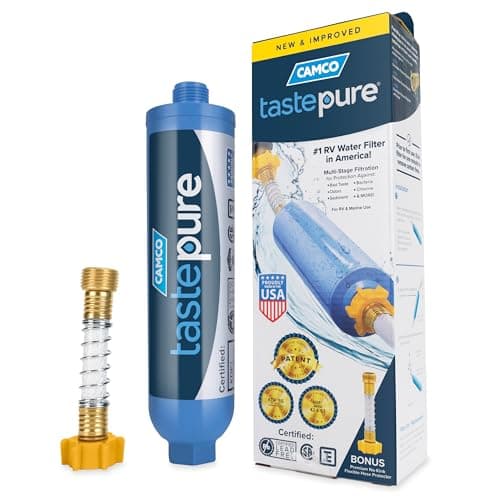 Camco TastePURE RV Water Filter, GAC and KDF An inline carbon filter for chlorine taste and sediment. It is not a purifier and does not claim to be, and for most campground water that is exactly the right scope. Top pick for most | Taste and smell, for the price of a tank of gas | 7.2/ 10 | |
| 2 | 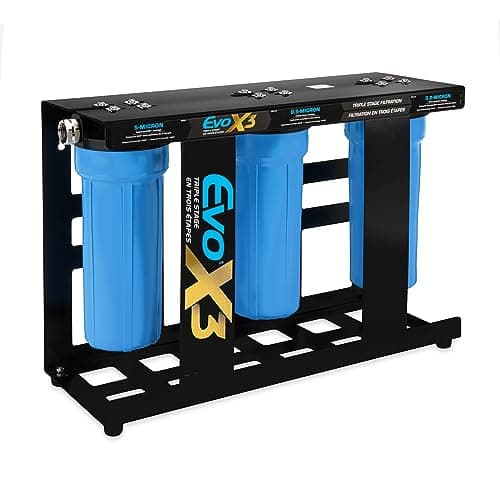 Camco Evo X3 Triple-Stage RV Water Filter Kit, 40649 A three-stage canister kit with replaceable cartridges, which is the step up from a disposable inline filter and well short of the price of a premium twin-canister rig. Step up | Serious filtration without going to a two-canister system | 8.2/ 10 | $283.70View on Amazon
|
| 3 | 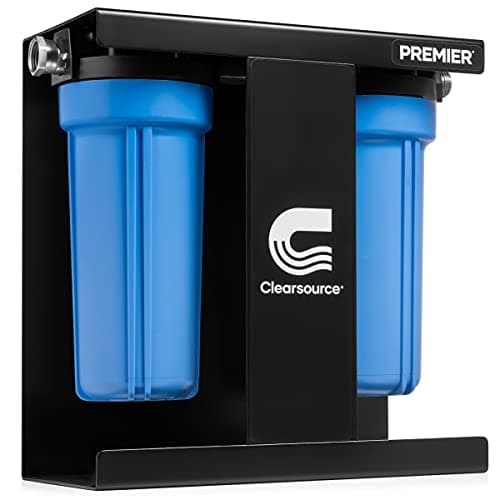 Clearsource Premier RV Water Filter System A multi-canister system with a bacteria-rated stage, mounted on a stand. It is the only option here that claims bacteria reduction, and it is priced accordingly. For full-timers | Full-timers who want the highest filtration available | 8.7/ 10 | |
| 4 | 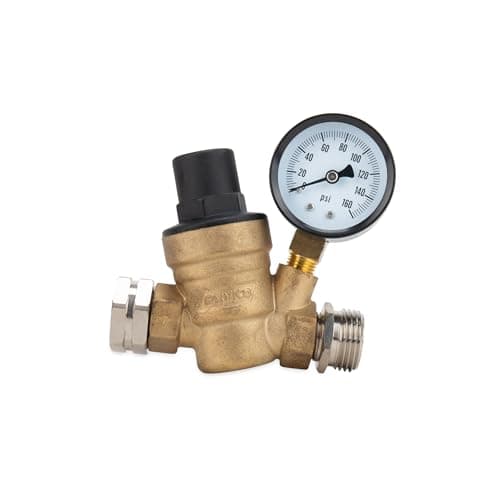 Camco Adjustable RV Water Pressure Regulator, Lead-Free Brass Adjustable lead-free brass with a gauge. Being able to dial pressure down to about 50 psi matters because a campground pedestal can deliver far more than your plumbing is rated for. | Setting your own pressure instead of accepting a preset | 8.2/ 10 |
Tap any row to jump to the full write-up. Prices come from Amazon and are read automatically — see each product below for the date.
The short answer
The honest framing for this category: most campgrounds are supplied from a tested municipal system. The water is safe and it tastes of chlorine. If that is your situation, you are buying a taste filter, and a cheap one does the job.
Three different problems
| Problem | What fixes it | Rough cost |
|---|---|---|
| Chlorine taste and smell | Inline granular activated carbon | Very low |
| Sediment, rust, grit | A sediment stage, or a regulator inlet screen | Very low |
| Fine particulate and better flow | Canister kit with replaceable cartridges | Moderate |
| Bacteria and cysts | Multi-stage with a rated cartridge | High |
| Hard water scale | Not a filter — a softener | Separate product |
Note the last row. Water softening is a different process from filtration, and no carbon filter reduces hardness. If your complaint is scale on fixtures, a filter is the wrong product.
Disposable inline filters: what they do and do not
A sealed plastic cylinder of granular activated carbon, sometimes with a KDF copper-zinc medium. You screw it onto the hose and throw it away at the end of the season.
What it does: removes chlorine taste and odor, catches coarse sediment, improves the water noticeably for drinking and showering.
What it does not do: remove bacteria, viruses or cysts. It does not make unsafe water safe, and the honest products do not claim to.
The real downside: flow. A small cartridge restricts flow noticeably, and combined with a conservative pressure regulator you can end up with a disappointing shower. Mounting it horizontally with the arrows pointing the right way helps slightly; not much else does.
The common mistake
Canister kits: the sensible step up
A housing with a replaceable cartridge inside, usually two or three stages: a sediment stage first, then carbon.
Two genuine advantages over a disposable. Flow is substantially better, because the cartridge area is much larger. And the running cost is lower over a few seasons, because you replace a cartridge rather than the whole unit.
The disadvantages are size and faff: it needs somewhere to stand, it has to be plumbed into the hose run with short connecting hoses, and you have to remember to change cartridges rather than just binning the whole thing.
Multi-canister systems: who they are for
Two or three separate canisters on a stand, with a fine sediment stage, a carbon block and sometimes a cartridge rated for bacteria reduction.
These are the only option here that makes a bacteria claim, and if you genuinely need that — a well supply, an untested source, a medical reason — this is the category. For a weekend camper on municipal water it is a lot of money and a lot of storage for a problem you do not have.
Read the cartridge specification rather than the marketing. “Protects against bacteria” should correspond to a stated micron rating or a stated certification on the cartridge, and a system is only as good as the cartridge currently in it.
Where it goes in the hose run
Spigot → pressure regulator → short hose → filter → main hose → 90-degree elbow → trailer inlet.
The regulator first is the important part: it means the filter housing never sees full pedestal pressure, and filter housings are the weakest plastic component in the chain. The full reasoning.
The verdict
Buy a disposable inline carbon filter and replace it each season. It fixes the problem most people actually have for very little money. Move to a canister kit if the flow restriction bothers you or if you camp enough that cartridges are cheaper. Buy a multi-canister system only if you have a specific reason to need bacteria reduction, and read the cartridge spec when you do.
What to remember
- Most campground water is safe and tastes of chlorine. That is a taste problem.
- A disposable inline carbon filter does not remove bacteria and does not claim to.
- Flow restriction is the real cost of a small cartridge.
- A canister kit gives better flow and cheaper running costs over a few seasons.
- Never leave a used filter on the hose over winter.
The picks in full
Camco TastePURE RV Water Filter, GAC and KDF
Camco · Best for taste and smell, for the price of a tank of gas
An inline carbon filter for chlorine taste and sediment. It is not a purifier and does not claim to be, and for most campground water that is exactly the right scope.
Key specifications
- Media
- GAC and KDF
- Type
- Inline, disposable
- Life
- Seasonal / per listing
- Origin
- Made in USA
Capacity figures read from Camco TastePURE filter specifications, October 2026.
How it scored
- Material safety (35%)7
- Flow rate (20%)6
- Kink resistance (20%)8
- Build quality (15%)6
- Price for capability (10%)10
Weighted average of the figures above. We did not test this product — see how we pick.
What it does well
- Removes the chlorine taste that puts people off campground water
- Fits inline on the hose in seconds
- Cheap enough to replace every season without thinking
What it is bad at
- Does not remove bacteria — this is taste and sediment only
- Restricts flow noticeably
- Disposable, so it is a recurring cost
Price as of October 5, 2026. #ad How this is funded
Camco Evo X3 Triple-Stage RV Water Filter Kit, 40649
Camco · Best for serious filtration without going to a two-canister system
A three-stage canister kit with replaceable cartridges, which is the step up from a disposable inline filter and well short of the price of a premium twin-canister rig.
Key specifications
- Stages
- Three
- Cartridges
- Replaceable
- Type
- Canister kit
- Part
- 40649
Capacity figures read from Camco Evo specifications, October 2026.
How it scored
- Material safety (35%)9
- Flow rate (20%)8
- Kink resistance (20%)8
- Build quality (15%)8
- Price for capability (10%)6
Weighted average of the figures above. We did not test this product — see how we pick.
What it does well
- Replaceable cartridges rather than a throwaway cylinder
- Noticeably better flow than a disposable inline filter
- Finer filtration stages than a single carbon block
What it is bad at
- Expensive next to a disposable filter
- Needs somewhere to stand and some hose management
- Cartridges are an ongoing cost
Clearsource Premier RV Water Filter System
Clearsource · Best for full-timers who want the highest filtration available
A multi-canister system with a bacteria-rated stage, mounted on a stand. It is the only option here that claims bacteria reduction, and it is priced accordingly.
Key specifications
- Type
- Multi-canister system
- Claim
- Contaminant and bacteria protection
- Mounting
- Stand
- Cartridges
- Replaceable
How it scored
- Material safety (35%)10
- Flow rate (20%)9
- Kink resistance (20%)8
- Build quality (15%)9
- Price for capability (10%)4
Weighted average of the figures above. We did not test this product — see how we pick.
What it does well
- The only system here making a bacteria-reduction claim
- Excellent flow for the level of filtration
- Built to be left set up at a seasonal site
What it is bad at
- Costs more than most people's entire hookup kit
- Big, heavy and needs a place to stand
- Cartridge replacements are expensive
Price as of October 5, 2026. #ad How this is funded
Camco Adjustable RV Water Pressure Regulator, Lead-Free Brass
Camco · Best for setting your own pressure instead of accepting a preset
Adjustable lead-free brass with a gauge. Being able to dial pressure down to about 50 psi matters because a campground pedestal can deliver far more than your plumbing is rated for.
Key specifications
- Type
- Adjustable
- Material
- Lead-free brass
- Gauge
- Yes
- Connection
- Standard garden hose thread
Capacity figures read from Camco regulator specifications, October 2026.
How it scored
- Material safety (35%)9
- Flow rate (20%)8
- Kink resistance (20%)7
- Build quality (15%)9
- Price for capability (10%)7
Weighted average of the figures above. We did not test this product — see how we pick.
What it does well
- Adjustable, so you can trade flow against pressure
- Gauge tells you what the pedestal is actually doing
- Brass body survives being stepped on
What it is bad at
- Costs several times a preset regulator
- The gauge is the first thing to fog or fail
- Adjustment screw needs a wrench, not fingers
Price as of October 5, 2026. #ad How this is funded
Common questions
Standard inline carbon filters do not, and the honest ones do not claim to. They address taste, odor and sediment. Only a multi-stage system with a rated cartridge makes that claim.
A disposable inline filter is generally per season, sooner if flow drops. Canister cartridges follow the maker’s interval. Never leave a used filter installed over winter.
It reduces flow rather than static pressure, and a small cartridge reduces it noticeably. A canister kit with a larger cartridge area restricts much less.
Sources
- Camco published water and waste product specifications — read October 2026
- RV Industry Association — standards and compliance program — read October 2026