First-Trailer Essentials & Tires
The Best Travel Trailer Tires
Trailer tires age out before they wear out. Here is how to read your placard, what the sidewall is telling you, and three tires that fit the most common size.
By Mike M. ·
How this page is funded: we earn a commission if you buy through our links, at no extra cost to you. It never changes which product we rank first. Prices come from Amazon and are read automatically — each one shows the date it was read. Full disclosure.
Quick picks
Scored on load rating (30%), build (25%), speed rating (20%), size availability (15%) and price (10%). All three are in ST205/75R15, the most common travel trailer size.
| # | Product | Best for | Score | Price |
|---|---|---|---|---|
| 1 | 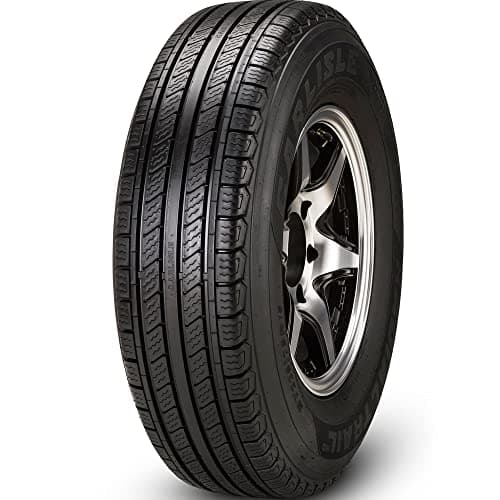 Carlisle Radial Trail HD Trailer Tire, ST205/75R15, 107M A genuine special-trailer radial in the size most single- and tandem-axle travel trailers wear, with a load index and speed symbol printed on the sidewall you can actually check. Top pick | The most common travel trailer size, at a sensible price | 8.0/ 10 | |
| 2 | 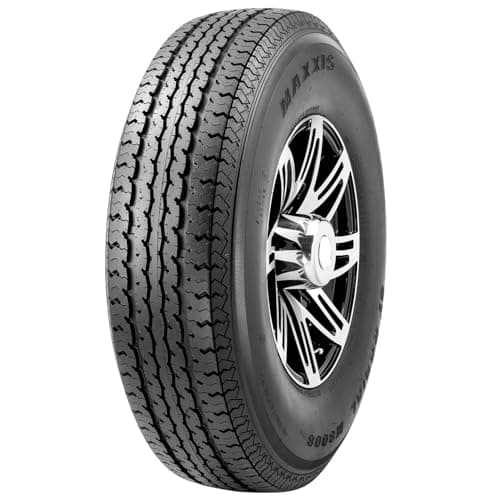 Maxxis M8008 Plus ST Radial, ST205/75R15, C/6-ply Maxxis has the strongest reputation among trailer tires for surviving heat and miles. This is the load range C version, so check it against your trailer's placard before buying. Best reputation | Owners who want the long-run reputation and will pay for it | 7.1/ 10 | |
| 3 | 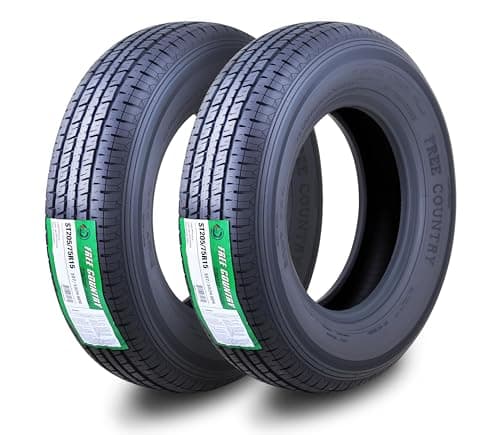 Free Country ST205/75R15 Trailer Tire, Load Range D, 107N Load range D at a budget price, with a curb scuff guard. The honest framing: it is the right load rating for many trailers, from a brand with far less history than the two above. Load range D on a budget | Load range D on a budget, with a scuff guard | 7.2/ 10 | |
| 4 | 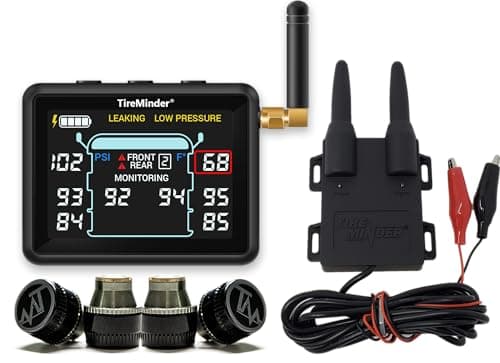 TireMinder i10 RV TPMS with 4 Transmitters Four transmitters and a dedicated monitor, which is exactly the count a tandem-axle travel trailer needs. The dedicated screen beats a phone app you have to keep awake. | A straightforward four-tire TPMS for a tandem-axle trailer | 7.5/ 10 |
Tap any row to jump to the full write-up. Prices come from Amazon and are read automatically — see each product below for the date.
The short answer
Trailer tires are the single most common way a trip ends badly, and almost all of it is preventable with three habits: correct load rating, correct pressure, and replacing them on age rather than tread.
Start with the placard, not the tire
Your trailer has a placard, usually on the front left exterior wall or inside a cabinet, giving the tire size, load range and cold inflation pressure it was built for. That is the specification.
The tire currently on the trailer may not match it. Previous owners substitute what was cheap or available, and a load range C tire on a trailer specified for D is a trailer running closer to its limit than the manufacturer intended on every trip.
| Marking | Example | What it means |
|---|---|---|
| Type | ST | Special Trailer — stiffer sidewalls, higher pressure |
| Width | 205 | Section width in millimeters |
| Aspect | 75 | Sidewall height as a percent of width |
| Construction | R | Radial |
| Rim | 15 | Wheel diameter in inches |
| Load index | 107 | About 2,149 lb per tire at max pressure |
| Speed symbol | M or N | M is 81 mph; N is 87 mph |
| Load range | C, D or E | C is 6-ply rated, D is 8, E is 10 |
Load range: a letter indicating the tire’s strength and maximum inflation. C is 6-ply rated, D is 8-ply rated, E is 10. Higher letters carry more weight at higher pressure. Never fit lower than the placard specifies.
The arithmetic you should do once
Four tires on a tandem axle, each rated 2,149 lb, is 8,596 lb of capacity. Your trailer’s GVWR — on its own placard — is the most it is allowed to weigh, and tongue weight is carried by the truck rather than by the tires.
So the tires carry roughly the GVWR minus the tongue weight. For a 7,000 lb GVWR trailer with 840 lb on the tongue, that is about 6,160 lb across four tires — around 1,540 lb each, comfortably inside a 2,149 lb rating.
Do that arithmetic once with your own numbers. If it comes out close to the tire rating, you want a higher load range, because trailer tires do not like running near their limit in summer heat.
The common mistake
ST or LT
An ST tire is built for a trailer: stiff sidewalls to resist the lateral loads a trailer axle generates, high inflation pressure, and generally a lower speed rating. An LT tire is a light truck tire built to steer and put power down, which a trailer tire never has to do.
This is one of the more argued-about questions in towing. The short version: ST is what your placard specifies, and there needs to be a real reason to deviate. Some owners move to LT for higher speed ratings or better availability, and if you do, the load capacity at your actual inflation pressure has to be at least what the ST tire provided. The two compared properly.
The date code, which matters more than the tread
Travel trailers cover few miles and spend most of their life parked in sunlight. The failure mode is not tread wear — it is the sidewall degrading from UV and ozone while the tread still looks nearly new.
Find the DOT code on the sidewall. The last four digits are the week and year of manufacture: “2225” is the 22nd week of 2025. The widely used replacement window is three to five years from that date regardless of appearance.
Two consequences. Check the date code on tires you are buying, not just on the ones you are replacing — a tire that has sat in a warehouse for two years has used two years of its life. And cover the tires when the trailer is parked for weeks, because that is cheap and it directly addresses the actual failure mechanism. The full aging story.
Pressure: run them at the maximum
Unlike car tires, ST tires are generally specified at the maximum cold pressure on the sidewall — often 50–80 psi. The stiff sidewall needs that pressure to carry its rated load, and running them soft is how you build heat.
Measure cold, before driving, with a gauge that actually reads that high. Most car gauges top out around 50–60 psi, which makes them useless here. The pressure guide.
The verdict
Buy the Carlisle in load range D if your placard calls for D and you want something widely stocked — availability matters when you need one replacement in two years. Buy the Maxxis if you tow long distances in heat and want the tire with the strongest owner reputation, checking the load range against your placard. The budget load range D option is the right rating at a lower price with much less published history behind it.
And buy a TPMS. A trailer tire going down is invisible from the driver’s seat until it comes apart. TPMS picks.
What to remember
- Match the size and load range on the trailer's placard, not the tire currently fitted.
- Load range C is 6-ply rated, D is 8, E is 10. Never fit lower than specified.
- The DOT date code matters more than tread depth. Three to five years is the usual window.
- ST tires run at the maximum cold pressure on the sidewall, often 50-80 psi.
- Cover the tires in storage — UV is the actual failure mechanism.
The picks in full
Carlisle Radial Trail HD Trailer Tire, ST205/75R15, 107M
Carlisle · Best for the most common travel trailer size, at a sensible price
A genuine special-trailer radial in the size most single- and tandem-axle travel trailers wear, with a load index and speed symbol printed on the sidewall you can actually check.
Key specifications
- Size
- ST205/75R15
- Load index / speed
- 107M (about 2,149 lb per tire, 81 mph)
- Construction
- 8-ply rating radial
- Type
- ST — special trailer
Capacity figures read from FMVSS 109 — new pneumatic tires (load and marking requirements), October 2026.
How it scored
- Load rating (30%)8
- speed (20%)7
- Build quality (25%)8
- Size availability (15%)9
- Price for capability (10%)9
Weighted average of the figures above. We did not test this product — see how we pick.
What it does well
- Correct ST construction, with stiffer sidewalls than a passenger tire
- Widely stocked, so a roadside replacement is findable
- Load rating suits most 5,000-7,000 lb tandem-axle trailers
What it is bad at
- M speed symbol means 81 mph — not a license to tow at 80
- Trailer tires age out before they wear out; the date code matters more than the tread
- Sold individually, so a set is four purchases
Price as of October 5, 2026. #ad How this is funded
Maxxis M8008 Plus ST Radial, ST205/75R15, C/6-ply
Maxxis · Best for owners who want the long-run reputation and will pay for it
Maxxis has the strongest reputation among trailer tires for surviving heat and miles. This is the load range C version, so check it against your trailer's placard before buying.
Key specifications
- Size
- ST205/75R15
- Load range
- C (6-ply rating)
- Construction
- ST radial
- Series
- M8008 Plus
Capacity figures read from FMVSS 139 — radial tires for light vehicles, October 2026.
How it scored
- Load rating (30%)6
- speed (20%)7
- Build quality (25%)9
- Size availability (15%)6
- Price for capability (10%)7
Weighted average of the figures above. We did not test this product — see how we pick.
What it does well
- The most consistently well-regarded trailer tire among long-distance owners
- Heat resistance is the specific thing it is praised for
- Smoother running than most budget ST tires
What it is bad at
- Load range C is lower than the D that many trailers specify — check your placard
- Costs more than the obvious alternatives
- Less widely stocked at tire shops than Carlisle
Price as of October 5, 2026. #ad How this is funded
Free Country ST205/75R15 Trailer Tire, Load Range D, 107N
Free Country · Best for load range d on a budget, with a scuff guard
Load range D at a budget price, with a curb scuff guard. The honest framing: it is the right load rating for many trailers, from a brand with far less history than the two above.
Key specifications
- Size
- ST205/75R15
- Load range
- D (8-ply rating)
- Load index / speed
- 107N (about 2,149 lb per tire, 87 mph)
- Feature
- Curb scuff guard
How it scored
- Load rating (30%)8
- speed (20%)8
- Build quality (25%)6
- Size availability (15%)5
- Price for capability (10%)9
Weighted average of the figures above. We did not test this product — see how we pick.
What it does well
- Load range D at a price most load range C tires ask
- N speed symbol is higher than many ST tires
- Scuff guard protects the sidewall against curbs
What it is bad at
- Little published long-term owner data compared with the big names
- Harder to match if you need one replacement in two years
- Budget ST tires are the ones most often reported failing on long hot runs
Price as of October 5, 2026. #ad How this is funded
TireMinder i10 RV TPMS with 4 Transmitters
TireMinder · Best for a straightforward four-tire tpms for a tandem-axle trailer
Four transmitters and a dedicated monitor, which is exactly the count a tandem-axle travel trailer needs. The dedicated screen beats a phone app you have to keep awake.
Key specifications
- Transmitters
- 4 included
- Monitor
- Dedicated display
- Expandable
- Yes, additional transmitters
- Model
- i10
How it scored
- Sensor coverage (25%)7
- Display (25%)8
- Alerting (25%)8
- Battery life (15%)7
- Price for capability (10%)7
Weighted average of the figures above. We did not test this product — see how we pick.
What it does well
- Four sensors matches a tandem-axle trailer with no add-ons
- Dedicated monitor, not a phone app
- Established name in RV tire monitoring
What it is bad at
- Four sensors means no spare coverage without buying a fifth
- Monitor needs 12 V power routed to it
- Sensor batteries are a periodic chore
Price as of October 5, 2026. #ad How this is funded
Common questions
Whatever the placard specifies, as a minimum. C is 6-ply rated, D is 8, E is 10. Fitting lower is the common mistake; fitting higher is fine if the wheel takes the pressure.
The last four digits of the DOT code are the week and year — 2225 is the 22nd week of 2025. Replace at three to five years from that date regardless of tread.
No. Passenger tires have flexible sidewalls designed for ride and steering, not for the lateral loads a trailer axle generates, and their load capacity at trailer pressures is insufficient.
The speed symbol is the limit — M is 81 mph, N is 87, and some older ST tires are rated 65. Those are limits, not targets: heat build-up rises sharply with speed.
Sources
- FMVSS 109 — new pneumatic and certain specialty tires — read October 2026
- FMVSS 139 — new pneumatic radial tires for light vehicles — read October 2026
- Tire Industry Association — read October 2026