First-Trailer Essentials & Tires
ST vs LT Trailer Tires
One of the more argued-about questions in towing. Here is what actually differs, and the conditions under which switching is defensible.
By Mike M. ·
How this page is funded: we earn a commission if you buy through our links, at no extra cost to you. It never changes which product we rank first. Prices come from Amazon and are read automatically — each one shows the date it was read. Full disclosure.
Quick picks
ST tires in the common travel trailer size, plus the monitor you want either way.
| # | Product | Best for | Score | Price |
|---|---|---|---|---|
| 1 | 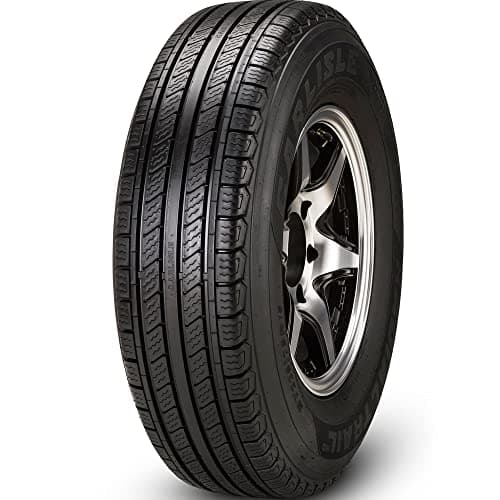 Carlisle Radial Trail HD Trailer Tire, ST205/75R15, 107M A genuine special-trailer radial in the size most single- and tandem-axle travel trailers wear, with a load index and speed symbol printed on the sidewall you can actually check. ST, widely stocked | The most common travel trailer size, at a sensible price | 8.0/ 10 | |
| 2 | 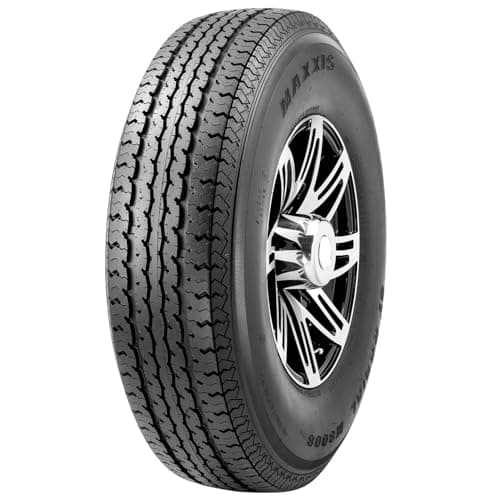 Maxxis M8008 Plus ST Radial, ST205/75R15, C/6-ply Maxxis has the strongest reputation among trailer tires for surviving heat and miles. This is the load range C version, so check it against your trailer's placard before buying. | Owners who want the long-run reputation and will pay for it | 7.1/ 10 | |
| 3 | 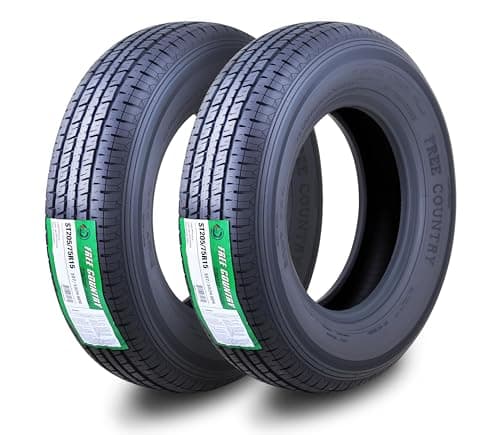 Free Country ST205/75R15 Trailer Tire, Load Range D, 107N Load range D at a budget price, with a curb scuff guard. The honest framing: it is the right load rating for many trailers, from a brand with far less history than the two above. | Load range D on a budget, with a scuff guard | 7.2/ 10 | |
| 4 | 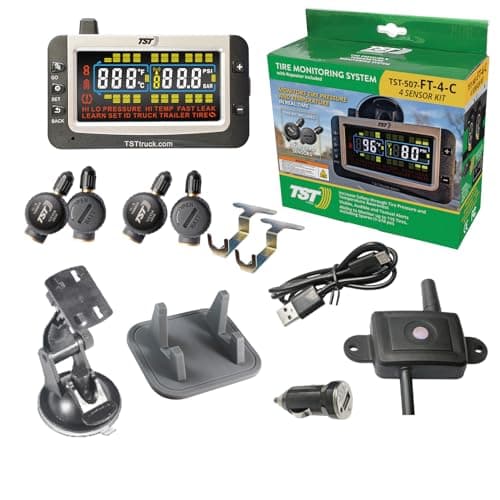 TST 507 TPMS with 4 Flow-Through Sensors and Color Display Flow-through sensors let you air up a tire without unscrewing anything, which is the difference between checking pressure weekly and meaning to. It needs metal valve stems. | Checking and adjusting pressure without removing the sensor | 7.9/ 10 |
Tap any row to jump to the full write-up. Prices come from Amazon and are read automatically — see each product below for the date.
The short answer
This argument runs forever online and most of it generates heat rather than light. Here is what is actually different.
What actually differs
| ST (Special Trailer) | LT (Light Truck) | |
|---|---|---|
| Sidewall stiffness | Stiffer, for lateral load | More compliant, for ride and steering |
| Design priority | Resisting side loads and sway | Traction, steering, braking |
| Typical inflation | Higher, often run at sidewall max | Varies by load, often below max |
| Speed rating | Often 65-87 mph | Generally higher |
| Tread pattern | Shallow, low rolling resistance | Deeper, designed for traction |
| Availability in trailer sizes | Excellent | Limited in some trailer sizes |
The key one is the first row. A trailer axle does not steer, so when the trailer is pushed sideways — crosswind, a passing truck, a camber change — the tire sidewall takes that load directly. A stiff sidewall resists it; a compliant sidewall flexes, and that flex reads as sway.
Conversely, an LT tire’s more compliant sidewall and deeper tread exist for a job — steering and traction — that a trailer tire never does.
Why people switch to LT
Three genuine reasons, and one bad one.
Speed rating. Many ST tires are rated 81 mph or lower, and some older ones 65. People who tow at 70–75 on interstates want more margin, and LT tires generally provide it.
Heat tolerance. The common failure of a budget ST tire is heat-related on a long hot run. LT tires are built for sustained highway use under load and some owners report better longevity.
Availability. In a roadside emergency, an LT tire in a common size is easier to find at a tire shop than a specific ST size.
The bad reason: because they look better or have more tread. Tread depth is irrelevant on a trailer tire, which does not need traction, and deeper tread means more rubber to generate heat.
The condition for switching, stated precisely
If you switch to LT, the LT tire’s load capacity at the inflation pressure you will actually run must be at least what the ST tire provided at its pressure.
That is not the same as matching load range letters, and this is where people go wrong. LT tire load capacity is published as a table against inflation pressure. An LT tire at 65 psi carries a different load from the same tire at 80 psi, and an ST tire’s rating is generally quoted at its maximum.
So: find the ST tire’s rated load. Find the LT tire’s load table. Confirm the LT tire at the pressure you will run meets or exceeds it, on every tire. Also confirm the wheel is rated for that pressure, which is the step people skip.
The common mistake
The conservative answer, and why it is reasonable
Fit ST tires in the size and load range on the placard, from a maker with a real reputation, replace them on date code rather than tread, run them at the sidewall pressure, and fit a monitor.
That combination addresses every one of the reasons people switch. The heat failures that drive people to LT are overwhelmingly budget ST tires run underinflated past their date code at 70 mph. Fix those four variables and the ST tire is doing the job it was designed for.
If you have done all four and still want more speed margin, the LT switch is a defensible engineering decision — made with the load tables in front of you, not from a forum thread.
What to remember
- ST sidewalls are stiffer to resist lateral load; LT sidewalls are built for steering.
- Tread depth is irrelevant on a trailer tire and more rubber means more heat.
- If switching to LT, match load capacity at your actual inflation pressure — not the load range letter.
- Check the wheel's pressure rating too.
- Most ST heat failures are budget tires, underinflated, past date code, at 70 mph.
The picks in full
Carlisle Radial Trail HD Trailer Tire, ST205/75R15, 107M
Carlisle · Best for the most common travel trailer size, at a sensible price
A genuine special-trailer radial in the size most single- and tandem-axle travel trailers wear, with a load index and speed symbol printed on the sidewall you can actually check.
Key specifications
- Size
- ST205/75R15
- Load index / speed
- 107M (about 2,149 lb per tire, 81 mph)
- Construction
- 8-ply rating radial
- Type
- ST — special trailer
Capacity figures read from FMVSS 109 — new pneumatic tires (load and marking requirements), October 2026.
How it scored
- Load rating (30%)8
- speed (20%)7
- Build quality (25%)8
- Size availability (15%)9
- Price for capability (10%)9
Weighted average of the figures above. We did not test this product — see how we pick.
What it does well
- Correct ST construction, with stiffer sidewalls than a passenger tire
- Widely stocked, so a roadside replacement is findable
- Load rating suits most 5,000-7,000 lb tandem-axle trailers
What it is bad at
- M speed symbol means 81 mph — not a license to tow at 80
- Trailer tires age out before they wear out; the date code matters more than the tread
- Sold individually, so a set is four purchases
Price as of October 5, 2026. #ad How this is funded
Maxxis M8008 Plus ST Radial, ST205/75R15, C/6-ply
Maxxis · Best for owners who want the long-run reputation and will pay for it
Maxxis has the strongest reputation among trailer tires for surviving heat and miles. This is the load range C version, so check it against your trailer's placard before buying.
Key specifications
- Size
- ST205/75R15
- Load range
- C (6-ply rating)
- Construction
- ST radial
- Series
- M8008 Plus
Capacity figures read from FMVSS 139 — radial tires for light vehicles, October 2026.
How it scored
- Load rating (30%)6
- speed (20%)7
- Build quality (25%)9
- Size availability (15%)6
- Price for capability (10%)7
Weighted average of the figures above. We did not test this product — see how we pick.
What it does well
- The most consistently well-regarded trailer tire among long-distance owners
- Heat resistance is the specific thing it is praised for
- Smoother running than most budget ST tires
What it is bad at
- Load range C is lower than the D that many trailers specify — check your placard
- Costs more than the obvious alternatives
- Less widely stocked at tire shops than Carlisle
Price as of October 5, 2026. #ad How this is funded
Free Country ST205/75R15 Trailer Tire, Load Range D, 107N
Free Country · Best for load range d on a budget, with a scuff guard
Load range D at a budget price, with a curb scuff guard. The honest framing: it is the right load rating for many trailers, from a brand with far less history than the two above.
Key specifications
- Size
- ST205/75R15
- Load range
- D (8-ply rating)
- Load index / speed
- 107N (about 2,149 lb per tire, 87 mph)
- Feature
- Curb scuff guard
How it scored
- Load rating (30%)8
- speed (20%)8
- Build quality (25%)6
- Size availability (15%)5
- Price for capability (10%)9
Weighted average of the figures above. We did not test this product — see how we pick.
What it does well
- Load range D at a price most load range C tires ask
- N speed symbol is higher than many ST tires
- Scuff guard protects the sidewall against curbs
What it is bad at
- Little published long-term owner data compared with the big names
- Harder to match if you need one replacement in two years
- Budget ST tires are the ones most often reported failing on long hot runs
Price as of October 5, 2026. #ad How this is funded
TST 507 TPMS with 4 Flow-Through Sensors and Color Display
TST · Best for checking and adjusting pressure without removing the sensor
Flow-through sensors let you air up a tire without unscrewing anything, which is the difference between checking pressure weekly and meaning to. It needs metal valve stems.
Key specifications
- Sensors
- 4 flow-through
- Display
- Color monitor
- Requirement
- Metal valve stems required
- Series
- 507
How it scored
- Sensor coverage (25%)7
- Display (25%)9
- Alerting (25%)9
- Battery life (15%)7
- Price for capability (10%)6
Weighted average of the figures above. We did not test this product — see how we pick.
What it does well
- Air up without removing the sensor — the feature that changes behavior
- Clear color monitor
- Strong reputation among full-time RV owners
What it is bad at
- Metal valve stems required, which can mean a tire-shop visit first
- Most expensive TPMS here
- Flow-through sensors are taller and more exposed to curb damage
Price as of October 5, 2026. #ad How this is funded
Common questions
It can be defensible, but the LT tire’s load capacity at the pressure you will actually run must meet or exceed the ST tire’s, and the wheel must be rated for that pressure. Load range letters are not equivalent.
Their stiff sidewalls and shallow tread are optimized for lateral load rather than sustained high-speed heat dissipation. The sidewall speed symbol is the limit — commonly 81 mph for M, 87 for N.
For the job a trailer tire does, yes — stiffer sidewalls resist the lateral loads a non-steering axle generates, which directly reduces sway. LT offers higher speed ratings and wider availability.
Sources
- FMVSS 109 — new pneumatic and certain specialty tires — read October 2026
- FMVSS 139 — new pneumatic radial tires for light vehicles — read October 2026
- Tire Industry Association — read October 2026