Towing Setup & Capacity
What Size Drop Hitch Do I Need?
There is no chart that answers this, because the answer depends on your truck and your trailer rather than on either one alone. Two measurements settle it in about five minutes.
By Mike M. ·
How this page is funded: we earn a commission if you buy through our links, at no extra cost to you. It never changes which product we rank first. Prices come from Amazon and are read automatically — each one shows the date it was read. Full disclosure.
Quick picks
Ranked on how well each one handles the problem this page is about - not knowing your exact drop yet, or needing more than one. Adjustable mounts lead for that reason; the fixed-drop option is here for the case where you already know the number and it is a big one.
| # | Product | Best for | Score | Price |
|---|---|---|---|---|
| 1 | 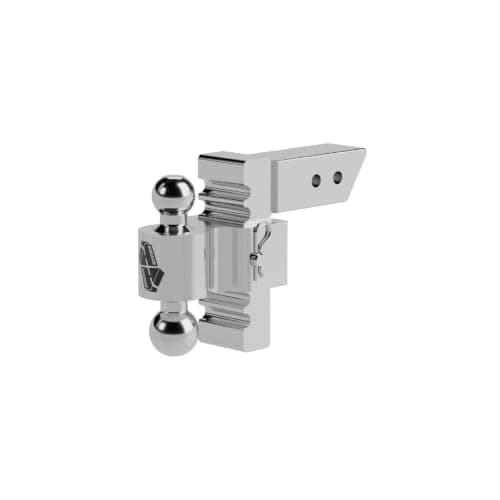 Andersen Rapid Hitch Adjustable Ball Mount, 3410 Aluminum body, plate-steel dual ball, six inches of drop or rise. The practical case for it is owning two trailers with different coupler heights and one ball mount. Top pick | One mount that fits a trailer and a utility trailer | 7.7/ 10 | |
| 2 | 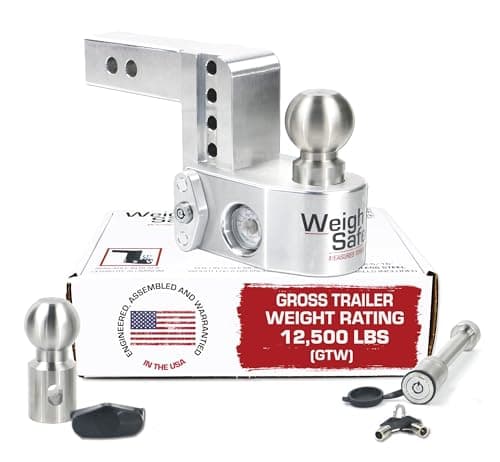 Weigh Safe Aluminum Adjustable Hitch with Tongue Weight Scale An adjustable ball mount with the scale built into the shank, so the number appears every time you couple up rather than only when you remember to get the scale out. Best with a scale built in | Seeing tongue weight every time you hook up, not once a year | 8.0/ 10 | |
| 3 | 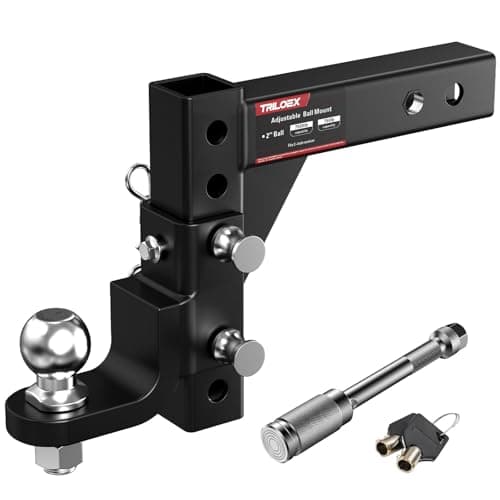 Adjustable Trailer Hitch Ball Mount, 9-1/2 in Drop A budget adjustable mount with a screw-in locking pin and a 7,500 lb rating. Fine for a light trailer; the rating is the reason it is not on the lifted-truck list. Best value | A cheap adjustable mount for a light trailer | 6.9/ 10 | $51.29View on Amazon
|
| 4 | 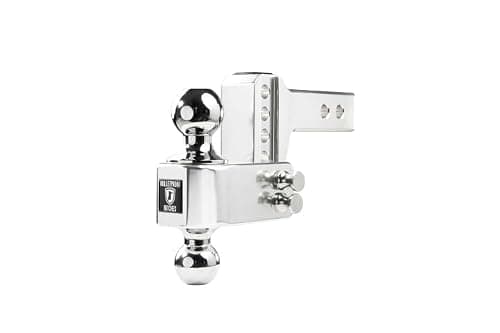 BulletProof Hitches 2 in Aluminum Adjustable Hitch, 14,000 lb A 14,000 lb rating in an aluminum body with a dual ball, which is the rare combination of high capacity and a mount you can carry one-handed. | High capacity without the weight of a steel drop hitch | 7.4/ 10 | |
| 5 | 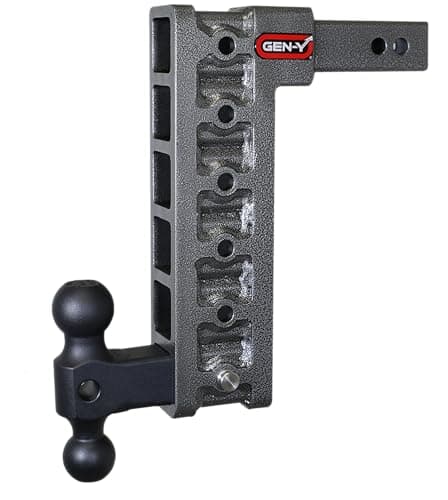 GEN-Y Mega-Duty 12.5 in Drop Hitch Ball Mount Twelve and a half inches of drop at a 10,000 lb rating, built in the USA. This is the category where a budget mount is genuinely the wrong answer. Deepest fixed drop | A lifted truck that needs real drop with real capacity | 7.7/ 10 |
Tap any row to jump to the full write-up. Prices come from Amazon and are read automatically — see each product below for the date.
The short answer
People look for a drop hitch chart and it does not exist, for a reason worth understanding before you spend money. Drop is not a property of your truck and it is not a property of your trailer. It is the gap between the two, so a 6 in drop that tows a utility trailer dead level behind a stock half-ton is wrong for the same truck with a leveling kit, wrong for the same truck towing a taller travel trailer, and wrong again after the rear springs settle a season. Any chart that claims to answer it has quietly guessed at one side of the subtraction.
Drop: the vertical distance from the top of the ball mount’s shank to the ball platform, measured with the mount in the orientation you will tow in. A mount with a 4 in drop puts the ball 4 in lower than the top of the receiver opening. Flip many fixed mounts over and the drop becomes a rise — but check the maker’s rating before you do, because inverted capacity is often lower.
The two measurements
CURT publishes the method, and it is the one every reputable ball mount maker uses. Measure the distance from the ground to the top of the inside of your hitch receiver, and the distance from the ground to the bottom of the trailer coupler. The difference is your drop or rise. Two details decide whether the number is any good.
- 1
Put both vehicles on level ground
Not a sloped driveway. A slope tilts both measurements by different amounts and the error lands entirely in the subtraction. A flat parking lot is worth driving to. - 2
Load the truck the way you tow it
Fuel, passengers, gear, bikes in the bed. A loaded truck sits lower at the rear than an empty one, and measuring empty is the most common way people end up with the wrong mount. If you tow with a weight distribution hitch, see the warning further down — that changes the exercise. - 3
Measure A: ground to the top of the inside of the receiver tube
Hook the tape on the ground, read it at the top inside edge of the square opening. Not the outside of the tube, not the bottom of the opening. Write it down. - 4
Level the trailer, then measure B: ground to the bottom of the coupler
Put a level across the trailer frame and raise or lower the tongue jack until it reads level. Then measure from the ground to the bottom of the coupler. This is the height the coupler wants to sit at when you tow. - 5
Subtract, and note which way round it came out
If the receiver reading is the larger number, that difference is the drop you need. If the coupler reading is larger, the same difference is a rise. The size of the number is the same either way; the direction is what you order. - 6
Allow about an inch for squat
The truck settles at the rear once the trailer is actually coupled, so a combination that is dead level uncoupled ends up slightly nose-high under tow. Roughly an extra inch of drop absorbs that, which is another argument for an adjustable mount: you can correct it after the first tow instead of guessing. - 7
Check the ball size separately
Drop and ball diameter are unrelated and both have to be right. The size is stamped on the coupler — the ball size chart covers reading it and what happens if you get it wrong.
| Receiver height (A) | Level coupler height (B) | What you need |
|---|---|---|
| 21 in | 17 in | 4 in drop |
| 22 in | 16 in | 6 in drop |
| 26 in (lifted truck) | 17 in | 9 in drop |
| 28 in (lifted truck) | 16 in | 12 in drop |
| 18 in | 18 in | No drop - a straight mount |
| 17 in | 21 in | 4 in rise |
Why level matters more than it sounds
Towing nose-high is not a cosmetic problem. A trailer that rides with its nose up shifts weight off the tongue and rearward onto the trailer’s own axles, which reduces the tongue weight percentage holding the rig straight — and low tongue weight is one of the principal causes of trailer sway. It also loads the rear trailer axle harder than the front one on a tandem, which is a tire wear and tire failure problem rather than a handling one.
Nose-down has its own costs: ground clearance at the tongue disappears on a steep driveway or a dip at a site entrance, the front trailer axle takes the extra load, and braking transfers more weight forward onto a tongue that is already heavy. Level is the target, and a small amount of nose-down is the more tolerable error of the two for most trailers.
Getting it level also makes everything else you measure meaningful. A tongue weight reading taken with the trailer nose-high is not the tongue weight you will tow with, which is why the tongue weight page starts by telling you to level the trailer first.
The capacity trap on deep drops
This is the part the chart-shaped question hides, and it is the part that matters most if your truck is lifted. A ball mount’s capacity rating is not a fixed number for the casting — it falls as the drop gets deeper, because a deeper drop puts the load further from the receiver and multiplies the leverage on the hitch pin and the receiver tube. The same adjustable mount is frequently rated for one gross trailer weight in its shallow holes and a lower one in its deepest hole.
So the sequence has to be: find your drop first, then find a mount rated for your loaded trailer weight at that drop. Doing it the other way around — buying the mount for its headline rating and then discovering the rating applies two holes up from where you need the ball — is how people end up towing on a mount that is, on paper, overloaded.
The common mistake
Two smaller specifications worth checking before you order. The shank has to match your receiver size — a 2 in shank does not fit a 2-1/2 in receiver without an adapter, and adapters add their own leverage. And the hole spacing on an adjustable mount sets how finely you can tune the height: a mount that adjusts in 1 in steps can land you half an inch off level and have no answer for it.
The mounts worth buying
Andersen Rapid Hitch, 3410. The top pick because it answers the actual problem this page describes. Six inches of drop or rise across its adjustment range, a dual ball with 2 in and 2-5/16 in heads, and an aluminum body that is light enough to carry in one hand. If you do not yet know your exact drop, or you tow a travel trailer and a utility trailer with different coupler heights, this is the mount that stops being wrong when something changes. The cons: aluminum scuffs where steel would shrug, it costs several times what a fixed mount does, and the adjustment range caps out at 6 in, which is not enough for a seriously lifted truck.
Weigh Safe adjustable hitch with tongue weight scale. The same adjustable idea with a gauge in the shank that reads tongue weight every time you hook up, 4 in of adjustable drop and a 12,500 lb gross trailer weight rating. The argument for it is that tongue weight is the number that changes most often and gets checked least; a mount that shows it turns a once-a-year measurement into a glance. The cons: it is the most expensive mount here, the gauge reads static tongue weight and is not a substitute for a proper scale if you need precision, and the aluminum body wants keeping clean.
Adjustable ball mount, 9-1/2 in drop. The value pick, and the one to buy if your drop figure came out large. It covers 9-1/2 in of drop and 8-1/4 in of rise, includes a screw-in locking pin, and costs a fraction of the branded aluminum mounts. The honest cons matter here: the 7,500 lb capacity is the lowest in this list and that figure deserves checking against your own loaded trailer weight at your actual drop, it is heavy steel, and it is a generic product rather than a named brand with a long warranty record.
BulletProof Hitches 2 in aluminum adjustable, 14,000 lb. The one to buy when the capacity number is what is binding rather than the drop. Fourteen thousand pounds of rating in a corrosion-resistant aluminum body with a dual ball, which is a lot of capacity without the weight of an equivalent steel mount. The cons: only 2 in of drop or rise, so it solves capacity and not geometry; it is priced accordingly; and like every aluminum mount it marks more easily than steel.
GEN-Y Mega-Duty 12.5 in drop. The deepest drop here and a fixed one, rated at 10,000 lb and made in the USA. This is the mount for a lifted truck whose measurement came out past what the adjustables reach. The cons are the cons of all deep fixed drops: it is one height and only one, the leverage at 12.5 in is exactly the loading the capacity section above is about, and it is heavy. Buy it when you have measured and you know. Our lifted-truck drop hitch roundup is the longer version of that case, and the adjustable ball mount roundup covers the rest of the adjustable field.
What to remember
- There is no drop hitch chart. Drop is the gap between your receiver and your coupler.
- Measure A, ground to the top inside of the receiver; B, ground to the level coupler.
- The difference is the drop. If the coupler is higher, the same number is a rise.
- Measure with the truck loaded as you tow it, on level ground, every time.
- Capacity ratings fall as drop deepens. Check the rating at the hole you will use.
- An adjustable mount is the right default, because both measurements change over time.
- A weight distribution hitch is leveled at its own head, not with a drop mount.
How we picked
The measurement method on this page is CURT’s published method, cited rather than paraphrased from memory, and the worked examples are arithmetic rather than measurements of real vehicles — we say so in the table caption because a made-up truck measurement would be worthless to you. The mount capacities, drops and ball sizes are each maker’s published figures, and every listing was confirmed live and in stock before it was featured. We have not towed with all five. Where a capacity varies by adjustment position, the maker’s own rating for your hole is the one that governs, not the headline on the box. Current prices come from retailer listing data read automatically and date-stamped. The rubric and its weights are on how we pick.
The picks in full
Andersen Rapid Hitch Adjustable Ball Mount, 3410
Andersen Hitches · Best for one mount that fits a trailer and a utility trailer
Aluminum body, plate-steel dual ball, six inches of drop or rise. The practical case for it is owning two trailers with different coupler heights and one ball mount.
Key specifications
- Drop / rise
- 6 in
- Balls
- 2 in and 2-5/16 in plate steel dual ball
- Receiver
- 2 in
- Body
- Aluminum
Capacity figures read from Andersen Rapid Hitch specifications, October 2026.
How it scored
- Rated capacity (25%)8
- Adjustability (25%)9
- Security (20%)6
- Build quality (15%)8
- Price for capability (15%)7
Weighted average of the figures above. We did not test this product — see how we pick.
What it does well
- Flip the ball plate instead of buying a second mount
- Aluminum means you can actually lift it
- Generous drop and rise range
What it is bad at
- Aluminum galls against a steel receiver if you never grease it
- The pin and clip are the weak point for theft unless you add a lock
- Costs as much as three fixed mounts
Price as of October 28, 2026. #ad How this is funded
Weigh Safe Aluminum Adjustable Hitch with Tongue Weight Scale
Weigh Safe · Best for seeing tongue weight every time you hook up, not once a year
An adjustable ball mount with the scale built into the shank, so the number appears every time you couple up rather than only when you remember to get the scale out.
Key specifications
- Gross trailer weight
- 12,500 lb
- Drop
- 4 in adjustable
- Balls
- Stainless 2 in and 2-5/16 in
- Receiver
- 2 in
- Extras
- 2-piece lock set included
How it scored
- Rated capacity (25%)8
- Adjustability (25%)9
- Security (20%)8
- Build quality (15%)8
- Price for capability (15%)6
Weighted average of the figures above. We did not test this product — see how we pick.
What it does well
- Measures tongue weight as part of hooking up — zero extra effort
- Dual stainless balls cover both common coupler sizes
- Adjustable height, so one mount fits two trailers
What it is bad at
- The gauge reads loaded tongue weight at the ball, which is not identical to a scale under the coupler
- Aluminum body scratches easily
- Expensive for a ball mount
Price as of October 28, 2026. #ad How this is funded
Adjustable Trailer Hitch Ball Mount, 9-1/2 in Drop
Generic · Best for a cheap adjustable mount for a light trailer
A budget adjustable mount with a screw-in locking pin and a 7,500 lb rating. Fine for a light trailer; the rating is the reason it is not on the lifted-truck list.
Key specifications
- Capacity
- 7,500 lb
- Drop
- 9-1/2 in
- Rise
- 8-1/4 in
- Pin
- Screw-in locking pin included
How it scored
- Rated capacity (25%)5
- Adjustability (25%)8
- Security (20%)7
- Build quality (15%)6
- Price for capability (15%)9
Weighted average of the figures above. We did not test this product — see how we pick.
What it does well
- A fraction of the price of a name-brand adjustable mount
- Big drop range, useful behind a lifted truck
- Locking pin included
What it is bad at
- 7,500 lb rating rules out most loaded travel trailers
- No published maker spec sheet to check the rating against
- Heavy steel — this is not a one-hand lift
BulletProof Hitches 2 in Aluminum Adjustable Hitch, 14,000 lb
BulletProof Hitches · Best for high capacity without the weight of a steel drop hitch
A 14,000 lb rating in an aluminum body with a dual ball, which is the rare combination of high capacity and a mount you can carry one-handed.
Key specifications
- Capacity
- 14,000 lb
- Drop / rise
- 2 in
- Balls
- 2 in and 2-5/16 in dual ball
- Body
- Corrosion-resistant aluminum
How it scored
- Rated capacity (25%)10
- Adjustability (25%)5
- Security (20%)7
- Build quality (15%)9
- Price for capability (15%)6
Weighted average of the figures above. We did not test this product — see how we pick.
What it does well
- Highest rating here, in the lightest material
- Dual ball covers both coupler sizes
- Corrosion resistance is a real advantage on a salted road
What it is bad at
- Only 2 in of drop — not a lifted-truck solution
- Aluminum needs anti-seize in a steel receiver
- Price
Price as of October 28, 2026. #ad How this is funded
GEN-Y Mega-Duty 12.5 in Drop Hitch Ball Mount
GEN-Y Hitch · Best for a lifted truck that needs real drop with real capacity
Twelve and a half inches of drop at a 10,000 lb rating, built in the USA. This is the category where a budget mount is genuinely the wrong answer.
Key specifications
- Drop
- 12.5 in
- Capacity
- 10,000 lb
- Receiver
- 2 in
- Origin
- Made in USA
How it scored
- Rated capacity (25%)9
- Adjustability (25%)7
- Security (20%)7
- Build quality (15%)9
- Price for capability (15%)6
Weighted average of the figures above. We did not test this product — see how we pick.
What it does well
- Enough drop for a genuinely lifted truck without stacking adapters
- Capacity holds up at full drop, which is the spec that usually collapses
- Heavy-gauge construction
What it is bad at
- Very heavy to handle and store
- Expensive
- Overkill for a stock-height truck
Price as of October 28, 2026. #ad How this is funded
Common questions
Ground to the top inside of the receiver, minus ground to the bottom of the leveled coupler. That difference is your drop — or a rise, if the coupler is higher.
Not a useful one. Drop is the difference between your receiver height and your trailer’s level coupler height, and both change with load and setup.
The mount’s own rating usually falls as drop deepens, because of leverage. Check the maker’s rating for the position you will actually use.
Level. Nose-high reduces tongue weight and invites sway; nose-down costs ground clearance. If you must be off, a little nose-down is the better error.
Sources
- CURT — how to measure hitch height, hitch drop and select a ball mount — read October 2026
- SAE J684 — trailer couplings, hitches and safety chains — read October 2026
- 49 CFR 393.70 — coupling devices and towing methods — read October 2026