Towing Setup & Capacity
Trailer Brake Controller Not Working: The Checks In Order
Most of the time it is not the controller. Work from the connector outward and you will usually find it in the first three checks.
By Mike M. ·
How this page is funded: we earn a commission if you buy through our links, at no extra cost to you. It never changes which product we rank first. Prices come from Amazon and are read automatically — each one shows the date it was read. Full disclosure.
Quick picks
If the diagnosis lands on the controller or its wiring, these are the replacement parts the checks below point to.
| # | Product | Best for | Score | Price |
|---|---|---|---|---|
| 1 | 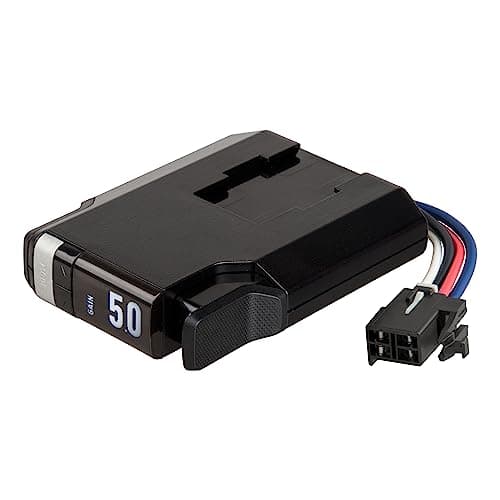 CURT TriFlex Next Proportional Trailer Brake Controller, 51146 Proportional, plug-and-play, fully adjustable and rated to four axles for well under the price of the knob-controlled version — the sensible default if your truck has a factory brake harness. The usual replacement | Most first-time buyers who want proportional braking cheaply | 8.2/ 10 | |
| 2 | 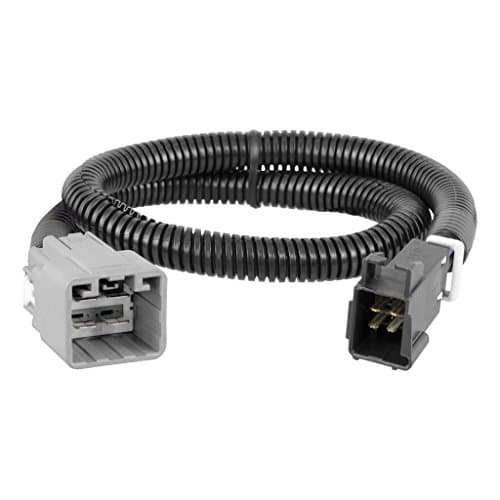 CURT 51457 Quick Plug Brake Control Wiring Harness, Select Ram The part that decides whether fitting a brake controller to a Ram is a ten-minute plug-in or an afternoon of splicing. Vehicle-specific, and cheap enough that there is no reason to splice instead. If the wiring is the fault | Turning a Ram brake-controller install into a plug-in job | 8.9/ 10 | |
| 3 | 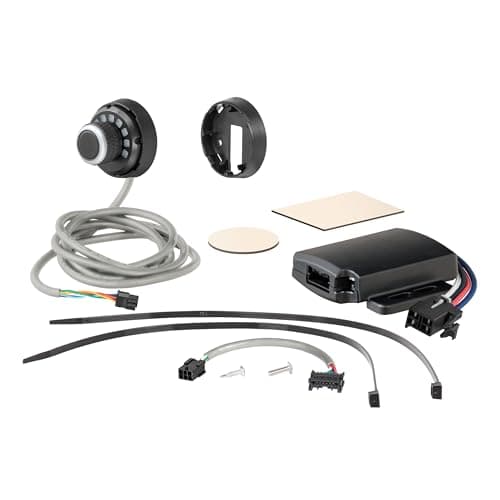 CURT Spectrum Proportional Trailer Brake Controller, 51170 Proportional braking with a dash-mounted knob, which beats an app the first time you feel the trailer push and want to change gain without looking away from the road. If you want a bigger knob | A permanent install with a physical knob you can reach | 7.2/ 10 |
Tap any row to jump to the full write-up. Prices come from Amazon and are read automatically — see each product below for the date.
The short answer
Brake controllers fail far less often than the four things around them: a corroded 7-pin connector, a bad trailer ground, a chafed wire inside the trailer frame, and a worn brake magnet. Replacing the controller first is the expensive way to not fix it, and it is the most common thing owners do.
Work outward from the connector. Each check below rules out a whole class of cause, and almost every real fault shows up in the first three.
Start from the symptom
| Symptom | Most likely cause | Start at check |
|---|---|---|
| Controller shows no trailer connected | Connector, trailer ground or broken brake wire | 1 |
| No trailer braking at all, controller looks normal | Brake wire open, or magnets failed | 1 |
| Controller is dark, no display | Power or fuse to the controller | 2 |
| Brakes apply but very weakly | Gain set low, bad ground, or worn magnets | 3 |
| Brakes grab or lock up | Gain set high, or controller not mounted level | 6 |
| Brakes apply with no brake pedal input | Controller mounting angle, or a shorted brake wire | 6 |
| Works dry, fails in rain | Water in the connector or a chafed wire | 1 |
The seven checks
- 1
Inspect both halves of the 7-pin connector
Unplug and look. You are looking for green or white corrosion, a bent or pushed-back pin, and a flattened spring contact. Clean with electrical contact cleaner and a small brush, not sandpaper. Check the plug on the trailer and the socket on the vehicle — both corrode, and the socket's spring tension matters as much as the pins. - 2
Confirm the controller has power and a brake signal
A controller needs a heavy power feed, a ground, a brake-light signal wire and the output to the trailer. If the display is dark, the fuse or the power feed is the problem. If it powers up but never senses braking, the brake-light signal wire is the suspect. Both are checks a multimeter answers in two minutes. - 3
Check the trailer ground
This is the single most under-diagnosed towing fault. The trailer's white ground wire must make a clean metal-to-metal connection to the frame, and the frame must be continuous to the brake assemblies. Rust, paint and a loose ground screw all produce weak braking, flickering lights and false no-trailer warnings — symptoms that look electronic and are not. - 4
Check the brake wire along the trailer
Follow the blue brake wire from the plug toward the axles. Look for chafe points where it crosses the frame, crushed sections at frame clamps, and corroded crimp joints near the axles. A wire that is intact in the dry and open in the rain is chafed insulation. - 5
Check the brake magnets
Each electric brake assembly has a magnet that should read within the resistance range the axle maker publishes — commonly a few ohms each. A magnet reading open is dead; one reading far from its spec is on the way out. A trailer with one dead magnet on a tandem axle brakes noticeably but poorly, which is exactly the weak-braking symptom. - 6
Check the controller's mounting angle and gain
Proportional controllers sense deceleration, so they must be mounted within the angle range the maker specifies and calibrated after mounting. A controller mounted too steeply or never calibrated applies brakes when you are not braking, or grabs at low speed. Re-run the calibration before concluding the unit is faulty. - 7
Only now consider replacing the controller
If the connector is clean, the power and brake signal are present, the ground is solid, the brake wire has continuity, the magnets read in spec and the mounting and calibration are correct — then the controller is the remaining suspect. A vehicle-specific harness is worth buying at the same time, because it removes the splices that caused a good share of the faults above.
The common mistake
The 'no trailer connected' message specifically
This warning is generated by the controller failing to detect a load on its output circuit. It is not an intelligent diagnosis; it simply means current is not flowing where the controller expects. Three causes account for nearly all of them:
The connector. A corroded or backed-out brake pin breaks the circuit while every other pin still works, so your lights are fine and your brakes are not. This is why the warning so often appears after a wet trip or a winter of storage.
The ground. The brake circuit returns through the trailer ground. A poor ground limits current enough for the controller to read it as no trailer, and tends to come with dim or flickering trailer lights.
An open brake wire or dead magnets. If the wire is severed or every magnet is open, there is genuinely no load. On a tandem-axle trailer it is rare for all magnets to fail at once, which is why the wire is the better suspect.
When to stop towing
Trailer brakes are not a convenience feature, and most states require them above a trailer weight that any travel trailer clears. If you have no trailer braking at all, the combination’s stopping distance is longer than the vehicle was ever rated for and the tow vehicle’s brakes are doing work they will overheat doing on any real descent. Fix it before the next trip rather than during it.
Two things to get right once it works again: set the gain properly with the loaded trailer rather than leaving it where it was, and check the breakaway switch and cable while you are under there — it is the backup for exactly this failure, and a frayed lanyard is the kind of thing nobody notices until it matters. The brake controller roundup covers gain setting and what to buy if the diagnosis lands on the unit itself.
What to remember
- The controller is the last suspect, not the first. Work outward from the 7-pin connector.
- Corrosion or a backed-out brake pin breaks the brake circuit while all the lights still work.
- A bad trailer ground is the most under-diagnosed fault in towing, and it mimics an electronic failure.
- A 'no trailer connected' message means no current is flowing — usually connector, ground or an open brake wire.
- Check magnet resistance against the axle maker's published figure before replacing anything.
- Re-run the controller's calibration after any remount. Grabby brakes are often a mounting angle, not a fault.
- No trailer brakes at all means stop towing, not drive gently.
The picks in full
CURT TriFlex Next Proportional Trailer Brake Controller, 51146
CURT · Best for most first-time buyers who want proportional braking cheaply
Proportional, plug-and-play, fully adjustable and rated to four axles for well under the price of the knob-controlled version — the sensible default if your truck has a factory brake harness.
Key specifications
- Braking
- Proportional, inertia-based
- Axles
- 2-4 axles
- Install
- Plug-and-play with factory harness
- Profile
- Low profile, fully adjustable
Capacity figures read from CURT TriFlex Next specifications, October 2026.
How it scored
- Braking control (30%)9
- Install effort (25%)8
- Adjustability (20%)8
- Readout / feedback (15%)7
- Price for capability (10%)9
Weighted average of the figures above. We did not test this product — see how we pick.
What it does well
- Cheapest genuine proportional controller here
- Handles up to four axles, so it outgrows a single trailer
- Low-profile case fits where a knob controller will not
What it is bad at
- Plug-and-play only if the truck already has the brake-control connector
- Adjustment is through buttons, which is slower than a knob while moving
- No app, no remote display
Price as of October 10, 2026. #ad How this is funded
CURT 51457 Quick Plug Brake Control Wiring Harness, Select Ram
CURT · Best for turning a ram brake-controller install into a plug-in job
The part that decides whether fitting a brake controller to a Ram is a ten-minute plug-in or an afternoon of splicing. Vehicle-specific, and cheap enough that there is no reason to splice instead.
Key specifications
- Fits
- Select Ram 1500, Classic, 2500, 3500, 4500, 5500
- Function
- Plugs a controller into the factory tow connector
- Wiring
- No splicing or cutting required
- Note
- Check the year range against your truck before ordering
Capacity figures read from CURT Quick Plug harness application listing, October 2026.
How it scored
- How often you use it (40%)9
- Build quality (25%)8
- Takes up little room (20%)9
- Price for capability (15%)10
Weighted average of the figures above. We did not test this product — see how we pick.
What it does well
- Removes the splicing step that puts people off fitting a controller themselves
- Costs a fraction of the controller it connects
- Keeps the factory wiring intact, which matters at trade-in
What it is bad at
- Ram-specific — useless on any other make
- CURT lists more than one Ram harness; the year and model decide which
- Only helps if your truck has the factory brake-controller connector
Price as of October 10, 2026. #ad How this is funded
CURT Spectrum Proportional Trailer Brake Controller, 51170
CURT · Best for a permanent install with a physical knob you can reach
Proportional braking with a dash-mounted knob, which beats an app the first time you feel the trailer push and want to change gain without looking away from the road.
Key specifications
- Braking
- Proportional (inertia sensing)
- Control
- Dash-mount knob
- Install
- Hardwired, mount-anywhere orientation
- Display
- LED status
Capacity figures read from CURT Spectrum specifications, October 2026.
How it scored
- Braking control (30%)9
- Install effort (25%)5
- Adjustability (20%)8
- Readout / feedback (15%)7
- Price for capability (10%)6
Weighted average of the figures above. We did not test this product — see how we pick.
What it does well
- Physical knob — adjust by feel without taking your eyes off the road
- Mounts in any orientation, which matters in a cramped footwell
- Proportional response rather than a fixed time delay
What it is bad at
- Hardwiring is a real afternoon if the truck has no factory harness
- Priced above controllers with more axle capacity
- Readout is LEDs, not a numeric display
Price as of October 10, 2026. #ad How this is funded
Common questions
Because no current is flowing on its output. Usually a corroded or backed-out brake pin, a poor trailer ground, or an open brake wire — all of which leave the lights working normally.
Measure resistance across each magnet with a multimeter and compare to the axle maker’s published figure. Open circuit means dead; well off spec means failing. Check all of them — one dead magnet still leaves partial braking.
Yes, and it is one of the most common causes. The brake circuit returns through the trailer ground, so a rusted or loose ground gives weak braking, flickering lights and false no-trailer warnings.
Usually gain too high, or a proportional controller mounted outside its angle range or never calibrated. Lower the gain, re-run calibration, and rule out a shorted brake wire.
Sources
- CURT published towing product specifications — read October 2026
- REDARC Tow-Pro Elite published specifications and vehicle fitment — read October 2026
- SAE J684 — trailer couplings, hitches and safety chains — read October 2026
- SAE J2807 — tow-vehicle gross combination weight rating procedure — read October 2026
- 49 CFR 393.40 — required brake systems, including trailer brakes — read October 2026