Towing Setup & Capacity
Trailer Hitch Classes Explained
Five classes, two ratings each, and one column most charts omit: which class your situation actually calls for.
By Mike M. ·
How this page is funded: we earn a commission if you buy through our links, at no extra cost to you. It never changes which product we rank first. Prices come from Amazon and are read automatically — each one shows the date it was read. Full disclosure.
Quick picks
The hardware that fits the class you land on.
| # | Product | Best for | Score | Price |
|---|---|---|---|---|
| 1 | 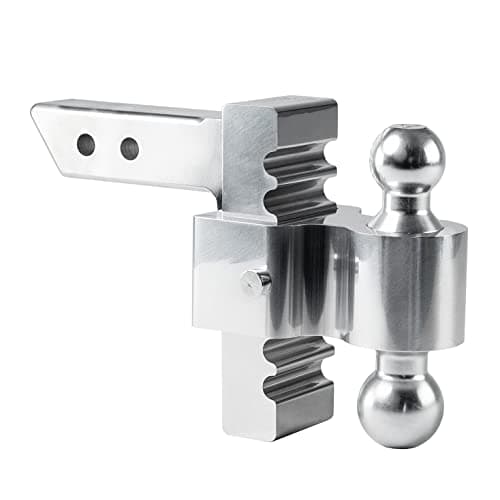 Andersen Rapid Hitch Adjustable Ball Mount, 3410 Aluminum body, plate-steel dual ball, six inches of drop or rise. The practical case for it is owning two trailers with different coupler heights and one ball mount. | One mount that fits a trailer and a utility trailer | 7.7/ 10 | |
| 2 | 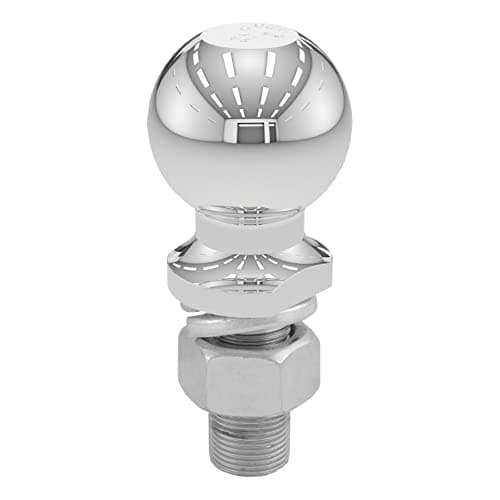 CURT Chrome Trailer Hitch Ball, 2-5/16 in, 10,000 lb, 40007 A 2-5/16 in ball on a 1 in shank rated to 10,000 lb. If your coupler says 2-5/16, no other size is acceptable, and this is the plain correct answer. | The ball most travel trailers over 5,000 lb actually need | 8.9/ 10 | |
| 3 | 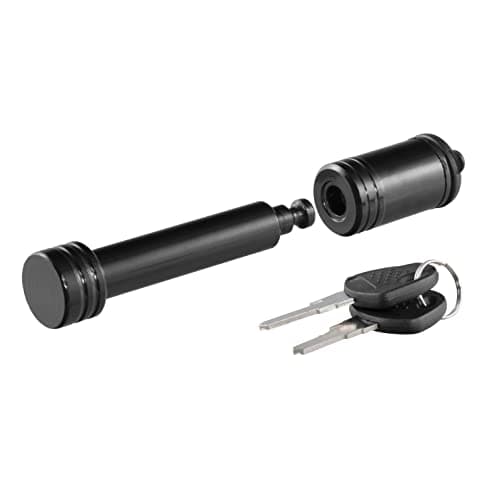 CURT Barbell Hitch Lock, 5/8 in, 23518 A 5/8 in locking pin for a 2 in receiver. Cheap, and it stops the single most casual theft on the list: somebody pulling the clip and walking off with your ball mount. | Replacing the pin and clip on a ball mount you leave in | 6.8/ 10 | |
| 4 | 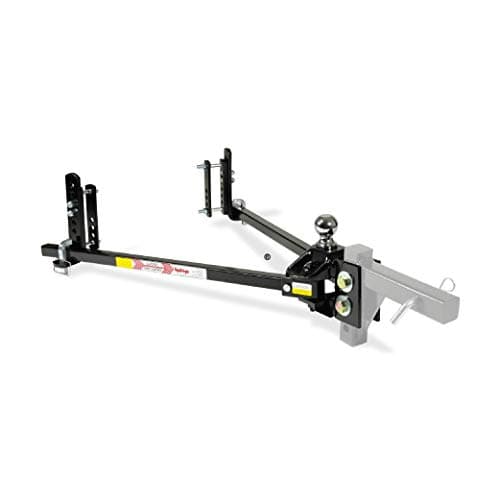 Equal-i-zer 4-Point Sway Control Hitch, 90-00-1001 Four-point sway control built into the head, so there is no friction bar to unclip before you back into a site — the single biggest quality-of-life difference for a first-timer. | Most half-ton trucks pulling a 5,000-10,000 lb trailer | 7.9/ 10 |
Tap any row to jump to the full write-up. Prices come from Amazon and are read automatically — see each product below for the date.
The short answer
The full table
| Class | Receiver | Gross trailer weight | Tongue weight | Which one you need |
|---|---|---|---|---|
| Class 1 | 1-1/4 in | 2,000 lb | 200 lb | Bike rack, small utility trailer, cargo carrier |
| Class 2 | 1-1/4 in | 3,500 lb | 350 lb | Small boat, jet ski, light utility trailer |
| Class 3 | 2 in | 8,000 lb | 800 lb | Most travel trailers up to about 26 ft |
| Class 4 | 2 in | 10,000 lb | 1,000 lb | Travel trailers 26-34 ft, car haulers |
| Class 5 | 2 or 2-1/2 in | 17,000 lb and up | 1,700 lb and up | Heavy equipment, large bumper-pull, gooseneck adapters |
Every receiver has two ratings
Read the label on your receiver and you will usually find two sets of figures:
Weight carrying (WC). The rating with a conventional ball mount. The tongue load acts on the receiver as a cantilever and this is the lower number.
Weight distributing (WD). The rating with a weight distribution hitch fitted. Load is spread across three axles and the bending moment on the receiver is lower, so the receiver can take a heavier trailer. Often 50% higher.
Practically: if your trailer is above the WC figure and below the WD figure, weight distribution is required by the receiver, not optional.
GTW and TW: GTW is gross trailer weight — the loaded trailer, everything in it. TW is tongue weight — the downward force on the ball. Both are stamped on the receiver and both apply at once.
The receiver opening, which is a separate thing
Class 1 and 2 use a 1-1/4 in square opening. Class 3, 4 and most of 5 use 2 in. Some heavy Class 5 receivers use 2-1/2 in, and 3 in exists on commercial equipment.
Because Class 3 and 4 share the 2 in opening, the same ball mounts and weight distribution shanks fit both — the difference is in the steel and the rating, not the hole. The receiver sizes and pin diameters has the dimensions.
Adapters exist to step a 1-1/4 in receiver up to 2 in. Treat them with suspicion: the adapter extends the lever arm and the limiting rating remains that of the smaller receiver. An adapter does not give you a Class 3 hitch.
The six-rating chain
Six ratings apply simultaneously, and the lowest one is your limit:
- The vehicle’s towing capacity, from the manual
- The vehicle’s payload, from the door-jamb sticker
- The receiver’s class rating, stamped on it
- The ball mount’s rating, stamped on it
- The ball’s rating, stamped on the ball
- The coupler’s rating, stamped on the coupler
Most people check one and assume the rest. The two that get missed are the ball — a 2 in ball can be rated anywhere from 3,500 lb to 8,000 lb depending on shank diameter — and the coupler, which is the trailer’s own limit.
The common mistake
Which class you need, by situation
A bike rack or cargo carrier only. Class 1 or 2 is fine. Check the carrier’s own tongue weight requirement — a loaded four-bike rack can be 150 lb or more.
A small utility or boat trailer. Class 2 covers most of it; Class 3 if the boat is substantial.
A travel trailer, any size. Class 3 minimum, Class 4 if you are over about 26 ft or want headroom. Both need weight distribution at the weights involved.
Anything over about 12,000 lb. Class 5, and a three-quarter-ton or larger tow vehicle to go with it.
What to remember
- Classes rate the receiver, not the vehicle.
- Every receiver has two ratings: weight carrying and weight distributing.
- Class 3 and 4 share the 2 in opening, so the same mounts fit both.
- Six ratings apply at once — vehicle, payload, receiver, mount, ball, coupler.
- A receiver upgrade never raises what the vehicle may tow.
The picks in full
Andersen Rapid Hitch Adjustable Ball Mount, 3410
Andersen Hitches · Best for one mount that fits a trailer and a utility trailer
Aluminum body, plate-steel dual ball, six inches of drop or rise. The practical case for it is owning two trailers with different coupler heights and one ball mount.
Key specifications
- Drop / rise
- 6 in
- Balls
- 2 in and 2-5/16 in plate steel dual ball
- Receiver
- 2 in
- Body
- Aluminum
Capacity figures read from Andersen Rapid Hitch specifications, October 2026.
How it scored
- Rated capacity (25%)8
- Adjustability (25%)9
- Security (20%)6
- Build quality (15%)8
- Price for capability (15%)7
Weighted average of the figures above. We did not test this product — see how we pick.
What it does well
- Flip the ball plate instead of buying a second mount
- Aluminum means you can actually lift it
- Generous drop and rise range
What it is bad at
- Aluminum galls against a steel receiver if you never grease it
- The pin and clip are the weak point for theft unless you add a lock
- Costs as much as three fixed mounts
Price as of October 5, 2026. #ad How this is funded
CURT Chrome Trailer Hitch Ball, 2-5/16 in, 10,000 lb, 40007
CURT · Best for the ball most travel trailers over 5,000 lb actually need
A 2-5/16 in ball on a 1 in shank rated to 10,000 lb. If your coupler says 2-5/16, no other size is acceptable, and this is the plain correct answer.
Key specifications
- Ball diameter
- 2-5/16 in
- Capacity
- 10,000 lb
- Shank
- 1 in diameter x 2-1/4 in long
- Finish
- Chrome
Capacity figures read from CURT hitch ball specifications, October 2026.
How it scored
- How often you use it (40%)9
- Build quality (25%)8
- Takes up little room (20%)9
- Price for capability (15%)10
Weighted average of the figures above. We did not test this product — see how we pick.
What it does well
- Correct size for the majority of mid-size and larger travel trailers
- Cheap enough to keep a spare
- Chrome finish resists the rust that seizes a coupler
What it is bad at
- A 1 in shank will not fit a ball mount drilled for 3/4 in
- Chrome chips, and then it rusts under the chip
- Needs a torque wrench to tighten properly, which most people skip
Price as of October 5, 2026. #ad How this is funded
CURT Barbell Hitch Lock, 5/8 in, 23518
CURT · Best for replacing the pin and clip on a ball mount you leave in
A 5/8 in locking pin for a 2 in receiver. Cheap, and it stops the single most casual theft on the list: somebody pulling the clip and walking off with your ball mount.
Key specifications
- Pin diameter
- 5/8 in
- Fits
- 2 in receivers
- Type
- Barbell style
- Finish
- Black
Capacity figures read from CURT hitch lock specifications, October 2026.
How it scored
- Security (35%)6
- Fit range (25%)7
- Weather resistance (20%)5
- Everyday usability (10%)9
- Price for capability (10%)10
Weighted average of the figures above. We did not test this product — see how we pick.
What it does well
- The cheapest security upgrade on the whole site
- Barbell shape is harder to lever than a padlock-style pin
- Fits the 2 in receiver on most half-ton trucks
What it is bad at
- 5/8 in only — a 1-1/4 in receiver needs a 1/2 in pin
- The lock cylinder is the first thing to corrode
- Protects the mount, not the trailer
Price as of October 5, 2026. #ad How this is funded
Equal-i-zer 4-Point Sway Control Hitch, 90-00-1001
Equal-i-zer · Best for most half-ton trucks pulling a 5,000-10,000 lb trailer
Four-point sway control built into the head, so there is no friction bar to unclip before you back into a site — the single biggest quality-of-life difference for a first-timer.
Key specifications
- Trailer weight rating
- 10,000 lb
- Tongue weight rating
- 1,000 lb
- Sway control
- 4-point, integral to the head
- Included
- Weight distribution kit; shank and ball sold separately
Capacity figures read from Equal-i-zer product specifications, October 2026.
How it scored
- Sway control (25%)9
- Tongue-weight range (20%)8
- Backing up (20%)9
- Setup effort (15%)7
- Quietness (10%)5
- Price for capability (10%)7
Weighted average of the figures above. We did not test this product — see how we pick.
What it does well
- Sway control is always on — nothing to remember, nothing to remove
- Back up and turn sharply without unhooking anything
- Bracket height is adjustable in the field with a wrench, not a shop visit
What it is bad at
- It creaks and groans in tight turns; owners report this consistently and it is normal, not a fault
- Needs a shank and ball bought separately, which catches people out on price
- Heavier to lift onto the coupler than a friction-bar setup
Price as of October 5, 2026. #ad How this is funded
Common questions
Class 3 minimum, Class 4 over about 26 ft. Check the rating stamped on your own receiver, and remember the vehicle’s towing capacity and payload still govern.
Weight carrying is the rating with a conventional ball mount, where the tongue load acts as a cantilever. Weight distributing is the higher rating that applies when the load is spread across three axles.
Adapters exist, but they extend the lever arm and the limiting rating stays that of the smaller receiver. An adapter does not turn a Class 2 into a Class 3.
Sources
- SAE J2807 — tow-vehicle gross combination weight rating procedure — read October 2026
- SAE J684 — trailer couplings, hitches and safety chains — read October 2026
- 49 CFR 393.70 — coupling devices and towing methods — read October 2026
- CURT published towing product specifications — read October 2026