Power & Electrical
The Best RV Power Cords And Adapters
Three adapters cover almost every situation, and one common substitution is genuinely a fire risk.
By Mike M. ·
How this page is funded: we earn a commission if you buy through our links, at no extra cost to you. It never changes which product we rank first. Prices come from Amazon and are read automatically — each one shows the date it was read. Full disclosure.
Quick picks
Scored on how often you will use them (40%), build (25%), packability (20%) and price (15%).
| # | Product | Best for | Score | Price |
|---|---|---|---|---|
| 1 | 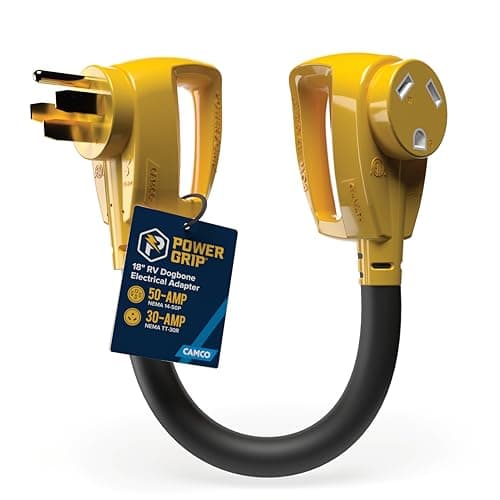 Camco PowerGrip Dogbone Adapter, 50A Male to 30A Female, 55175 The adapter for a 30-amp trailer at a 50-amp post. Ten-gauge copper and a molded grip, and it does not give you more power — it gives you a connection. Buy first | Plugging a 30-amp trailer into a 50-amp pedestal | 8.4/ 10 | |
| 2 | 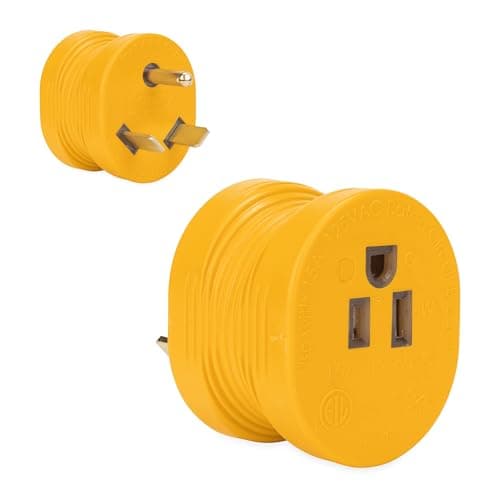 Camco PowerGrip Adapter, 30A Male to 15A Female, 55233 Lets a 30-amp cord plug into a household outlet for loading up in the driveway. One air conditioner will trip the breaker; the fridge and the lights will not. For the driveway | Running the trailer off a household outlet at home | 8.5/ 10 | $8.97View on Amazon
|
| 3 | 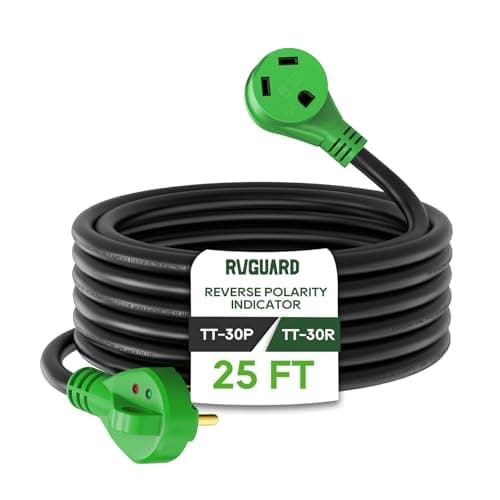 RVGUARD 30 Amp 25 ft RV Extension Cord with Polarity Indicator The same 25 ft 30-amp job with a reverse-polarity indicator built into the plug, at roughly half the price of the name-brand cord. Best value cord | A 30-amp extension cord at half the usual price | 7.3/ 10 | |
| 4 | 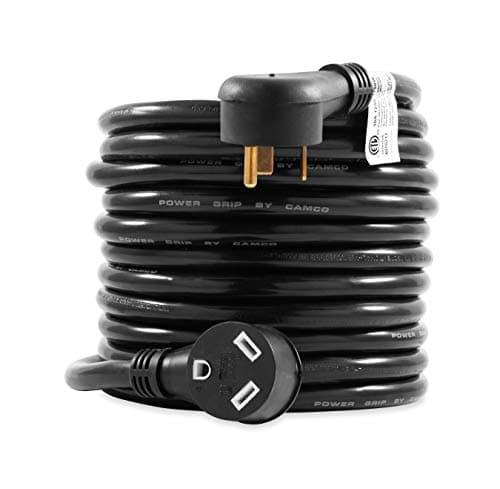 Camco 25 ft 30 Amp RV Extension Cord, 55193 Twenty-five feet of 10-gauge copper rated 125 V / 3,750 W. The gauge is the only thing that matters here; a thin cord gets hot and drops voltage. | Reaching a pedestal that is 10 feet too far away | 7.4/ 10 | |
| 5 | 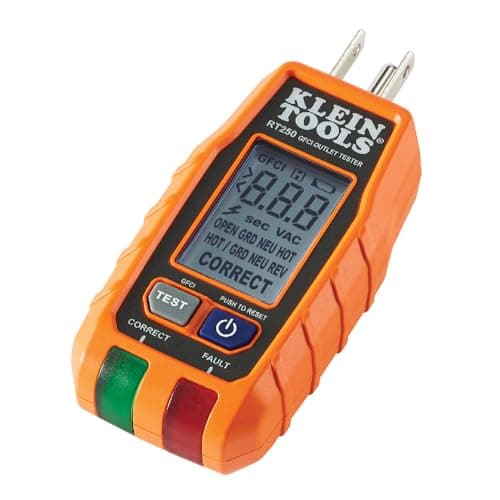 Klein Tools RT250 GFCI Outlet Tester with LCD Display Reads voltage and wiring faults on a standard 120 V outlet. It will not test a 30-amp pedestal, but it is how you check the outlets inside the trailer and the GFCI that feeds them. | Checking the trailer's own outlets, and a 15-amp pedestal outlet | 8.8/ 10 | $17.84View on Amazon
|
Tap any row to jump to the full write-up. Prices come from Amazon and are read automatically — see each product below for the date.
The short answer
Adapters change the shape of the plug. They do not change how much power is available, and that is the single most misunderstood thing in this part of the trailer.
Which adapter is which
| Adapter | Use | Power you get |
|---|---|---|
| 50 A male to 30 A female | 30 amp trailer at a 50 amp pedestal | 30 amps |
| 30 A male to 15 A female | 30 amp cord into a household outlet | 15 amps |
| 30 A male to 50 A female | 50 amp trailer at a 30 amp pedestal | 30 amps, one leg |
| 15 A male to 30 A female | A 15 amp supply into a 30 amp cord | 15 amps |
Read the third row carefully. A 50 amp trailer on a 30 amp pedestal gets 30 amps on one leg. Half your breaker panel is fed and the other half is not, and one air conditioner will be most of your budget. The adapters explained in full.
Buy the dogbone shape rather than a rigid molded block. The block hangs its full weight off the pedestal outlet and levers the prongs; the dogbone’s short cord lets the weight sit on the ground.
Extension cords: gauge is the whole specification
This is the part where people improvise dangerously. A 30 amp RV load drawing near its limit needs 10-gauge conductors. A typical household extension cord is 14 or 16 gauge.
Undersized cord does two things, and both are bad. It gets hot — resistance times current squared, concentrated in a coiled cord on the ground. And it drops voltage, which produces exactly the low-voltage condition that damages motors, except self-inflicted and at your own hands rather than the campground’s.
The common mistake
Two practical points. Shorter is better — every foot of cord drops a little more voltage, so use 25 ft rather than 50 if 25 reaches. And uncoil it fully before use; a cord coiled in a tight loop under load heats far more than one laid out.
Features actually worth having
A molded grip handle. RV plugs are a tight fit and pulling them out by the cord damages the connection. A grip ring or handle means you pull the plug.
A reverse-polarity indicator. Some cords have an LED in the plug that shows a miswired pedestal. It is not a substitute for a protector, but it catches the fault at the moment you connect.
Heavy jacket rating. The cord lies on hot asphalt in the sun and in standing water in the rain. A heat-resilient, outdoor-rated jacket matters.
100% copper conductors. Aluminum-clad copper exists and is cheaper. For this current, use copper.
A cheap tester for the trailer side
A plug-in receptacle tester with a display checks the 120 V outlets inside the trailer and the GFCI that feeds them. It will not fit a 30 amp pedestal socket, so it is not a pedestal tool — but the GFCI test is the one nobody runs, and a failed GFCI is both a safety issue and a common cause of “half my outlets stopped working.”
For the pedestal itself, that is what the diagnostics on your surge protector or EMS are for. The 30-second pedestal check.
The verdict
Buy the 50-to-30 dogbone first — it is the adapter you will use most. Add the 30-to-15 for driveway loading. Buy one 25 ft 10-gauge extension cord and keep it for when a site is awkward. Add a receptacle tester because it costs very little and tests the one thing nobody tests.
What to remember
- Adapters change the plug shape. They never create power.
- A 50 amp trailer on a 30 amp pedestal gets 30 amps on one leg.
- RV extension cords are 10-gauge. Household cords are 14-16 and are a fire and voltage-drop risk.
- Shorter cord, fully uncoiled, carries the load better.
- Buy the dogbone shape, not a rigid block that levers the pedestal outlet.
The picks in full
Camco PowerGrip Dogbone Adapter, 50A Male to 30A Female, 55175
Camco · Best for plugging a 30-amp trailer into a 50-amp pedestal
The adapter for a 30-amp trailer at a 50-amp post. Ten-gauge copper and a molded grip, and it does not give you more power — it gives you a connection.
Key specifications
- Configuration
- 50 A male to 30 A female
- Wire
- 100% copper 10/3 gauge
- Rating
- 125 V / 3,750 W
- Part
- 55175
Capacity figures read from Camco PowerGrip adapter specifications, October 2026.
How it scored
- How often you use it (40%)9
- Build quality (25%)8
- Takes up little room (20%)7
- Price for capability (15%)9
Weighted average of the figures above. We did not test this product — see how we pick.
What it does well
- Correct heavy gauge for a 30-amp load
- Molded grips make it removable with wet hands
- The adapter you will use most often
What it is bad at
- Does not increase available power — your trailer is still 30 amp
- Dogbone body is bulky in a cord bag
- Prongs bend if you yank it by the cord
Price as of October 5, 2026. #ad How this is funded
Camco PowerGrip Adapter, 30A Male to 15A Female, 55233
Camco · Best for running the trailer off a household outlet at home
Lets a 30-amp cord plug into a household outlet for loading up in the driveway. One air conditioner will trip the breaker; the fridge and the lights will not.
Key specifications
- Configuration
- 30 A male (TT-30P) to 15 A female (5-15R)
- Rating
- 125 V / 1,875 W
- Grip
- Non-slip grooves
- Part
- 55233
Capacity figures read from Camco PowerGrip adapter specifications, October 2026.
How it scored
- How often you use it (40%)8
- Build quality (25%)7
- Takes up little room (20%)10
- Price for capability (15%)10
Weighted average of the figures above. We did not test this product — see how we pick.
What it does well
- Makes driveway loading and pre-cooling the fridge possible
- Tiny and cheap
- Correct NEMA configurations, not a generic adapter
What it is bad at
- Fifteen amps will not run air conditioning — expect a tripped breaker
- Easy to overload if you forget what is switched on
- Household extension cords are usually too thin to use with it safely
RVGUARD 30 Amp 25 ft RV Extension Cord with Polarity Indicator
RVGUARD · Best for a 30-amp extension cord at half the usual price
The same 25 ft 30-amp job with a reverse-polarity indicator built into the plug, at roughly half the price of the name-brand cord.
Key specifications
- Length
- 25 ft
- Service
- 30 amp
- Feature
- Reverse polarity indicator
- Handle
- Molded grip
How it scored
- How often you use it (40%)8
- Build quality (25%)7
- Takes up little room (20%)5
- Price for capability (15%)9
Weighted average of the figures above. We did not test this product — see how we pick.
What it does well
- Polarity indicator catches a miswired pedestal at the plug
- Half the price of the obvious alternative
- Grip handle makes it easy to unplug
What it is bad at
- Shorter brand track record
- Indicator is not a substitute for a surge protector or EMS
- Same stiffness and bulk as any 10-gauge cord
Price as of October 5, 2026. #ad How this is funded
Camco 25 ft 30 Amp RV Extension Cord, 55193
Camco · Best for reaching a pedestal that is 10 feet too far away
Twenty-five feet of 10-gauge copper rated 125 V / 3,750 W. The gauge is the only thing that matters here; a thin cord gets hot and drops voltage.
Key specifications
- Length
- 25 ft
- Service
- 30 amp
- Wire
- Heavy-duty 10-gauge copper
- Rating
- 125 V / 3,750 W
Capacity figures read from Camco extension cord specifications, October 2026.
How it scored
- How often you use it (40%)8
- Build quality (25%)9
- Takes up little room (20%)5
- Price for capability (15%)6
Weighted average of the figures above. We did not test this product — see how we pick.
What it does well
- Correct 10-gauge copper, not a repurposed household cord
- Heat-resilient jacket survives hot asphalt
- Twenty-five feet covers most awkward sites
What it is bad at
- Expensive for an extension cord
- Heavy and stiff in cold weather
- Every extra foot of cord is extra voltage drop
Price as of October 5, 2026. #ad How this is funded
Klein Tools RT250 GFCI Outlet Tester with LCD Display
Klein Tools · Best for checking the trailer's own outlets, and a 15-amp pedestal outlet
Reads voltage and wiring faults on a standard 120 V outlet. It will not test a 30-amp pedestal, but it is how you check the outlets inside the trailer and the GFCI that feeds them.
Key specifications
- Use
- Standard 3-wire 120 V receptacles
- Display
- LCD voltage readout
- Tests
- Wiring faults and GFCI trip
- Model
- RT250
How it scored
- How often you use it (40%)8
- Build quality (25%)9
- Takes up little room (20%)10
- Price for capability (15%)9
Weighted average of the figures above. We did not test this product — see how we pick.
What it does well
- Numeric voltage, not just a pattern of lights
- Tests the GFCI trip, which is the one nobody checks
- Pocket-sized and from a tool maker with a real reputation
What it is bad at
- Does not fit a 30-amp TT-30 pedestal outlet
- No surge protection — it is a diagnostic tool only
- Needs a working outlet to tell you anything
Common questions
No. Household cords are typically 14–16 gauge, nowhere near enough for a 30 amp load. They overheat and drop voltage. Use a 10-gauge RV cord.
A 50 A male to 30 A female dogbone. You still have 30 amps available — the adapter does not increase what your trailer can draw.
Shorter is better — every foot drops voltage. Twenty-five feet of 10-gauge is a sensible maximum for routine use, and uncoil it fully so it does not overheat.
Sources
- National Fire Protection Association — standards including NFPA 1192 for recreational vehicles — read October 2026
- Camco published electrical product specifications — read October 2026
- RV Industry Association — standards and compliance program — read October 2026